Episode 25: How can we trust AI?
Published: Tuesday, Mar 17, 2026 • Duration: 53 minutes • Season 1
Download MP3 | Watch on YouTube
https://news.ycombinator.com/item?id=47408205
summarize "https://youtu.be/Mpj-ic1WWE8" --timestamps --slides
A conversation between two infrastructure engineers about the practical limits of using AI to implement and scale spec-driven development. They trade concrete war stories: a host’s tool (specledger) broke down when moved from solo work to a team; missing validation and documentation caused divergence between spec, plan and implementation; and the big themes are where to place deterministic checks, how to keep a single source of truth for docs, and how to restore human trust in AI-produced artifacts. The episode contains specific pointers: episode 25, a quick multi-day trial of the host’s tool, a weekend spent copying over a robust test suite, and examples like a 10-item user-story backlog split into three work streams that still lost details.

Setup and immediate problem
Hosts introduce the episode and a new recording service and say they will discuss AI + infra. One host describes shipping a tool called specledger and then discovering quality problems once the workflow ran across a team rather than solo: features implemented by others didn’t match the spec and validation was absent, which created doubt about AI-driven outputs.
Missing validation and empty “constitution”
They found the repository’s validation scaffolding never got initialized, so many required checks and checklists were absent; the host says he “exfiltrated” his own project’s principles and strong test suite (including browser end-to-end workflows) over the weekend to restore confidence. He emphasizes that the final phase — validation, testing and polishing — must be a defined task in the plan, and that missing rules allow the agent to produce outputs that aren’t automatically testable. “no the problem is the instructions were missing”
Divergence: plan, task and agent behavior
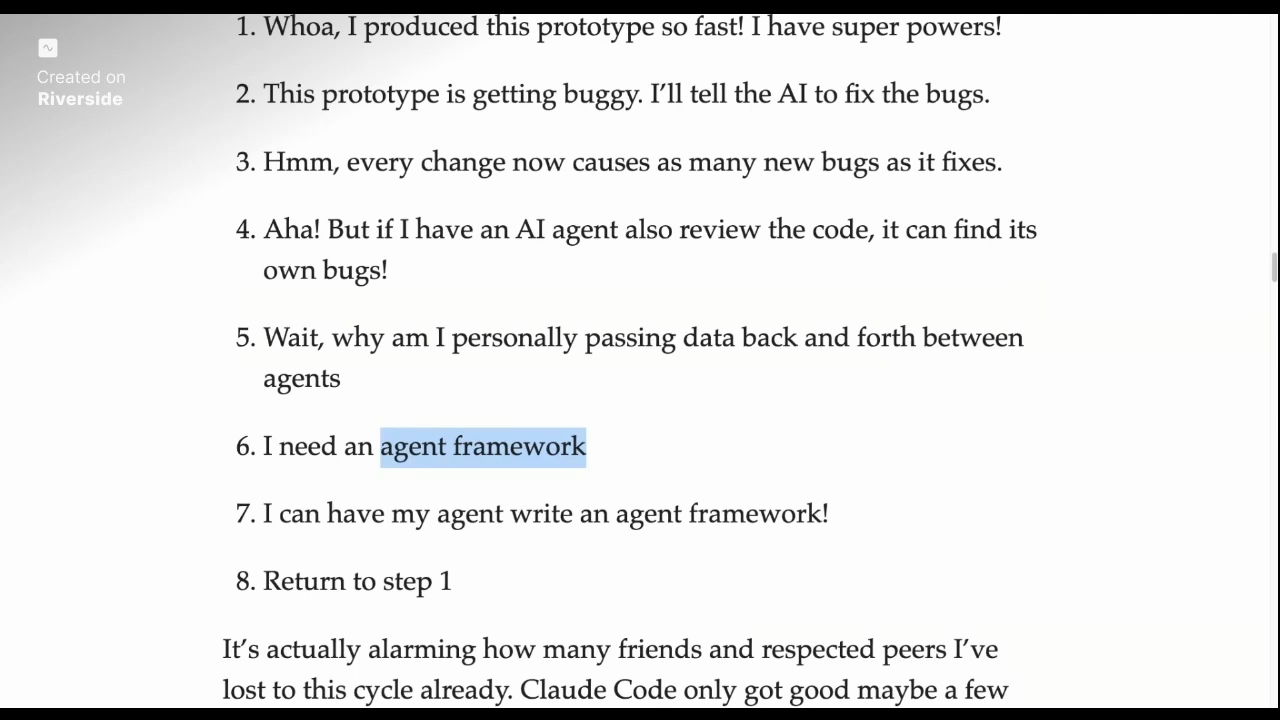
Multiple failure modes appeared: (1) task descriptions drifted from the spec because ad-hoc midstream changes weren’t back-ported to the spec; (2) agents chose different implementation patterns after reading a library’s docs and then simplified or deviated when things failed; (3) juniors driving implementation didn’t stop the agent when it diverged. They propose a cross-artifact validator and a flag to require at least one validation run; the core difficulty is defining when an agent should stop and surface an error versus continue making pragmatic changes.
Documentation, duplication and source-of-truth friction
They describe a common enterprise symptom: auto-generated summaries, tutorials and references proliferate from a canonical corpus and then drift out of sync, leaving multiple inconsistent mirrors. The host recommends storing an explicit doc/design index in the repository and keeping documentation close to code, but notes that spec-driven tools often accumulate many successive spec folders (v1, v2…) and lack a canonical merged root, which breaks the “single source of truth” promise.

Deterministic API refs + an AI query layer
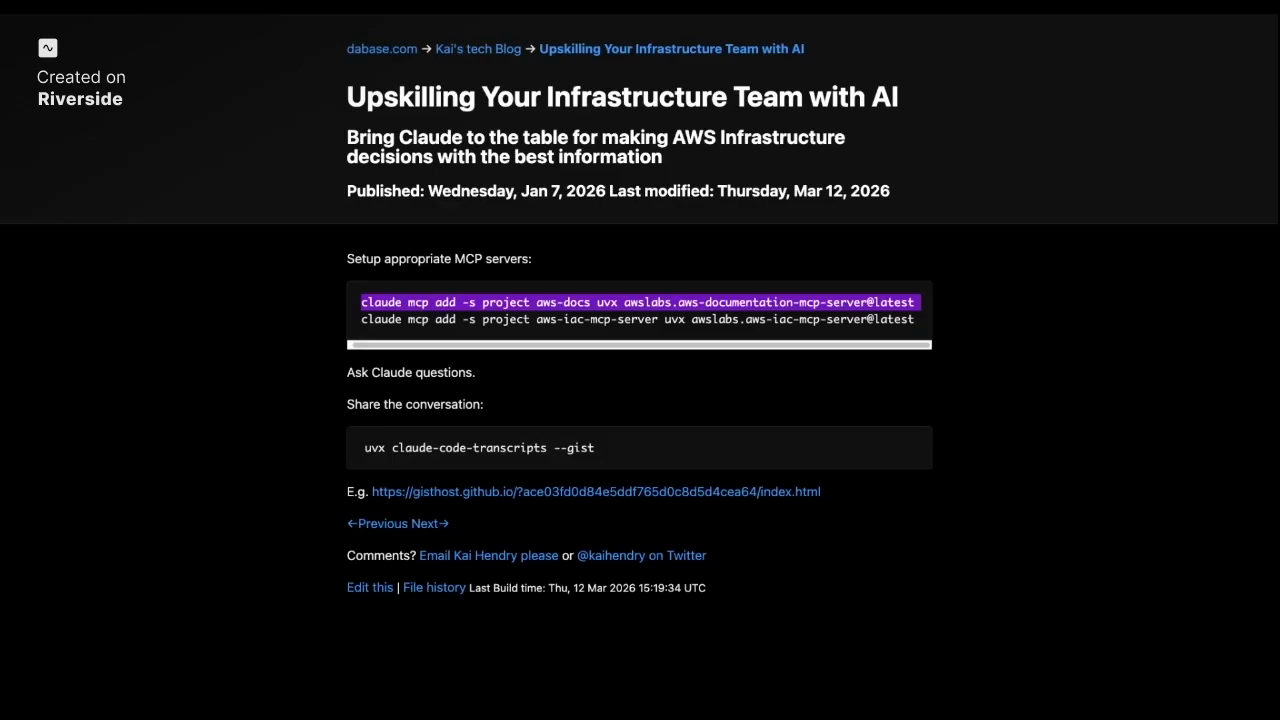
A practical pattern surfaced: generate deterministic API references and examples directly from code (types, docstrings and generated API docs), keep that as the canonical dataset, then layer a queryable AI index on top so people can request tutorials or examples derived from the authoritative source. They discuss indexing published docs into a vector store and serving a doc-query interface so non-developers can ask natural-language questions while the underlying API reference remains programmatically generated and versioned.

Trust, CI/CD artifacts and how to restore confidence
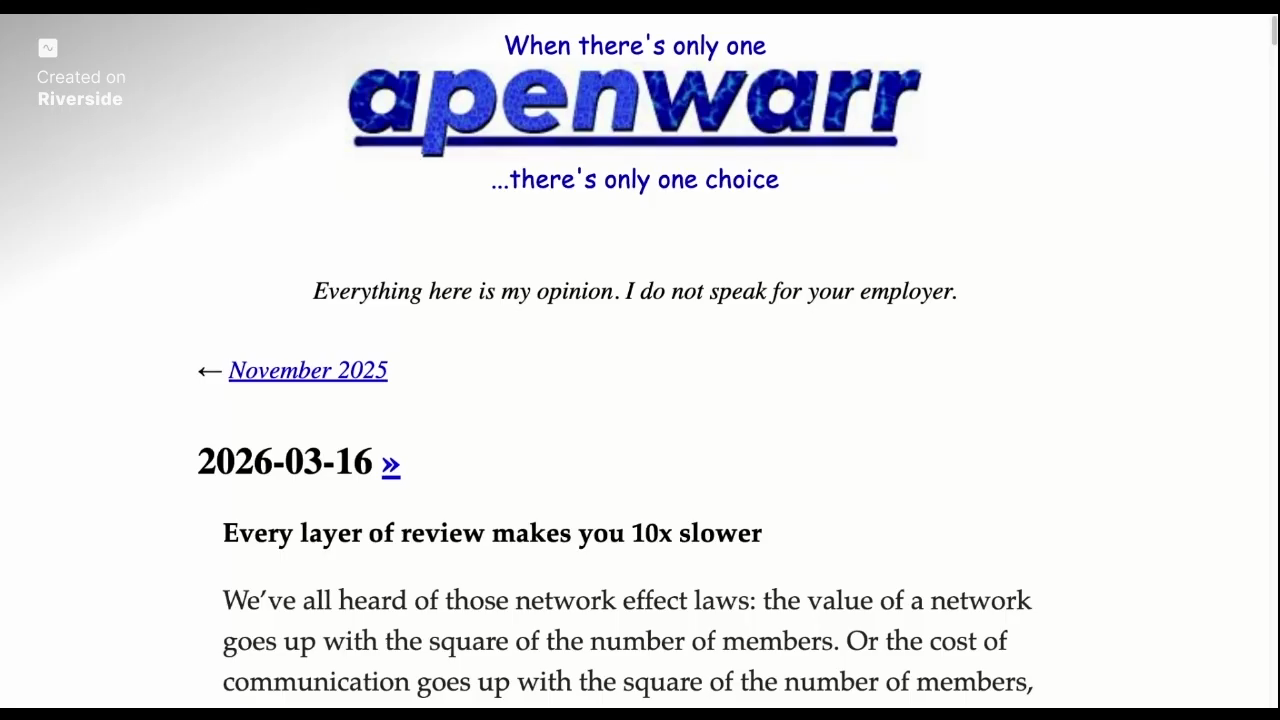
Trust is the central theme: once consultants or teams use AI and quality slips, client trust breaks. The hosts map familiar concepts onto AI workflows: immutable artifacts moving rightward through a pipeline build trust as they pass deterministic promotion gates. The tension is obvious — AI accelerates output but reviews and quality gates are slow — so the way forward is more automation: formal parsers, deterministic validators and tooling that convert constrained user-story formats into machine-checkable tests (BDD/Gherkin-like). Humans still belong at the start and the final sign-off, but the guests argue for stronger automated verification during the lifecycle because volume of AI output overwhelms human reviewers. “trust and alignment or whatever you want to call it is so key with all this innovation that’s happening.”
Model: openai/gpt-5-mini