Episode 16: Measuring AI productivity, and will AI have Ads?
Published: Sunday, Jan 11, 2026 • Duration: 53 minutes • Season 1
Download MP3 | Watch on YouTube
https://x.com/kaihendry/status/2009678360046420110
https://docs.astral.sh/uv/llms.txt
summarize "https://youtu.be/tKad1dhw5Qs" --timestamps --slides
This episode is a wide-ranging conversation that starts with a storm anecdote and quickly centers on practical questions about measuring AI-driven productivity, the human friction that accompanies adoption, how teams build trust in LLM-generated code via testing and spec-driven workflows, and the emerging business pressures (access costs, funnel collapse, and the idea of ads inside LLMs). The hosts mix concrete examples from company practice (DORA snapshots, property-based testing, runner costs) with tech-culture takes (Jevons paradox, “10x” skepticism) and tool notes (transcript indexers, conductor, spec tools).

Opening: storm, power and infrastructure
Conversation opens with personal storm anecdotes and a concrete resilience problem: an earlier outage left the speaker “out of power for like two 47 hours” (almost two days), exposing how quickly heating and mobile connectivity fail without electricity and prompting practical coping choices (butane cookers, spare kits) and a brief digression about unreliable mobile mast backup in rural areas.

Execs demand numbers: “How much more productive?”
A middle manager describes being asked to quantify AI productivity gains (“how much more productive 100 100% 200%”), while customers sometimes block the best models; the practical answer discussed is to use DORA-style engineering metrics (four defined metrics from the Accelerate research), take early snapshots per team (data, cloud, app, iPad teams) and compare pre/post AI adoption using instrumented sources (GitHub, Jira, PR/release timestamps) to show measurable change.

Metrics culture, fudging, and adoption anxiety
Speakers warn about presentation culture and gaming numbers (example: tagging coverage reported jumping from 20% to 60% after manual/retroactive edits), and about comparing adopters to non-adopters (OpenAI/other reports claim big gains but lack transparent methodology); they push back on hype labels like “10x engineer” and cite suspicious self-reports (a tool claiming it “finished it in 10% of the time”) as reasons to insist on verifiable, repeatable measurement and private challenge of fudged results.
Spec-driven dev and trustworthy tests for LLM output
The hosts highlight a spec-driven IDE approach (Kirro) that mixes deterministic logic and formatted user stories to generate structural tests, and they recommend property-based testing (fast-check in Node, Hypothesis in Python) to validate behavior rather than surface syntax. Practical notes: porting CDK to CDKTF revealed test harness value, but also costly CI requirements (examples noted: TypeScript jobs needing ~8 CPUs and 32 GB RAM), so runner costs and caching (turbo cache, monorepo task runners) matter for real-world adoption.
Jevons paradox, access inequality, and session tooling
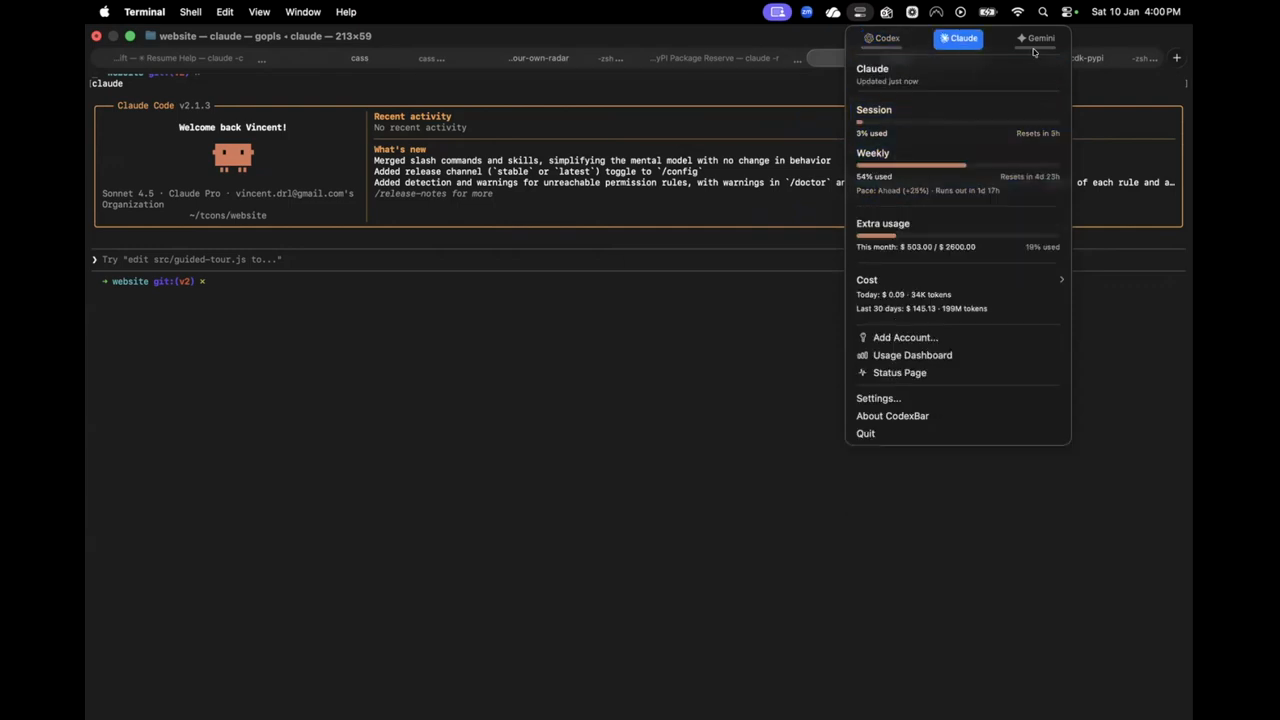
They invoke Jevons paradox — “if things are getting easier to do, we’re going to do more of it, not less of it.” — to argue easier AI will expand activity, not shrink it, while flagging access stratification: a handful of heavy users spend hundreds of dollars monthly (example figure cited: people spending ~$600/month) and capture outsized output. To counter siloed learning, they demo transcript/session tooling (a Rust-based indexer and sharing tool) and argue teams need transcript rating, shared prompts, and workflows to upskill people and capture institutional knowledge.

Workflows, conductor, and the revenue threat to docs
They discuss limits of structured LLM workflows (difficulty getting templates to do meta tasks like “library of prompts”), mixed experiences with conductor (sometimes keeps an LLM loop going), and real business risk: a docs-driven project reported an ~80% drop in funnel traffic/revenue after LLMs started generating code for users, triggering major staff reductions in one example; as a commercial response the hosts debate attribution and monetization inside LLM flows and offer a blunt hot take — ads or paid surfaced attributions inside model outputs are likely to appear — and note a viewer poll result that around 65% thought an LLM already outcodes them, summarized as “Claude is already better than them at coding”.
Model: openai/gpt-5-mini