Episode 16: Ralph Wiggum, Gas town, Playwright right, Omarchy & Skill issues
Download MP3 | Watch on YouTube
https://x.com/mattpocockuk/status/2008200878633931247
https://steve-yegge.medium.com/the-future-of-coding-agents-e9451a84207c https://github.com/steveyegge/gastown
https://github.com/kaihendry/skills
- 00:00 Ralph Wiggum
- 01:37 Gas town
- 13:21 Testing
- 16:26 Playwright demo
- 33:41 Ralph Wiggum memes
- 36:37 Omarchy
- 41:11 Skills for AI
summarize "https://youtu.be/o-NUs1isBp8" --timestamps --slides
This clip is a technical conversation that jumps between memes, agent orchestration, LLM-driven testing, and developer tooling. The hosts use the Ralph Wiggum meme as a framing joke to discuss why simple looping patterns can outperform heavy orchestration, then dig into Steve Yegge’s Gastown design choices and iterations, a live demo of LLM-generated Playwright end-to-end tests, token and cost tradeoffs when models send large page snapshots, and higher-level debates about who will adapt to agent-first workflows (engineers, product people, or curious hobbyists). The tone mixes practical demos (a working Playwright test suite generated by an LLM) with design lessons drawn from multiple Gastown iterations and the limits of current “skills” and context windows.
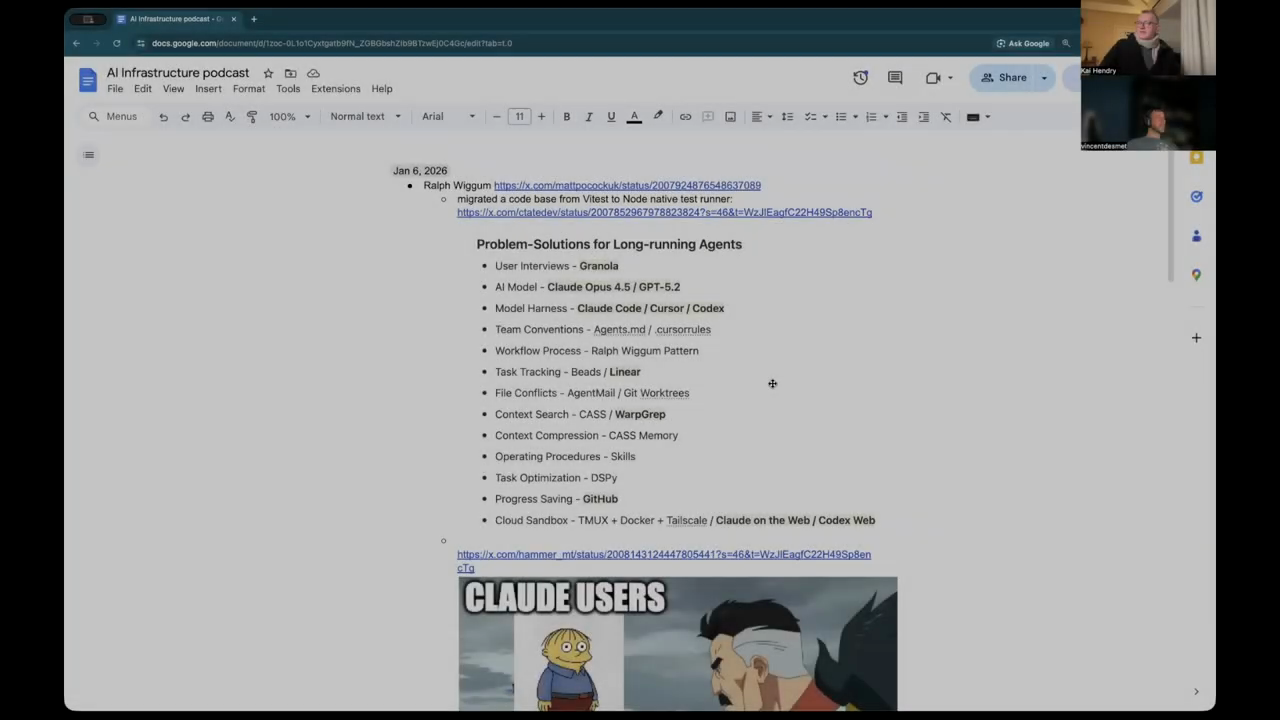
Ralph Wiggum as shorthand for looping agents
The hosts open by awarding the “Ralph Wiggum” meme status to a class of agent workflows that rely on simple loops rather than heavy orchestration. The meme (“I’m in danger.”) is used to mock quick, looped approaches that can be surprisingly effective because “the models have become so good.” They contrast lightweight looping with more feature-rich orchestrations and link that intuition to Steve Yegge’s Gastown posts, which document multiple design passes and tradeoffs in agent naming, components and communication patterns. “I’m in danger.” “the models have become so good.”
Gastown, naming, and orchestration tradeoffs
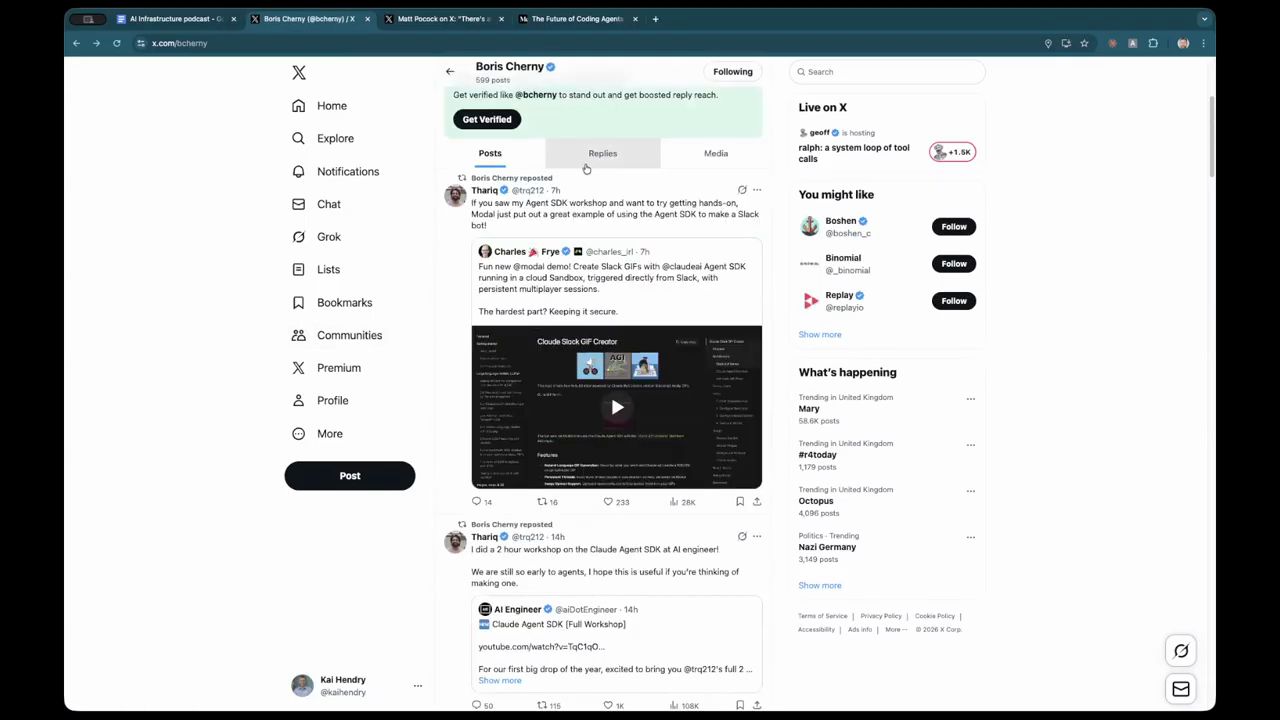
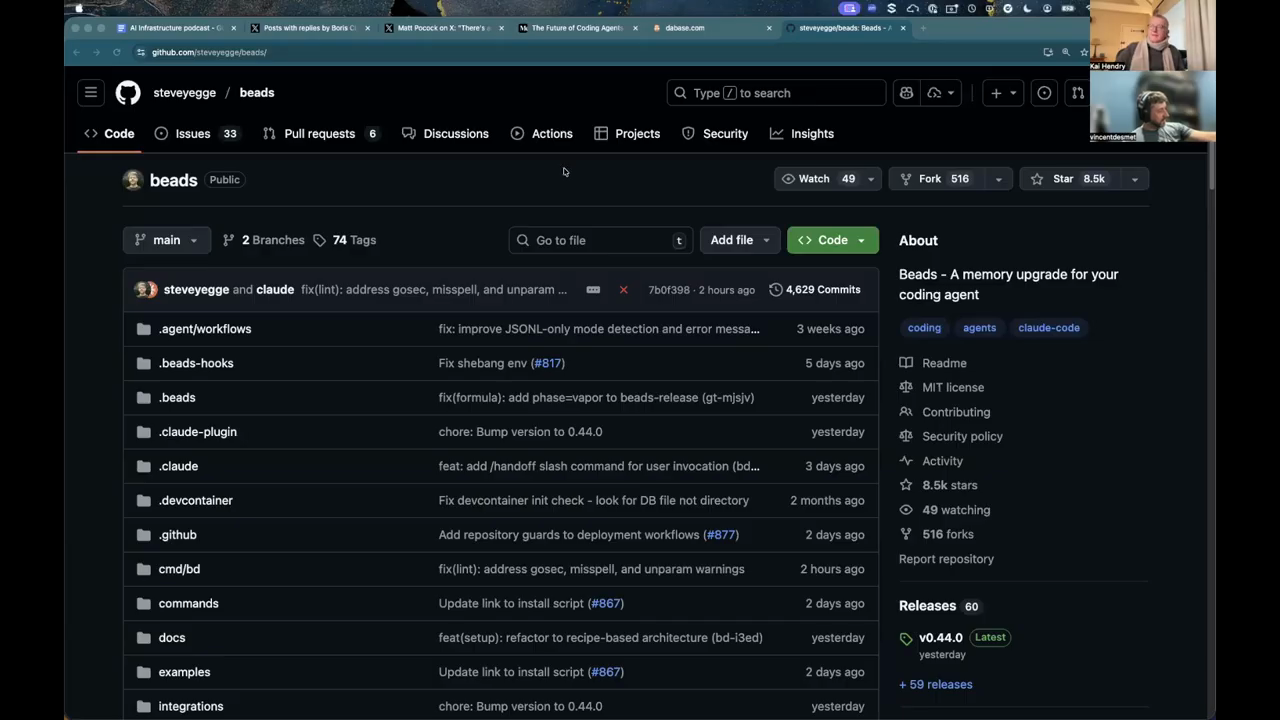
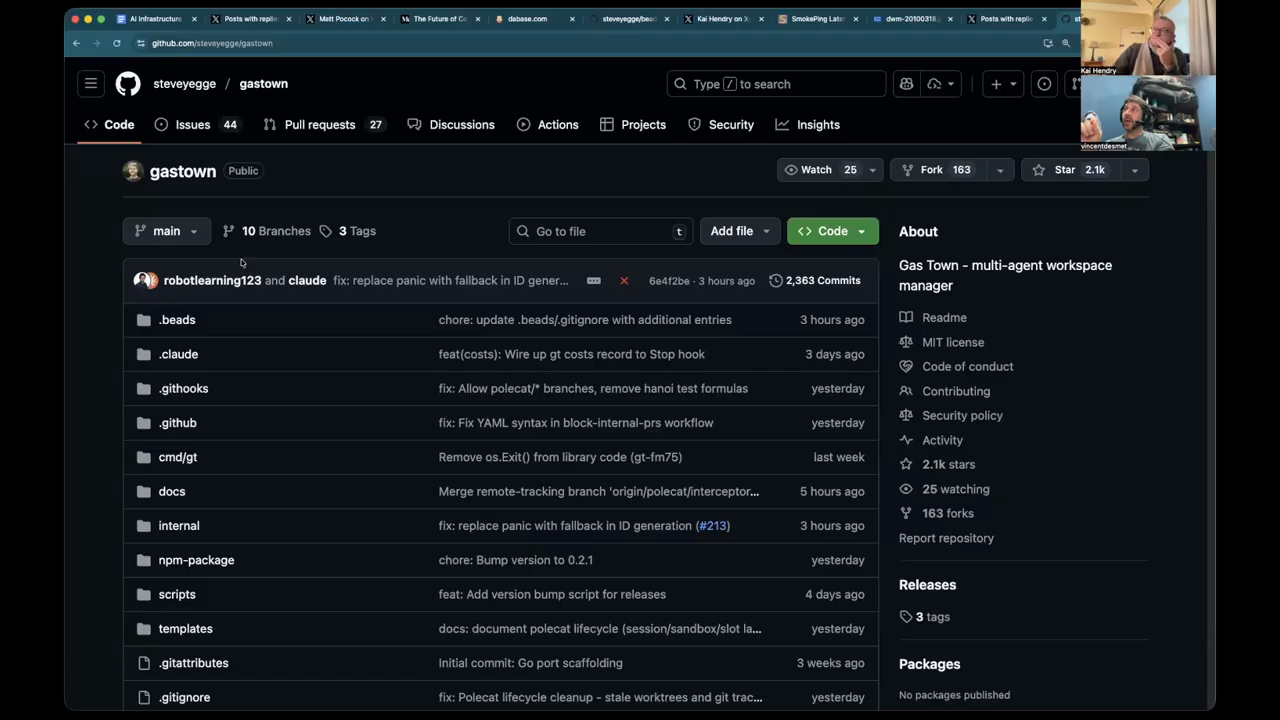
They discuss Steve Yegge’s two posts: an initial Gastown announcement (noting a $600/month running cost) and a longer second post that explains iterations (Python → VC → Golang, several workshops). The conversation highlights problematic terminology (bcats, scrapyard, towns) and why naming matters: engineers want concrete terms (OCR scanner microservice) rather than obscure project handles. Two orchestration approaches are compared: giving each agent isolated git worktrees/branches and resolving merge conflicts later versus sharing a single filesystem with coordination primitives (file reservations/locks) to avoid conflicts upfront. The hosts note Gastown’s mail/MCP was conceived by non-engineers and argue that non-engineering perspectives can surface simpler, effective coordination models.
Playwright demo: LLM-generated end-to-end tests
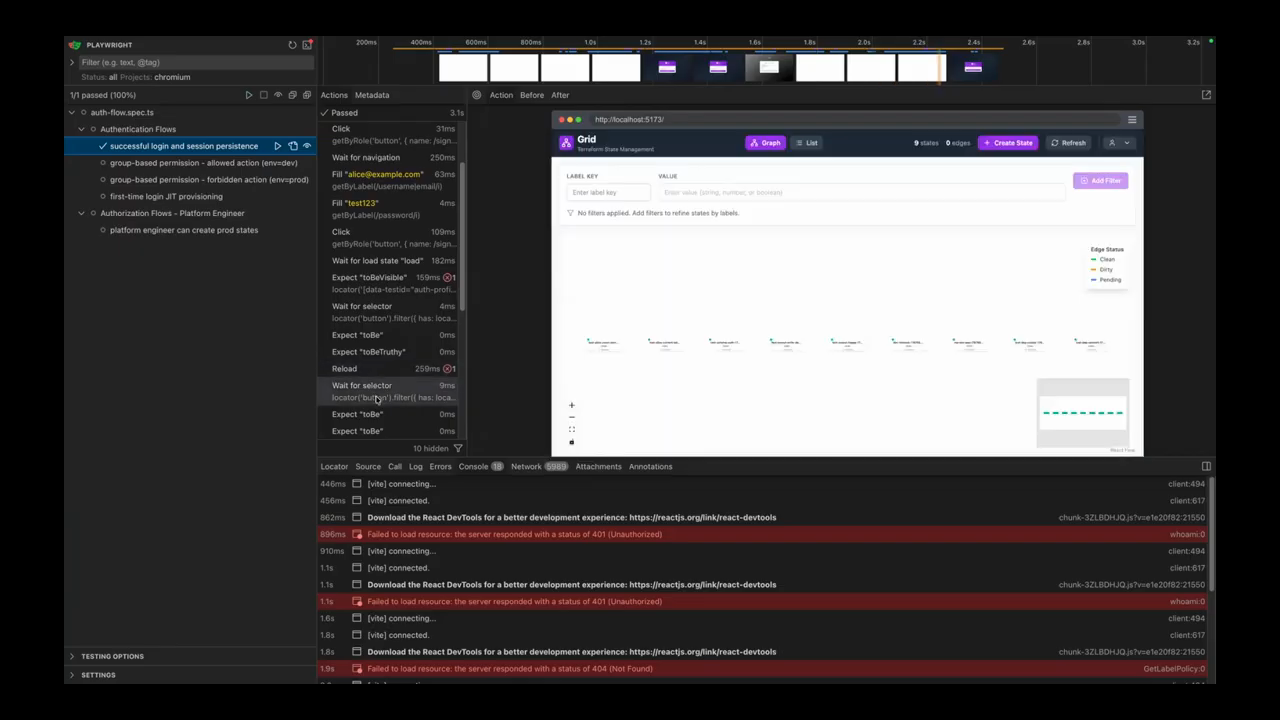
One host demos an end-to-end Playwright test suite that was generated entirely by an LLM (no handwritten test code). The test setup is ~170 lines; it bootstraps containers, creates test users (Alice, platform user, new user with no groups), registers roles in the API, then runs UI flows (login, refresh, assert session persistence). Tests are launched in parallel: separate Chrome instances (non-headless) run multiple workers simultaneously. A simple successful login-and-refresh run completed in about 3 seconds in the demo. The script waits for selectors (test IDs) and verifies UI states; failure modes are exposed with browser console output and screenshots. The demo emphasizes that an LLM can produce executable Playwright scripts that perform complete E2E checks and environment setup.
Debugging with page snapshots, huge prompts, and token costs
When a test fails because an element can’t be found, Playwright produces a structured page snapshot (a YAML-like DOM skeleton) plus encoded screenshots; feeding that snapshot to an LLM produces a comprehensive diagnostic. The demo showed an automatically generated LLM prompt that included the page structure and a large failure trace — the prompt reached a few hundred lines (~300 lines reported) and included the YAML snapshot and context. Pasting that snapshot into a fast cloud model immediately identified a changed test ID as the cause. The hosts highlight two costs here: (1) token bloat from sending large encoded images and page dumps (Playwright’s MCP approach can send B64 screenshots and structural data that are very large), and (2) real-money API wallet surprises — one anecdote described a paid subscription where enabling “extra usage” burned a monthly $20 allowance quickly. The overall point: Playwright’s script-based approach bundles logic server-side (smaller chat turns) while snapshot-based MCP-style interactions can balloon token usage; both approaches have tradeoffs for debugging and cost.
Model speed vs quality, tooling defaults, and small platform anecdotes
They contrast two model behaviors: very fast, looped cloud-code workflows that may require repetition and external loops versus slower models (GPT-5.2 in discussion) that internally iterate and produce more correct outputs. This is framed as a speed/quality tradeoff: snappy models that need orchestration loops versus slower-but-deeper reasoning. The hosts also note ecosystem moves: one distro/toolchain (Omari) ships with an open-code CLI agent by default and bundles cloud-code/agent tooling to simplify the dev experience; installer anecdotes claim very fast installs (one host reported a 3-minute install, another 6 minutes 20 seconds), and emphasis on theming and polish as a user-acquisition lever. These details illustrate how developer ergonomics and default tooling choices shape who adapts to agent workflows.
Skills, context-window limits, roles, and the future of agent tooling
They close with meta issues: “skills” can become redundant as models learn common CLIs (example: models eventually know how to run GitHub CLI without explicit skill injection), but skills still capture small platform-specific traps (e.g., GH pager behavior, commit checks). Context degradation matters: hosts cut off tasks before the tail of the session to avoid “dumb” behavior when remaining context is low. They debate who will adapt: engineers, product owners, or hobbyists—concluding it’s about who invests time to get reps and learn the new patterns. Steve Yegge’s Gastown is singled out as an example of iterative design: several passes (three or four iterations) produced a flow that agents now use intuitively, and because LLMs will be retrained on public repos, tools like Gastown and Beats will only become easier for models to use over time. The clip closes with a mix of technical demos, concrete operational caveats (costs, token bloat, CI flakiness observed in a repo), and practical advice about keeping goals narrow so LLM-driven agents don’t drift.
Model: openai/gpt-5-mini
Transcript (auto-generated from YouTube captions)
Okay. Ralph Wigan number one on the
agenda.
>> Well, you put it number one. Don't act
surprised. You expected me to bump it
down.
>> Well, to be honest, I wanted to put it
like
second to uh you demoing the the thing
that you're trying to demo to me
>> cuz you're afraid we're going to run out
of time.
>> Oh my god, there's a lot to cover and I
need to basically take my kids off in 10
minutes. But like maybe
>> you call me 10 minutes before you go and
then
>> I don't know if you like like if you had
10 minutes and you wanted to talk about
something what you want to talk about
you choose
>> the memes around Ralph Wigum.
I like him.
>> What what is Ralph Wigum?
>> Okay. So I saw a very niceation
>> where Ralph Wigum is a Simpson
character. the guy who sits on the train
in the class and that ate the crayons
and the very famous meme where he's on
the bus and the bus is about to crash
and he goes like I'm in danger. It's
like it's it's a classic character like
a clueless character. Um, and so it's
kind of fitting for the fact that you
just put it in put cloud in a loop. And
I like it um because one of the
breakdowns of why it is successful
is basically
it just means that um
that the models have become so good.
I I thought putting them in a loop was
pretty much what Gast Town was doing
with a little bit of coordination.
>> No, no, no. Gast Town. So I I like the
second blog post that that Steve Jger g
did, which is way more the background
than how it came to be what it is. I
think that's a gentle introduction to
Gast Town. So he has the original
announcement. Here's Gast Town. Cost
$600 a month to run it. It's crazy.
Don't do it. Caveat. Watch out. And um
and then he did a second and with a full
breakdown. It's very hard to follow
because it's like introducing all of
these different concepts but using you
know names that don't make sense like
bcats and and uh scrapyard and towns and
the way that towns communicate. I still
don't understand the difference between
like why can't you just say agents are
mailing each other? No, we have to see
bullot bulls live.
>> I think I I often think to myself that
uh in our industry terminology is
actually
a big part of what we do, right? Using
the right words is the right and and AI
agents
>> is already kind of overloaded as
>> sensitive to words. Oh, it's
>> I mean like agents I' I've seen if you
like I don't know if you go along on
YouTube and you and you like some people
have like weird ideas what agents are. I
think and like if if if you define it if
you call your agent PCAT and you define
what PCA does exactly and what where it
lives exactly and how it works exactly.
I think
>> it's very hard because then you're
introducing all these new concepts and
they don't have any relationship. But
that's what a a new a new idea a
groundbreaking idea will probably end up
doing, right? We'll invent three new
words in the process.
>> So this is why I I'm I'm defending Steve
in his in his crazy naming.
>> Yeah. But I have a history here of
coming into an organization as a DevOps
engineer and being told to de deploy
Okali and having to scram cuz first off
you weren't involved in the original
design of Okali. You have no idea what
Okalai is supposed to be. Then you have
to find
>> So okali are the what you call the
facets of the eyes of a bee and it was
basically the optic uh character
recognition engine for scanning receipts
at the supermarket at the team that I
was working at. So you see how annoying
it is. Uh and then another thing that's
very annoying. Yes, naming is is is is
difficult, but for me it was like just
tell me that you want the OCR scanner
microser deployed, right? Don't tell me
I have to go and figure out what OKAI is
>> at the same time. All these calls and
all this nonsense,
>> but at the same time
>> Yeah, but that that's kind of different.
I mean, that's like a project name as
opposed to But yeah, I get I get I get
what you're saying. It can be it can
work the other way very easily.
Yeah, I mean it makes sense I guess if
you if they are in in a in the nom
nomature like it was an or an an
organization called Honorsby. So it was
Okalai and Beehive and Beehive was a
product catalog but you know
>> Oh god no.
>> Yeah. Yeah. But you know you cringe the
moment I say this. I cringe the moment I
read like Paul Catz and all and then he
says to avoid copyright he mixes Mad Max
terminology with others uh to make sure
that like no single um enterprise can go
after you know him for copyright claims
or trademarks. He said, "No wonder." And
no one. Anyway, what I was trying to say
is, and we were getting back to Ralph
Wiggum, is that
the second article is way better because
he really explains um exactly how and
how many iterations he went because he
create original vibe coder and then he
created VC and then he created a Python
version of Gastown. He had a couple of
workshops.
Uh I think it's the second one there.
Yeah. And then he did the Golang version
of Gaston and he he kind of explains his
experiences using Python versus Golang
and um you know what worked, what didn't
work and like he went to through three
or four iterations of um Gaston.
So
it's a very good I like this one. It's a
way more gentler introduction to how it
came to be what it is. Um but it is a
very interesting way and is a very
interesting
you know group of people are approaching
agent orchestration by building it in a
non-engineering
way. For example, is it better to create
git work trees and let every agent work
in an isolated work like git branch and
then deal with the branch conflicts like
merge conflicts or and that's another
approach. Is it better to all let them
all like let's say you're in three or
four agents at the same time on the same
file system and give them a way to
communicate with each other and reserve
files so that they don't create these
conflicts at in the first place. And as
an engineer,
>> yeah, blocking a folder or something.
Yeah.
>> Yeah. So, as an engineer, you come with
a long background of like git and
versioning and collaboration that takes
several days and you know this type of
workflow, whereas these agents work at a
very different like speed and have a
much better way of coordinating than us.
So, approaching it from a non-engineer
perspective, which is what um this guy,
I forgot his name now on Twitter. He
built the the mail system that Gasttown
uses. So basically this male MCP for
agents to communicate is all coming from
non-engineers looking at this O AI um
hype from a completely different angle
like a non-engineering angle and I
thought that was very interesting to
read and I think Ralph Wigum is also an
approach to that right stop trying to
build too many processes around these
agents and give them a very simple loop.
So have you have you tried it? Actually
I can relax now since um the school is
not opening in is delayed opening for 1
hour.
>> Oh because people were stuck.
>> We got time.
So that's good.
So yeah. Have you have you tried well
this uh approach then?
No, but I think the the one of the
breakdowns for it I thought was very
interesting breakdown because I think I
just I'm repeating myself. Sorry, I'm
distracted. Because it identifies that
the models have just become so much
better. And also I feel that kind of
reflects us as we are like you know this
didn't work but I finally found
something that worked and and and this
works 100%. I tried so many and it
didn't work but guess what?
>> Maybe it doesn't work because you found
the right way of doing it. Maybe it just
works so much better.
>> Personally, personally, I I thought AI
was was was interesting, but then when
Claude 4.5 came along, I thought to
myself, "Holy moly." Yeah. So many
people now because I I avoided X for a
long time and but it used to be a very
good source of news, but you were
sharing me some threads and then I
decided to just start going through this
and and the
>> onex you mean.
>> Yeah. If you subscribe, if you follow
the right people, then it's insane. Like
the amount of
>> Yeah, that that tab is insane. But if
you
>> and the amount of people going like I
just spent two weeks during the holidays
with Opus with the double limits and I'm
sold. I'm sold. That's it.
>> I'm sold. I I I I enjoyed uh the
anthropic posts on on X like the the the
uh advent calendar and the that Boris
guy is also really good that the the the
what's his name?
God searching on uh the guy that that
invented Corker or
he he's great. Yeah. is I don't know if
you follow him, but he's he's posting
>> Boris. Yeah, because he people ask
things and he he replies to them and he
talks about his his his workflow,
>> but then he also replies, "Oh, just do
this." Or he says, "Yeah, that's a great
idea. Let me let me add that and we'll
add it to the backlog."
>> Yeah. Yeah. There was an epic one where
someone suggested something and then he
released it in 20 minutes.
>> Yeah. So,
>> and also that he says that he's what
merging 100 PRs and he has like
>> six um parallel agents and the way he
switches between his mobile and his his
>> I I I have I'm using my wife's
subscription
because I have API subscription through
work and I just don't want to mix it all
up. So the the the the thing that
confuses me or the thing that I want to
do, the workflow that I want to do is
that like I I have my clawed stuff or I
have my agents doing something, but say
I pop out to go fetch my kids and or I'm
in the supermarket. It would be nice to
to go on the Claude app and basically
see how those agents are doing, but but
right now there's no link between Claude
code u sessions and and the and the app.
And I thought he was alluding to the
fact that that this might be possible
because he said, you know, there's a
command in the cloud co
and uh but it but it doesn't actually do
anything.
>> Yeah. There was another very cool one.
Um, people are more and more saying like
I need my laptop like my Claude Code on
my laptop because it has everything
installed. And Boris, I don't know how
he does it, but he must I don't know
maybe he has a custom sandbox internally
within Antropic that has all the tools
that has more than what we get when
we're on the web. But
>> we get like if you use Claude Code on the
web, there's a lot of restrictions on it
obviously because they don't want people
to start running crypto miners.
And so basically he um somebody says
what if I can just like run a T-max um
from my laptop or like a reverse tunnel,
you know, like Angro and have that
exposed through the web so that I can
just be on my mobile.
>> This this might help you. Bars, help me.
I hit my weekly limit slash extra usage.
Yeah. You know what that is?
>> It just starts using your it starts
using your wallet with the API costs.
>> So like you you use you pay $20 a month.
You put $5 or maybe you put $20 in your
wallet. You you hit the five hour
session limit and you go like, you know
what, I would really love Opus to finish
this. And you like go like, yes, extra
usage. And it burns through $20 within
like within like an hour. And you go
like, what? I just paid $20 a month and
now I just burn to another 20 in an
hour. It's very very painful, but it
does help if you're in a rush.
>> This is also interesting. Opus 4.5 is
Ralph Wigum and Playright is AGI.
>> I disagree. Those are people I talked to
one guy and he has like an enterprise
access and he says, "Yeah, I I I burn
millions of tokens like like you
mentioned before. They have thousands of
dollars." Then maybe you can you can use
Playright MCP. But if you're on a a
normal subscription,
>> so the last podcast upload.
>> Yeah.
>> If um and you can find it on debase.com
podcast,
>> the thought that's been jiggling around
my mind since we last spoke is is valid.
>> How do you test and validate stuff?
>> Yep.
>> Do you have do you have the solution for
that? Because Yeah. Like when I read
this um this tweet about
>> about playright being the agi you were
saying to me no you're running play
right wrong with MCP so so how do you
run play right right play right right
should be a rapper okay so what is my
problem with MCPS and also the problem
that both Cloudflare and Antropic have
highlighted is that it's a massive token
waste that sending all of the characters
across on every turn one by one I've hit
it myself several times. It's very
frustrating.
>> Right. So when you use the playright
MCP, it will take screenshots which is B
64 encoded image. So that's the
significant amount of characters. It
will take a structural document like
some type of YAML representation or an
XML representation of the whole page.
It's not really XML because it's like
more of a structure of all of the
elements. Um it's a it's a strange I
don't know this representation. I'm not
a front end engineer, you know, but but
it takes it some type of of skeleton,
not a screenshot, but sometimes of like
structure, it also sends that down to
the model. Um, and and all of this
information is like so much. But when
you use playwright as a as a scripting
engine, basically you write you write a
script, right? you say first go to this
URL
>> then click on the login page
>> then you will be redirected
automatically to another page wait for
the um username text box to be available
or element to be available
>> I have scripts like that myself
>> but that's a script that is a maybe you
know 20 lines and that gets generated by
the LLM and sent to playright and it
executes in one go and it may get the
reading that script
wastes a ton of tokens in my experience.
>> Oh, it doesn't. Why would it? What? It
literally didn't not I I never wrote
playright in my life and I was like I
would love to be able to do more of an
end to end. So maybe I share my screen.
I don't have
>> Okay.
>> Uh
>> Okay.
Yeah, you got to you got to demonstrate
this workflow. I'm very curious. Like
for example, could you could you show a
workflow where um
>> not on requests? I can show you what I
have.
>> Okay.
>> No, but I want to see how you create it.
Like go to like debase.com
>> and also
>> listen to a podcast or something. I mean
that's very simple. There's no login
here or anything.
>> Validate that there's a
>> send me that in advance and I will try
>> Kim.
>> Yeah.
>> Thank you. Thank you uh Abiooft for
creating Kalema. I mean I'd be dead if I
didn't I mean Mac OS would so suck if it
didn't add Kalema. Yeah. All the other
ones you need to pay, right?
>> Exactly.
>> Yeah. So, I have like test users, Alice
user, platform user, new user with no
groups and and I'm validating that these
users are not able, you know, to do
things. So, it has like
>> you coded this with the AI, right?
>> Yeah. I I don't know how to write any of
this. I have not written a single letter
of code in this test.
>> Okay. Okay. So, so it's 170 lines.
>> Okay.
>> Right.
>> Um
the the setup thing
is the coolest thing because it does the
E2E setup which um as you can see it
makes sure that the containers are
running and then it makes sure that the
users like it creates a user by creating
the Alice user inside um inside click
and and creates the test user with
certain password
and and and everything. It also goes
against my API to register the user
role. So if if I in kick look I create a
user a certain group membership and in
my API I create group membership to role
mapping. So it does both ends. Okay.
Right. So this playright test. So that's
like a UI for running the script.
>> Yes. So and this is this is gold and uh
because if I
>> it's amazing I tell you. So once
everything's up right now the server is
up and they're listening.
>> Yeah. and and I can just go for example
I want to do a successful login and
succession persistence test. So I'm
going to log in and then I'm going to
refresh and make sure I'm still logged
in. Right? So I close the console. The
there's nothing here. It did not run.
When I click it and when you trigger
them it's going to run them all in
parallel. This is running in a separate
Chrome browser. So in this case it goes
to sign in with SSO
but clearly it's it failed. Oh no it
didn't fail. It didn't fail. Sorry it
passed. It's green, right? There's some
error messages here. 401 unauthorized.
That's my API because my web asks um
like the login status and you get a 401
if you're not logged in. So these
console error messages I have to get rid
of at some point. That's my who am I
endpoint. Anyway, you can see here it
ran very fast, right? It took 3 seconds.
So it navigated.
>> So what ran in parallel? I didn't quite
understand.
>> I just ran one. I just ran this one.
>> But if you run them, you can if I click
this one, it's going to run all of
these. You can click this one. It's
going to run all of them. And it's going
to all run in separate headless uh not
headless, it's going to run all in
Chrome uh instances separated
individually. All run at the same time.
All different workers, Chrome workers.
So So I just ran one. So it went to the
website and then it says not
authenticated. It clicked on sign in. It
was redirected to Keycloak. It entered
the test user which was part of the
bootstrap. It clicked on login. Yeah.
>> Then it went it was automatically
redirected to the to the API and it
waited for the selector. So this is
something that that you learn.
Originally the the LLM did not generate
any test ID onto the elements inside the
browser. So it look for text like it
looks for like the login button and
things like that.
>> But if you then after a while I think
open code C Codex or Gemini said you
know what would make it really easy if
you would add test ID to each of these
elements. I was like what what is test
ID? I was like, well, you know, if you
want to do playright scripts, you just
add like little attributes to each of
these elements and then
>> it just it just came up with that in a
coding session.
>> Yeah, I have no idea. Like, again, I
have never written playright in my life.
I have not done this. I'm not a front-
end engineer. And it just said, let's
use a test ID. I was like, okay,
awesome. Do it.
>> And so, it waits for the selector
>> and then it's it
reloads to make sure that the user is
still logged in, right? And then it
verifies I expect to still be logged in.
And then I guess it opens this uh login
screen on the right and it sees I'm
logged in and I have a product engineer
role because I'm a product engineer
group membership. Right? But what if I
want to you know what if I introduce
failure, right? So again this did not
involve right now I ran my own make
target but this did not involve any you
know back and forth between the LLM and
the MCP server directing Chrome anything
like that right it was a single script
and it ran the full thing end to end and
then it gets the result it gets the
console it gets the errors at every
stage you can see exactly what was the
state of the web browser at that point
um so if I if I close this then the make
target will finish.
So now if I um go and change something
for example in my outflow or maybe in my
page maybe in my web app I will I will
remove the test ID for example so it
can't find the element. So let's go
under
>> Yeah. Yeah. I like this idea testing for
failure.
>> Yeah.
No login pace. Is there like test ID?
>> No. Where is the test ID even? you know
your code base inside out.
>> I haven't touched this. I haven't I
haven't touched this for um
for like
ever. I don't know.
>> This is when you when you start whipping
out copilot, please make a failing test.
>> Yeah, there's some here like it tries to
it tries to make sure that the edges
exist between states. And here is the
list view. It tries to make sure that a
certain um state ID is listed after you
this is part of the create. So there's
one test that does that does a create
creates a state but my my dashboard is
supposed to be read only but I wanted to
test permissions so I added the create
state button.
It's like oh my god I have to remove
that. Um even for the notification it
tries to make sure that there's an error
message. So maybe if I remove the toast
test ID, let's say I remove this and
then I find the test that looks for
notification toast. So let's find that.
>> Um, it's definitely not in the TSX. It's
going to be in the test scripts, I
think.
>> I think you your
didn't work.
>> Yeah.
>> Oh, by the way, did you try a marachi?
Yeah, I am using a much I'm using Arch
by the way, but not here.
>> But but you but did you try a March?
>> Yeah, I'm using of course I'm not going
to use Arch without a March. What kind
of lunatic do you think I am?
>> Well, but like I installed it the ISO
yesterday. I was very impressed.
>> Yeah,
>> I've got it on my on my uh my ThinkPad.
>> Just don't run the like screen saver
because it crashed constantly and it
kills Hyperland. Okay. So, you're using
Omari,
of course.
>> Yeah. So, there's this thing checks for
a success notification. So, there's some
uh here verify state created looks for a
success notification which looks for uh
locates ro alert. No, that's not what I
want. I want to know the one that has
like
toast notification. So, it added the
test IDs, but it's not using them.
Nice. Uh,
>> yeah. So,
>> I'm sure it's using it. So, here it's
using them here. Let's look for those.
It used for out profile button. So, let
me remove the out profile button. So,
let me let me remove the test ID. So, it
can't find that anymore. And then it
will fail the test because it's not
there. Right. Let's look for
>> call it button two or something. I don't
know why you want to do this.
>> Yeah. So what I wanted to get out of
this conversation is that I wanted to
know that there's some a good way of
testing
uh an AI generated product and making
sure that it's consistent and doesn't
break for users and things like that.
Okay, let's run it again. The So this
helper is the
this is the login via keycloak. So it's
going to fail the login via K clock
because I I removed it. So the first
thing one that we did should fail this
time and we should get like a clear
error message of why it failed
>> and where and where where in the code
>> and you get an LLM prompt also from from
playright
>> which is the craziest part.
>> Yeah.
>> Huh? What
>> you get an LLM prompt. It's going to say
it failed on this step. Here's your LLM
prompt to find it. Find the fix.
>> Is this part of playright already? This
is part of play, right?
>> This is why I'm like whoever like I try
to find online resources. Every single
one is about the MCP. I'm like why is
nobody talking about this this awesome
features that are in in playright that
are like way better than the stupid MCP.
So okay, let's close the console again.
>> Yeah, the
>> this one should fail now. It should
>> a lot of people have gone off the ball
with MCP.
>> Yeah, expect to be visit. Wait, wait,
wait.
It's probably going to time out, right?
>> Kaboom.
>> May maybe I need to build my web app
again. No, it failed. It errors, right?
>> Yeah,
>> it failed here.
>> Yeah. Yeah.
>> Here it says expect locator to be
visible failed.
>> Yeah,
>> it says locator here and then copy
prompt.
>> Yeah. Yeah.
>> And you go into your code and you go
into cloud and you say, "Hey, um, well,
don't use this prompt because it's going
to
>> That's the biggest prompt I've ever seen
in my life. It's like 20 pages. How many
lines of code is that?"
>> But it's everything that you would It's
It's a lot shorter.
>> Just scroll just scroll down. Like, how
how long is this thing? Just scroll
down.
>> Keep your knickers on.
>> They're on. Trust me.
>> 300 lines. Not that much. Come on.
>> What the hell? That's but that's
amazing. But at the same time,
>> it's absolutely amazing because it goes
like look this is what the page is.
Here's the YAML. This is the page
snapshot. The thing I told you it has
this this YAML representation of the
page. And if I give this if I just give
this right now
>> HTML
>> it 100% cloud will go like yo the the
loc the location button has a two to it.
It changed for sure. It will find it in
a sec in an instant.
Not even going to I'm not giving it
permission to write. I'm just going to
launch cloud real fast.
Paste that in.
>> Probably going to waste $10 on this on
this uh
>> now. I haven't used cloud all day. It's
fine.
Use 77% of the commitment.
>> It's fine. It resets um on the Thursday.
Yeah, it's still enough. 25% for
Wednesday should be enough. One day more
than enough.
Okay, look. It didn't even have to go
through anything like the test expect
the element to be like this. But your
profile button
um would you like me to read? Yes, read
it. Let's read. It didn't read. It just
said uh it fails because the it looking
for this button. It can't find this
button. So, it hasn't even read the odd
state yet, but immediately it's going to
say, "Oh, you have a the test ID
change."
>> Okay. Well, I
>> There you go. It says like there there's
your problem. The test ID doesn't match.
>> Okay. Very good demo. Very good demo.
Vincent,
>> not not prepared at all. But but but now
do you trust me? Because earlier you
were like you you did not trust me. You
even wanted to hang up the
>> I still think the the creating the these
tests is is damn expensive. But
um like I'm just thinking like like
legacy applications where
>> that's what I was telling you. I was
telling you that none of the
applications that we've written so far
have these things in place. But if you
if you one thing is with LLMs you can
actually spend you say it's expensive
but how much do you pay for a QA
engineer? $5,000 a month. How much do
you pay for cloud? I pay 30 $30 a month
and it did all of this for me.
>> But it's it's also Yeah. I mean
>> you're right. You're right.
>> You're right. You're right. You're
right. It's I actually never thought
about the the poor QA engineer who's
going to be threatened by AI. But now
I'm thinking
>> but the QA engineer would have saved me
money because I wouldn't have written
all of the tests without test IDs. It
would have immediately thought like hey
we need playright we need test IDs. Stop
this right.
>> Well
>> well I no I'm just thinking aloud that
there's no need for a test engine.
I mean that that job is
>> now you need to be all right. You need
to pick it up quickly and you can learn
quickly from the LLM.
>> You need to know workflows like you the
one you just showed me. So hopefully
>> which is why I think
>> the podcast viewers will will rate the
podcast or or like it to say that hey I
learned something thanks to Vincent's
demo right now
>> which Kai didn't trust. Never going to
make that mistake.
>> A healthy skeptic skepticism.
Okay. So that that approach shows me
that you tested it with playright,
but I just c can we have a quick look at
beads because that that confuses the
hell out of
>> Yeah, go ahead because you had a lot of
questions about beats. You took already
this screen I guess.
>> Um no I haven't actually
screen
>> but can you now understand that all of
this material maybe it should be the
first dabbase.com blog going about stop
using playride mcp and use playrite the
right way. Why don't why don't you write
a blog? Jesus Christ. It's still
I need you to I need you to help me out
here. I'm dying.
>> I don't know because Oh, blog on the
base or blog. I don't really have you
have
>> you can you can blog on the base. It's
just do a pull request.
>> Ah, guest blogs.
>> Okay. So, here we I'm I'm sharing the
screen now. Hopefully, everyone can see
my screen. This is beads, baby. Okay.
One thing that confuses me is that when
you look at the workflow runs, they all
fail.
So that makes me think like, well, what
how come they're even failing? Because,
you know, they're using AI.
>> Check the CI. The only way to make sure
if something is properly tested looking
at the CI.
>> Okay. It looks like it's the Golint is
is failing. But but still,
>> can you see my screen?
Yeah, probably. I just can't see you. I
don't know where you are.
>> Uhhuh. Whatever. So, I mean, it's a bit
trivial here. Like, it's a golden error,
but like why didn't like the hook or
something pick that up?
>> It's been failing for ages. Um, so that
that's that's my first question about
beads.
>> No, hold on a minute. I think I Oh, now
I can see it. Okay,
>> the next the next thing. Okay, like say
so say this is release 0.440.
Okay. So, we should be able to see uh
>> Oh, you're right. All of the all of the
G actions are failing.
>> Yeah,
>> that's ridiculous.
>> Yeah. So, like how does he even release
it when everything's failing? So, it
just shows me that
>> that's why I haven't updated for a
while.
>> But like I mean
>> that's the question.
>> Okay. Now, let's have a look at this.
Like if I go, it's clone it out. You can
see my screen, right?
>> Yes. So, if you go if you go into beads,
so get tag. Oh my god, this is probably
going to show you how how incompetent I
am. Where's the latest bloody tag? Okay,
so this So, if I go get uh switch, I
think that should work, shouldn't it?
Uh,
>> don't
get check out on the tag directly. Yes.
>> Um, I think I need to still create a
branch, don't I? uh release.
Okay, so this is 04440
and I think if if you run scripts tests,
it should pass, right?
Well, if the CI is failing,
then I would not expect it to pass on a
machine that doesn't have any special
setup.
>> To me, the CI is the validation that
>> you need to say to anyone like
>> it's a you problem because it works on
the machine. So, it's your machine
problem. If the if the CI is not
working, I cannot say anything.
>> Yeah. So I I ran I ran scripts test
essential on a on a main checkout and it
failed and I was like what how can this
possibly be basically so yeah here here
look it's failing
>> in get in in go test it's failing in the
CI yet he makes a release
I'm I'm totally confused
interesting very interesting
Steve,
>> very worrying.
>> Steve, what the hell are you doing, man?
>> Wait, he's watches. All of this. All of
this.
>> He what? Of course he watches.
>> Hey, Steve.
>> Hey, Boris.
>> Thanks for tuning in, man.
>> Hey, Slam, man.
>> Can we go to the Ralph Wigan memes?
>> Yeah, let's let's go to the Ralph Wigan
memes.
>> I don't Are you familiar with um with
Invincible?
So the cartoon characters there is in is
the Vuvian
of in
>> this is a Marvel thing, isn't it?
>> No, like it's it's like this
anti-heroes.
So, and that's a spoiler for season for
maybe the first three episodes of season
one, but
>> Oh, no. I'm not going to watch this
crap.
>> Yeah. So, so it's a lot of these heroes
comic books, they're now like the heroes
are actually super villains.
>> Um, like the boys and and Jenv and and
and Invincible, but but it's pretty
funny because
>> he is this super it's like a play on
Superman, but he comes from like
Krypton,
planet Krypton. Um, so he's like a
Superman inside Earth and he's they're
looking at um airplanes that are flying
and he's he's telling his son, but he he
basically his role is to prepare Earth
for takeover. So he's supposed to
destroy all of the Earth defenses. Yeah.
>> So um but his son um is supposed to, you
know, follow in his footsteps but
refuses. And so he's telling him like,
"Look at what they need to mimic a
fraction of our power because they need
all of these machines to fly and all,
but we we have so much more power." And
and so basically here the GPT 5.2 users
are making fun of it because I think
it's very funny a very funny meme
because when you use Claude Code, it goes
very fast but it makes mistakes, right?
So you put it in a loop but if you use
Codex or GPD 5.2 two, it goes very
slow, but it ends up being correct
because it like spends a lot of time
actually reasoning and making changes.
It kind of has the loop built in and and
and that's kind of a
>> joke. So, GPT 5.2 already has this kind
of flow
>> because, you know, it's so much slower
and people are like, I hate GPT5 because
it's so slow. It's not feel doesn't feel
snappy. But then on the other side, you
have all these cloud users that are so
snappy having to put it into a stupid
loop. Yeah, that's a typical trade-off
between
speed and uh
and uh quality, I suppose. If it's fast
enough, it doesn't really matter, does
it? Or
>> it can pave over the cracks quickly or
something. I
>> I don't know. It depends on the
complexity of the task, you know, and
because we're so bad at selecting the
the models ourselves or the automatic
selecting doesn't really work well. I'm
happy to have a model that is very
snappy for most of the things that I
need it to do and then when it needs to
do a super hard troubleshooting thing
that I need to let it loop a bit I'm
also okay with it or maybe I just switch
over myself but I would rather have
something that's always fast than
something like GPT5.
Yeah, I thought it was a funny a funny u
you know reference.
>> Open code became the default on Omari
>> default
>> the default. So, Omari ships with CH GPT
and Claude Code and they switched u as a
default CLI agent to open code. So, they
use Ghosti already by default and now
they made open I mean they just added
the package as far as I could tell. But
yeah, yeah, I'm I'm so impressed with
Omari. Um
I'm really impressed.
>> But the the greatest thing about it is
Omari DHH is very much focused on um the
the theming, right? He he forked
chromium so just that he could apply the
theme
>> color. I think the theming is a way of
hook of attracting people. I mean I
think I think I think DHH is is next
level. I think he has a very good sense
of taste. You need that that that polish
that that the Linux desktop has been
missing. and Amachi with the themes. I I
know for for power users it's it's a bit
of a waste of space, but like I I
understand why he's gone gone that way.
I I mean the whole the whole install
process. Did you run through this
install process too?
>> Yeah, just like you have the same
pictures and I posted on Instagram, not
on Twitter.
>> It's just it's just amazing like like
when you install Windows, it takes you
like half a day. This took like this
takes three minutes.
>> He does it on on stage, right? Uh here I
had the whole actually when uh let me
turn off the the
>> It's so amazing. I If you're not using
Amarachi, why aren't you using Amarachi?
It's amazing.
>> Yeah.
>> The the coolest thing is that
>> he he he's also even solved copy and
paste. Like copy and paste works really
well. The super
>> So I was like asking CHPT. This was like
when it was booting. Oh yeah, it has the
whole uh it's a video basically. What?
>> Oh my god. This you this. Please stop
these handheld videos.
>> How are you going to make a screen uh
capture when it's booting?
>> Well, you you can get one of these.
>> You are you have Why did you take a
picture with your lap phone of your of
your
>> True, but it's at least it's better.
It's It's less irritating than a video.
>> And this one. Stop. I sent you one and
now I show you a second.
>> No. What was your installed? What was
your time?
What was your time?
>> Can you show the time? Uh, 6 minutes and
20 seconds.
>> Oh my god, what a loser.
>> I How come it mine was so slow? It's a
Vietnam internet, dude. I'm not on a
backbone. What kind of internet
connection do you have?
>> What? A gigabit?
>> Yeah. The fact that you have like a IP
range tells me you probably pay a
shitload of money for a backbone
internet connection straight a pipe
straight to your bedroom.
>> Yeah. I don't know if you do anything
like this, but like what I like to do is
is I I smoke ping my internet connection
to like for example S3 endpoints so I
know exactly if my S3 endpoint is is uh
sucking or doing something weird.
>> Okay. So it's definitely internet
problems for me because
>> Yeah. I mean
>> because it was you choose to live in a
third world country.
>> Oh, you also did it on a new NVME SSD
that you bought, right?
>> Huh? You als we also just at the same
time bought
>> Oh, yeah. Yeah. I installed it on a new
This is the same I Well, you Okay. You
have this You have the high-end Samsung
one that cost
>> and it still took 6 minutes and your
shitty end one it took three minutes.
>> Well, I got the micron the micron.
Um yeah, like I'm just quite bullish
about Omari and uh the future the I feel
like the tiling has been pretty amazing
manager,
>> huh?
>> The tiling window manager takes a while
to get used to though.
>> I mean to be honest, I'm I'm a full
screen kind of guy. I I mean I I have my
my workspaces 1 2 3 4 5.
>> Yeah.
>> I mean I've been I've been using DWM for
a decade or something and it's basically
the same idea. Okay.
>> But you have one screen of two screens.
>> Well, I have like 1 2 3 4 5 6 7 8 9.
>> No, I mean on your lap. So, it's a
laptop with one. I have like
>> two screens. So, for me, it took a while
to get used to like moving the window.
>> But, but you're on your Mac OS machine
right now, aren't you?
>> Yeah. Yeah, I'm on the Mac OS, but I
installed it on my desktop with like
dual monitors. On my MacBook, I have
three I have my MacBook plus two
screens.
>> Yeah. I mean, to be honest, I'm I'm
still loving my M1 Mac Pro. I don't see
myself changing but but my but my backup
machine is a Marchi so I'm I'm pretty
pleased with that okay when I like I've
worked at a few startups like okay let
like sometimes like okay let I'm I'm
being very facitious here but like like
for example I'm working at go back in
the day and they're product owners that
get assigned to a product and and like
I'm just thinking to myself like what
are their qualifications
like how did this person become a
product owner owner. This person doesn't
know how to code or is not very very
specifically but but somehow they're in
charge of this uh this product to do
this thing and I'm like
>> I think product owners
it seems like like an MBA middle manager
and that's that was the qualification
>> but surely an MBA middle manager product
owner is not going to fly today.
>> Yeah. But I I known product owners that
are very good and and you know they're
focused on user stories and focused also
on deliverables and um they do you know
with together with UX and the graphic
design designers and there's that's a
complex job but definitely that's where
I'm also like when I'm doing my full
stack stuff for fun I'm like yeah I'm
obviously not a UX expert and I'm scared
like I need to get those thing under
under control because I need I feel like
I can direct
>> the typical product owner doesn't isn't
a UI expert either right
>> the so and a colleague uh some time back
told me that to be a middle manager
anyone can be he told me like anyone
could be a middle manager all you need
to be is organized
is it correct to say that um AI helps
you keep organized this Cuz that's the
way I think about it.
>> I think you need to I think when when
you use AI, you need to be even more
organized because AI goes on the tangent
with you if you don't pay attention.
>> I see.
>> I think you need to really know like
hold on a minute. This is high priority.
Yes. Yes. AI can tell you this high
priority, but it's only going off on
what you make it feel like. If you feel
that is not a high priority, you will,
you know, AI will quickly adjust and go,
you're absolutely right.
>> Yeah, you're right. You're right. You're
right. You It's I guess this goes back
to people who have experience. The
people the people that have a taste or
or know the the different rabbit holes
that you can run into, the people that
know how to get to a deliverable are
better disposed to work with AI.
>> I think so. Yeah. people that are able
to keep the goal their eyes on the on
the target and and scope down and
identify this is good for an MVP. I need
to get this in front of users quickly
and and able to
>> I guess I was trying to paint a picture
that that us engineers would be a better
fit for the product owner. We were
hoping for it but I'm not sure given the
examples I gave you earlier as well like
an engineer exposes explores these this
working like collaborative working of
engine of agents using git and what he
knows but somebody coming like from a
completely different background just
things like well we're orchestrating
things that communicate at the lightning
speed it's not like humans need to wait
for each other and are busy and are
sleeping you know they can easily
coordinate file system and and you know
tweet a few turns and
>> yeah, but a product a product owner is
not going to come up with that Ralph
Wigum approach is is he he or she
well
>> well apparently it was product owners
and it was a dude that is a a quant
trainer uh you know high frequency
trader
>> that that came up with these systems. I
guess I'm biased to think how engineers
are going to scale up, but I'm also
>> Yeah, I guess what I'm trying to figure
out in my brain is like I think I think
I know where I need to go, but but where
do the existing people need to go too
also? Like I I guess all these skills
that we're learning are accessible to
anyone really. Yeah, it's just a matter
of who is passive to reinvent themsel
and who can, you know, because this is
one thread I saw on on on Twitter now. I
used to say always say I saw it on
Reddit. Now I start to say I saw it on
Twitter. Um which is like
>> some people they're just doing their 9
to5. They have their family life. They
have no time to explore this. And then
you have other people
>> that have nothing but time. Maybe
they're unemployed or they're just like
Steve addicted to to these things and
they're just uh you know Steve Jay was
saying I'm running Claude Code while I'm
driving like it's it's on my laptop in
my car and and like I'm on it all the
time and um
>> yeah people investing their time. Yeah,
I guess it's all about that people
investing time.
>> He said I had 1 million and this is
another thing they say right? You need
to get in the reps. you need to be like
you need to exercise and it becomes a
body to to muscle like mind to body uh
connection but when you're on the topic
because everyone is going off uh and
misrepresenting this tweet from this
Google engineer principal engineer at
Google uh Jana Doan or Rakil who build
>> Yeah Raquel yeah yeah I I love that lady
she's written some great stuff
>> load testers and stuff in
>> yeah it's one of my favorite tools
>> yeah I also use it so she said that they
spent several years as a team
um building.
>> Oh, do you have the tweet?
>> Did she still have it on her account?
She might have removed it cuz I think
many people just jumped on it and said
like you see AGI is here because
um you know Claude Code was able to do it
in a week what they spent years to do.
Yeah, this is that's the one, right? I'm
not joking and this isn't funny.
>> Yeah, I I I hate it.
This person screenshotted her like what
is that because she removed it?
>> I think she might. Well, the my my
takeaway of what she said was that was
that uh was that well Claude was is good
a and b uh that like
that that Claude was was able to make a
breakthrough because like let's be
honest like when you have a team when
you have a team of like three or let's
say five let's say if you have a team of
five actually good people
>> it's it's quite a struggle to build
something because the five people might
be pulling in different directions. But
when you but when you give a task like
build an orchestrator to to claude 5 4.5
and then out pops a a product and you
know 10 minutes later you're like
wondering what the hell's going on now.
>> This is like a classic case of Captain
Hindsight like you know
>> Captain Hindsight.
>> You know Captain Hindsight from South
Park?
>> No. No I don't actually.
He comes to a burning building and
people are screaming and they're like,
"Save us, Captain Hindsight." And say,
"That building is built too close to the
other building and there should be a
fire exit there. You're welcome." And he
goes away. Like
anyway, um it's like they spent years
designing this and iterating through
different versions. and she approached
cloud and you prompted it just an
indicator that an expert with experience
into certain systems and knowing the
trade-offs is able to build something
like within 5 days with it, but it
doesn't represent all of the, you know,
mistakes that they made along the way
and all of the retries they had to do
and the different iterations that went
through.
>> So, it would have taken a lot longer.
But reality is yes. I mean you can you
can definitely take an idea and iterate
and and then or build an MVP and try it
out and then realize all the problems
that you have with it and then quickly
throw it away and and and step back and
do another one. Uh which is what what
Steve Jie said when he was building
Gastown, right? He did the Python
version then did the Golang version and
and he says like he basically spun it up
looked at the agents what they were
trying to do and then because he has
this idea like we talked about last time
you you built the the flags and the
commands that the agents are trying like
they hey here's beats issue tracker
create an issue and it goes like okay bd
create and in an error it's create d-
description oh the description should be
a positional argument instead of a flag
you know so he makes the the tool to
behave like like the agents and then
when he was building gas town he tries
it. The agents are like struggling. He
he kills it. He just looks at what they
did and then he builds those flags and
those commands. They said it took like
three four iterations and finally the
agents were like intuitively picking
everything up and started to just turn
code out on their own. That's when I
knew I had it. That's when I knew it was
ready to go. And since then it's been
running and he has like received 30
different uh pull requests and like it's
barely four days and he says it's taken
taking off like crazy. This thing is
going on its own. And another really
cool uh observation he made was that
beats was launched in October. It wasn't
part of the training corpus of LLMs. Yet
they were very good at using it. But
what else is happening is all of these
LLMs get retrained with the new updated
data and they will be intuitive on
beats. They will be trained on beats.
>> They will know how to use it and they
will know how to use Gasttown. So it's
only going to get better. they're only
going to get more intuitive with Gaston
is what he said. And I thought that was
a really cool um takeaway as well. It's
basically, you know, the what they call
it pointing.
>> That's one thing that I found quite
frustrating with the skills because I
wrote a skill to help me like
I wrote a skill to help me um to use uh
the GitHub CLI for example, right? Like
this one here. Like if I give you this
URL then you can view it and you can for
some reason that I need to put the ch
override the GH pager otherwise when you
when you run when when you run GitHub
run ls it just stops you know what I
mean you have to press Q to to to get
out of it
>> it blocks I don't know why the GitHub
CLI works that way
>> but you don't have you have to do that
in your in your terminal but if you do
if you go in in cloud and you do execute
ter uh shell you will don't have to do
it because the pager in in cloud is not
set like the TTY is different.
>> Yeah. Yeah. But like in VS code um it
runs it in the terminal and the page is
the same as your terminal and it gets
stuck.
>> Really Claude Code did not get stuck for
me.
>> Yeah. But I understand the Claude Code
wouldn't because it has a different uh
environment. But the the way that VS
Code works slightly different. But
anyway, what I'm trying to say here is
that um I wrote this and then I did a
test like do the thing like here's the
thing
>> with with the skill and then or or
without the skill then with the skill
and see if if the skill actually was
used and did it actually even work. And
the funny thing was is that it was kind
of helpful for um for for uh
>> until you hit 40% context remain
>> for for for OpenAI for for basically
dumb models. But Claude 4.5 knew how to
run GH CLI without even uh me telling it
to do it
>> right. Yeah.
>> So it's like what you said with beads.
It's like we're getting to a stage where
like the models are trained to do these
things to to get these new skills and
then you and then it gets to a point
then like why is that skill even there?
It's just it's just polluting the
context, right? Because now the model
even knows how to do this and I don't
even have to tell it to do this.
>> Yeah, it's a bit it's a bit subtler I
think because I think
but it's it's right. I mean ultimately
it just directs in a way we don't
understand how these things work right I
mean it there's just like terabytes of
data going into
layers of of of what do they call it
>> inference models or whatever
>> it's more like neural neural networks
yeah yeah but I I do I do things that
that I there's one step that I ask it to
do which I don't think it does
automatically
And that is to check
I mean the whole the whole GitHub CLI
experience is insane. They sort of hide
the the commit for some bizarre reason
in the CLI.
>> So basically I tell it to like please
check what the commit was and make sure
it's same as the one that's local.
Otherwise we know we're getting off to a
bad start.
>> Right. Nice. Yeah. This is a type of
like small little details that you
wouldn't get in a training corpus,
right? That is like
>> yeah,
>> you know, if you're trying to do this
task, there's this little um catch that
you need to watch out for that that you
need to that the skill really is useful
for. But even then, like I feel that
these skills are they say that if you
hit 40% context window remaining, then
the model models turn into dumb. It's
time to cut. Like the moment I see I'm
I'm the task is complete. And if it's
like 45% I'm like okay time for the
handover you know don't try to tackle
anything else. Uh because they will
start doing these things where even
though I have like the skill and I have
it repeated in my initial prompt on the
session plus there's a skill plus I have
to say it again and yet it still doesn't
do it sometimes. It's like okay
>> yeah that's
that's we've talked about it before but
I I see it a lot online. And it's like
yeah I've I've given the skill I've
given the claw MD but it doesn't
actually do what I asked it to do.
So there's so so from so so from from
both angles we have a problem here like
we we have models are improving so that
you don't even need the skill and then
the other side that when you even write
the skill it doesn't take it on
some do better than others. It also
depends on what sort of need in the
context. This is one thing that I
realized very weird. I was working on a
a project and I had like broken down the
tasks. Um and
and this is one of the things I talk
about why Ralph Wiggum is good because
normally you will break down the task
and you will um you will create a big
plan of this then that right do this
then do this then do this. But then if
you need to adjust course adjust in the
middle you're kind of like oh where does
that go? and and if you have like a long
list of tasks, it's a bit harder to
readjust everything. Um, but what I was
trying to say is that
for some reason I had a very big task
list with very clear specifications on
each task and I had never told it to do
something. Um, and for some reason one
of the previous hand session handoffs,
maybe Opus decided to add this little
helpful example code snippet, but it
doesn't match at all my original task
design for the next next task. It says
do this. And so I I kicked off open
code. It was one of the first times I
used open code and Codex in open code
and it started to do this completely
different thing. And I was like, hold on
a minute. I never told it to do that.
And I went, where does it come from? I
started blaming open code from not
reading the task properly. And then I
noticed it was in the session handle
from Opus. I was like, where did Opus
get that from? And then when I I I
removed it. I I get reset the whole
tree, got rid of everything that open
code has done because I didn't want
that. It was one very early little code
snippet and I removed that little
snippet that Opus added for fun and
suddenly it worked perfectly exactly as
as planned. So this can be frustrating
if you don't pay attention. Yeah,
>> I think like at the context degradation,
>> for some reason it didn't follow the pre
pre-existing research and thought it
might be helpful and and and a little
bit like do a little bit extra
sometimes, right?
>> Well, I guess going back to the whole
product owner versus engineer, I think I
think engineers are a little bit more
detail orientated, right? We we would
probably catch that.
>> I don't know. I I can't say those things
because there's so many different
engineers and owners product. I can't
say again like I said it's the people
that are able to reinvent themselves
either they're an engineer or a product
owner and they're able to to to get the
reps in and to explore and they're
curious and they keep going at it even
if it's not the perfect
>> you are right I agree
>> it's not because somebody decided to be
owner
>> why does
>> one day
>> why the hell doesn't any of Steve Jger's
>> has to pass
>> oh no it does pass it I needed a BD in
it.
>> Oh, so you needed a SQL database
>> and then it worked.
>> I mean, this is for gas town.
>> Uh,
>> I mean, did it? Yeah,
>> now it's running the cache, right?
>> Because go test by default, we know.
>> How do you make it not dash count on the
if you go to the make file? So cloud
always says it's actually dangerous when
you use cloud because um
>> like how do I make it do a non-cash one?
Uh
>> dash count
>> dash count.
>> Yeah, dash count one space one. That's
what cloud always does.
>> What does that work?
>> What? How is that intuitive?
>> It's about the parallelism of the task
or something. If you do it again, I I
don't remember exactly, but when when
you were
>> it's gonna be cached.
>> Nope.
>> What?
>> Cash breaks
>> just by doing count one.
>> Yeah, there I remember why at some
point, but at this point, I don't care
anymore cuz like when I see this and I
ask cloud, it just says it just at the
count. And like the first time I was
like, heck, why? Now I'm like, yeah,
whatever. You're right.
Does it does it do what I expect? Oh,
yes it does. Okay. I I uh I have to go
now.
>> Okay. Okay. Oh, generated by claw code.
Generated by claw code. Interesting.
>> But look at who. It was Gus. It was
Jack.
>> Who are these people?
>> Author Kiro, Gus. These are the
different pcats in G in in in Gast Town.
Oh,
>> Jack, Gus,
>> George, Max,
>> Dave,
and then there's Deacon. And then
there's
>> Black Finger.
>> Wow, man. I got to have a closer look at
this. Okay, thanks for the chat. I think
that was good stuff. See you. Bye bye.