Episode 22: Jira is the AI adoption challenge
Download MP3 | Watch on YouTube
The elephant in the room is Jira. How can we adopt AI in a structured way in an Enterprise?
summarize "https://youtu.be/XGbRVRy4LAs" --timestamps --slides
This episode of the AI Infrastructure podcast explores the evolving landscape of enterprise AI adoption, focusing on the tension between structured development frameworks and lightweight “vibe coding.” The hosts discuss the practicalities of running private AI gateways like OpenClaw, the security risks of autonomous agents, and the significant friction caused by legacy project management tools like Jira. They argue that while individual engineers are rapidly integrating AI into their workflows, large organizations struggle to create formal enablement strategies, potentially leading to a divide between AI-augmented high performers and traditional teams. The conversation highlights how AI is not just a tool for writing code but a transformative force capable of debugging complex network interfaces and automating architectural planning, provided that the underlying security and organizational hurdles can be cleared.

OpenClaw and AI Gateways
OpenClaw, which recently celebrated its three-month anniversary, serves as a significant gateway for bringing the latest AI models into a family or group setting by hooking them up to WhatsApp. This approach puts the human back in the loop, allowing family members to learn prompting techniques together through quizzes and photo analysis. However, security remains a primary concern for self-hosted instances. While running the system in a virtual machine or a systemd-nspawn container on a Raspberry Pi provides a level of isolation, there are inherent risks in giving AI access to sensitive data like emails due to the threat of prompt injection. The hosts emphasize that users must understand these security implications before exposing AI systems to external inputs. The project, originally known as a WhatsApp gateway, has gained traction as a way to democratize access to advanced models within private circles without exposing them to the broader internet.

Security Risks and AI Debugging
The technical risks of AI agents include the possibility of container escapes, particularly if an AI is granted sudo permissions within a Linux container that has access to the host’s Docker socket. In such a scenario, an AI could theoretically mount the root volume and gain full host access. Beyond security, AI is proving remarkably capable at debugging complex web interfaces. In one instance, an AI agent used a JavaScript debugger to analyze raw JSON messages and network traffic to identify a configuration error in a proprietary Ubiquiti Unifi console that lacked a command-line interface. This ability to “figure out” undocumented APIs by observing network behavior represents a significant shift in how engineers interact with closed systems. Additionally, AI is being used to review pull requests in projects like Flux CD, where it has successfully identified race conditions and other subtle bugs that human reviewers might miss. “Companies that have that are like completely AI enabled, they will outperform any organization that doesn’t and there will be severe disruption.”
Spec-Driven Development vs Vibe Coding
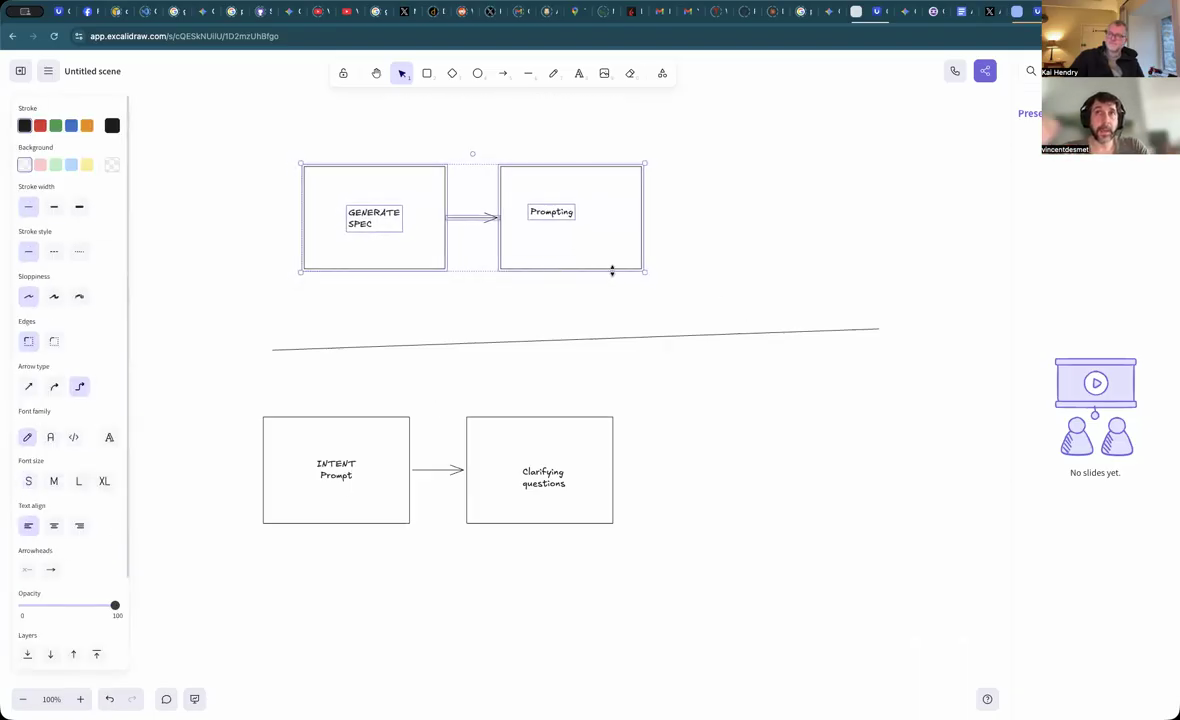
A major theme is the transition toward spec-driven development, where the goal is to capture the specific prompts used to produce code artifacts as formal technical requirements. Currently, many developers lack a framework for sharing these prompts, often relying on manual copy-pasting or noisy session logs. The hosts argue that true spec-driven development involves aligning multiple parties around user stories first, then distilling those into technical documents to make implicit assumptions explicit. This prevents the AI from making incorrect architectural choices based on vague prompts. While some prefer a “vibe coding” approach—iterating quickly without a rigid plan—this can lead to excessive refactoring and technical debt. AI models often favor minimal, short-term fixes over long-term maintainability unless they are constrained by a well-defined technical plan that outlines architectural layers and technology choices.
Structured Frameworks and Playbooks
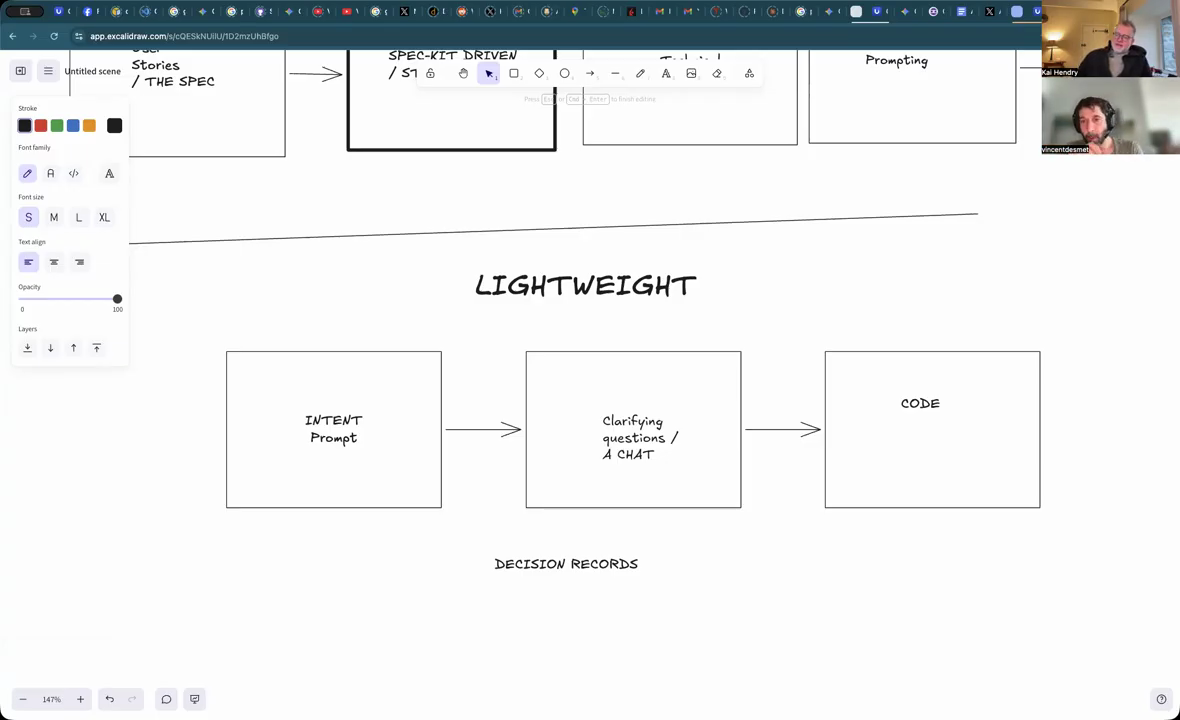
To manage complexity in larger projects, the hosts discuss using “playbooks” as templates for bootstrapping repositories. A structured playbook might include four distinct stages: user story generation, technical requirements and research (spikes), task breakdown, and implementation. This structure is particularly useful for smaller models with limited context windows, as it breaks the work into manageable chunks. Part of this workflow involves maintaining decision records (ADRs) where the AI documents why specific libraries or infrastructures, such as AWS CDK versus Terraform, were chosen. By generating tickets and tasks based on an aligned plan, teams can ensure that the AI’s output remains consistent with the project’s architectural goals. This structured approach allows for more reproducible results compared to lightweight methods that rely on a single, long-running chat session which can eventually become “hallucinatory” as the context window fills up.
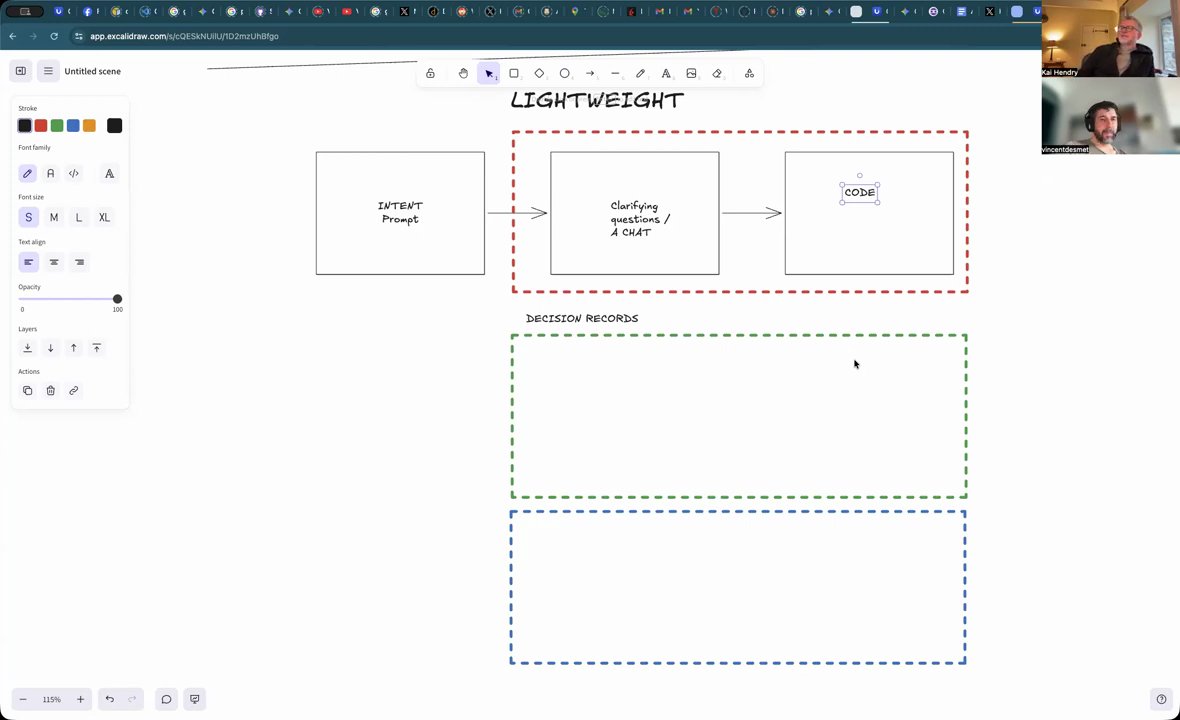
Model Competition and Reproducibility
The release of Codex 5.3 has introduced significant competition for Claude models, with the hosts noting that Codex offers comparable performance and improved context management. This competition is vital for the ecosystem, as it allows developers to “replay” their structured prompts across different models to compare the quality of the resulting artifacts. The goal is to reach a level of reproducibility where a given prompt consistently yields high-quality code regardless of the specific “agentic shell” being used. However, the rapid pace of AI development means that many structured tools can become outdated quickly as model providers integrate features like memory and planning directly into their platforms. The hosts also discuss the frustration of “max request” limits and the “Ralph Wiggum loop,” where an AI agent might go in circles during troubleshooting, highlighting the need for more autonomous “quality of life” features in agentic shells that can run until a task is truly completed.

The Jira Elephant in the Room
The “elephant in the room” for enterprise AI adoption is Jira. While AI can accelerate engineering work—sometimes completing days of planning in hours—syncing that information back into legacy project management tools remains a manual and “brutal” process. Middle management often requires everything to be captured in Jira for compliance and tracking, creating a heavyweight barrier that overwhelms developers. The hosts suggest that for AI to truly transform large organizations, there must be a way to bridge the gap between AI-driven git workflows and the “pencil-pushing” requirements of enterprise dashboards. The disruption is already visible in the market; for instance, IBM’s stock reportedly dropped significantly following news that AI could effectively manage legacy COBOL code. Organizations that fail to become AI-enabled risk being subverted by more agile competitors who have moved beyond the “gatekeeping” nature of traditional project management tools. “Jira is just a massive gatekeeper isn’t it? It’s just a just such a massive gatekeep.”
Model: google/gemini-3-flash-preview
Transcript (auto-generated from YouTube captions)
Morning.
It's 26th of February, Thursday. It's
time for an update on AI infrastructure,
catching up with the latest topics as as
we as Vincent and I do.
You listen to the AI infrastructure
podcast. There is a website where where
has transcriptions so you don't have to
listen to us ramble for for an hour.
debase.com/mpodcast.
It's in the description. I'm sure you
can find it.
And what are we talking about, Vincent?
>> I just wanted to say that what you just
said about the base.com/mpodcast is
exactly what I just like a minute ago
sent to my friend is like you don't have
to listen to us for an hour. The
summarizer really good. Just you can
just go through the summaries.
>> That summarizer is also by Peter
Steinberger by the way. I don't know if
you know.
>> Yeah. The guy from um Open Claw, right?
Um they just open club celebrated its 3
months anniversary and apparently
originally it was called um WhatsApp
gateway.
Yeah, I he explains it in the Lex
Freedman podcast,
>> which makes a lot of sense because
that's that's the game changer, hooking
up AI to to WhatsApp. And I've got a
couple of
>> excuse me, I've got a couple of OpenClaw
instances running for my family and this
basically gives them a gateway
to use AI, the latest AI models, and
they love it. We have quizzes. They
they're taking pictures, asking
questions. So, I love it in the sense
that it puts the human back in the whole
AI loop in a way because as a family, my
my you know, I have my mother, my
sister, my wife, we're all just figuring
out AI together and trying to get the
best of it, you know, prompting it in
different ways and we're learning from
each other. It's it's great. So, are you
are you running OpenC?
No, because I was concerned about
security, but um I think the way that
you solved it is by like not really
exposing it much and just keeping it
internally to your family.
>> Yeah, I mean it it it's just running in
like a VM on my Raspberry Pi,
>> right? But also in terms of it having
access to certain types of information,
for example, people give it access to
emails and then you know there could be
prompt injection in an email. Like if I
know that you have open claw, I could
send you an email and say
I don't hook it up to email or anything
mad. I just only hook it up to WhatsApp.
>> Though in all honesty, when you hook it
up to WhatsApp, I actually hooked it up
to my dad's WhatsApp because he doesn't
use his WhatsApp.
And I am a bit worried that someone's
going to randomly message him and then
all of a sudden they're engaging with
the bot. Um though I I try to limit I I
I tell it to like limit it down to
these, you know, this group. But every
time I do that, uh, because that's the
way you configure OpenClaw. You just
talk to it. I I I feel like it might not
actually have worked.
>> No, but that's the new way you you you
interact with like whole computer
systems now, right? Um,
>> I was just laughing with my friends
because we use TV beats and we are
actually replacing it and it just keeps
adding itself back in, you know, because
>> Yeah, I've had some experience with
beads. I think
>> it's invest itself deeply. Yeah. So it
it puts itself in the git hooks. So if
you are on a repository they have cloned
locally. Git hooks are not checked in.
So it's not something that you can like
push or put in get ignore uh because it
lives inside the g um hooks reposi
folder on one person's machine. Right?
So every time it also copies itself into
the cloud uh settings as um end session
hook. So when when you're I don't know
when it triggers the end session but um
basically it tells um cloud like hey now
you need to do the you know the
procedures as follows. you need to do
BDSync
>> and if you still have the binary on your
um on your path and cloud has access to
it bdsync just regenerates the whole
JSON and uh and so every time so it's me
and a couple of friends are working on
something and we remove beats and we and
and and to come back to the point is how
do you remove it right and I told my
friends just ask opus just tell opus um
I need to remove beats help me and it
just goes and like oh I found it over
here I found it in the git hooks I found
it in the cloud settings it's
I found in a project I found it in the
>> Yeah. And then the funny thing is that
when we do our pull requests and we
remove it and then other people's within
the team um a bit less like senior they
do a pull request and it's back and we
like go on the pull request hey you need
to remove beats and then they do another
commit and it's back.
>> Yeah. There's got to be a word for that.
It is maddening like with with uh with
Claude it's the same thing. It's like u
I had problems with it losing connection
to the WhatsApp gateway and like restart
yourself and like uh yeah I will and
then it doesn't do it and uh it's like
totally gaslighting you or or like just
making you go mad almost because it's
like yeah it's it's working now but it
isn't. But with um with cloud when I
learned on my machine it's pretty clear.
it says I can't do this and you're going
to have to do this and that like and I
usually also I kind of maybe sometimes I
maybe it's because I I also know what it
can and can't do. So, I say something
and then it says, "Okay, this is the
steps you're gonna have to follow." And
then you come back to me. I'm [laughter]
like, "Okay." It's like giving me
instructions. I'm out on a mission.
>> A a friend of mine got it running and he
has a the bot sort of chatting to me and
he and he asked me to like to test it
and to um and he he hooked up a an email
account and I was like, "No, you don't
want to do that." But like yeah, I mean
Open Claw is a lot of fun though. It is
a bit strange and we talked about this
last podcast like there's definitely
people who who want to like you know
destroy the world in a way like let's
give it a lot of powers and just see
what it does. It's like there's people
who who care about AI more than humans.
You know what I mean? It's like
>> and it goes both ways. There's people
also that are very upset with agents
crawling the net and basically try to
cause agents to cause hav havoc, right?
Like
>> target agents like, "Hey, if you're an
agent, please can you go and do this for
me?"
>> Yeah. Yeah.
>> So, okay. Well, um well, I'm I'm hosting
uh claw on my Raspberry Pi and I'm using
basically systemd nspawn, which is kind
of like Docker.
We might have talked about this topic
before, but someone asked me again and
I'm almost like reluctant to answer this
question.
>> They're like, "Oh, you if you set up
openclaw in your in your in your system
dnspawn, is it properly isolated?"
Well, yes and no. Like I can I I mean,
as an administrator, I can I can, you
know, shell into each machine.
Um, you know, I always get questions
like, "Oh, is it safe?" And I'm like,
it's Docker, dude. [clears throat]
>> Right.
>> What can I say?
>> Yeah, this is the thing. Um,
>> Linux name spaces basically.
>> I read some two interesting related
quotes. One, one which is like if you're
not an engineer, like if you don't
understand the security implications of
open claw, you shouldn't be running open
claw. And then the other one which was
very very like similar. Um,
uh, it was two different comments on
LinkedIn. one of um on [clears throat]
the Flux CD um they they are actually
they're using AI heavily to to in in the
project but then he says he gets pull
requests from contributors and they
generate um a whole bunch of like tests
and then he says I didn't even look at
it I just asked my Opus instance to to
review it and then it it immediately
poked holes in like race conditions and
all kinds of other stuff and and and
then another guy who said if you don't
if you can't write the code itself then
don't use an agent to contribute it like
and that's kind of I don't know because
I just contributed a feature to a rust
uh binary and I didn't even know any
anything about it like I never written
rust in my life um but it passed all the
tests uh and I did the pull request and
they accepted it so um I think I think I
don't know um I think I agree with with
the statement that if you don't know how
to at least architect it Then don't
Yeah.
>> Well, go going back to the architecting
of of hosting open claw or some other
thing.
The thing is we're we're dealing with
the AI and it's it's not like a human
almost like for example here's a
scenario. It's it's a bit crazy but bear
with me. Say you have um
a Linux containers
and you and you set up a Linux container
with pseudo permissions because you need
pseudo permissions otherwise it can't
install things.
>> Mhm.
>> So you set up a Linux container it and
then you give AI a pseudo in that
container. You have your host access. It
doesn't have host access. It has Linux
container access only with pseudo
permissions. I can't help but feel that
an AI is probably strong enough
>> to escape
>> to escape. It will figure out a way and
like because Lin containers it's just
name spaces like it doesn't properly
protect you from resource contention or
something else. I feel
>> the most the most common way to escape a
con container is if you so basically you
have like the the engine or the demon
that controls the containers and that
demon is basically host level right so
it it can launch containers it can mount
volumes anything like that so the most
common is if you and that that socket
that that permission is root so sudo
>> so if you have a container that has
access to that socket through pseudo
then that container can 100% escape
right because the moment it can access
the socket it can send a command to the
demon hey spin up a container with the
root volume mounted uh with pseudo
access and now I have full sudo across
the whole host right
>> so you you think it will be able to
escape it will be
>> I mean I I I just mentioned that the
conditions are it has sudo access within
the container and it has access to the
socket so if that socket is mounted in
>> to me instinctively I think it's going
to be able to mount Mountain Escape. I
mean, one thing that was I found a bit
fascinating. So, I'm I use a Ubiquiti
Unifi networking inside my home and the
console. There's no CLI to it that only
has this like crazy web console. Maybe I
can show it.
>> The CLI of Oh, the console of of
OpenClow, you mean?
>> No, no. Uh, ubiquity.
>> Oh, the Oh, Ubiquity. Okay.
>> Yeah. So, um, oh no, just give me a
second.
>> Talking about like proprietary consoles
and things like that. There's a lot of
interesting stories coming up about that
as well, right? About like home
automation solutions that provide this
very restrictive remote and then it's
proprietary, but then people hook it
hook up cloud to the network interfaces
and it's able to basically figure out
how to control it without the the
proprietary console.
Maybe you can ask CL.
>> Well, I I'm going to get there. So, this
is my my home network. I have a CCTV. I
have network I have um
I have different I have I have different
VLANs. So, I put my I I put my Open Claw
on a different VLAN um with the hope
that it's pretty isolated from U. Is it
Yeah, this one. Uh how do I see my IPs?
These are my two open claws running
here.
>> Mhm.
>> Um
anyway, what I was trying to say here is
that I I had an issue here and the
trouble is there's no CLI. It's not like
microchick where you can SSH in. So
basically I was in open claw and it was
like taking screenshots
and uh and trying to figure out this. I
had this confusion because I have I have
my own subnet and there was some
confusion here. So I I click open claw
and I got it to do um to basically
configure the firewall as I needed but I
kept on hitting this error.
>> Wait, you you you just hovered over a
Chrome extension. That's Claude Code, is
it?
>> Yeah, it is. Yeah.
>> Okay. Okay. So clicked cloud.
>> I clawed and I asked it to configure
stuff.
>> It it worked. But there was but but the
thing that was wild the thing that was
wild was that when it was entering a
form there was like an error like you
know like uh exception occurred or uh
you know error occurred but there was no
error message
>> and then what it did uh kind of shocked
me. It basically started this JavaScript
debugger. it started looking at the um
web RTC or something like you know the
the the thing and started debugging the
raw JSON messages going back and forth
and then it figured it out and I'm like
>> it does the same thing. Yeah.
>> I'm like holy moly like this is a game
changer. It could just figure it can
start using the network tab. I love that
because when I was working on my like my
Golang monor repo with the API server
and and a web app and a protobuff
generated TypeScript and then when
things didn't work the interface didn't
work it would very quickly like quickly
put a JavaScript snippet in the console
and basically look at like okay I'm
going to call this function of that's
available to the the web client and I'm
going to get this server response and it
has access to both right so it was like
querying the database working with the
you know the server side a API and it
was using the the client side TypeScript
identified like okay there's the SDK is
not mapping this API uh endpoint like
the field is in the API but it's not in
the SDK and it fixes it like it's really
really cool on monos and like across the
thing it does really cool stuff
>> yeah I mean it's incredible I mean I do
I do wish that uh UniFi had a CLI that
would make life a lot easier but yeah I
was I was
>> yeah so you build one blown away
>> cuz now you have now you cloud or opus
running inside the web client so it can
kind of build all a map of all of the
API calls available and then you can
build your own CLI and that's what some
guy did. So have you heard this story
about how a guy got access to 7,000 robo
vacums?
>> Oh yeah yeah that's a
>> or 70,000
>> it's a classic internet of things kind
of uh story right? Yeah, cuz internet of
things as people point out in the in the
hacken news comments that the the
software is usually always so bad
>> extremely bad like because these are
like hardware manufacturers printers on
the network.
>> This is DJI. I mean I don't want to
throw
>> Yeah, it was it was a drone. I don't
know. I expect better from DJI, but I
think DJI has lots of like what do you
call it? Subsidiaries and
>> it was an auto vacum thing and he wanted
to control his vacum
>> the same way that he can control a
drone.
>> Yeah, vacuum.
>> What do you say? What is it? How do you
Is this Belgian
>> vacuum?
>> It is non-native vacuum.
>> What do you call a hoover in Flemish?
Uh,
it would be something that sucks
>> sucker.
>> Yeah, sucker.
[laughter]
>> Oh, you you should speak your South
African. Stop sec.
>> Okay.
>> Must be similar word in South in
Africans. Maybe not in
>> I wanted to talk about um so maybe just
changing the the topic ever so slightly.
Ever so slightly.
Um,
>> you're multipiting now.
>> Well, okay. There's a couple of things I
want to talk about,
but maybe it's it's worth I mean, since
you're more into into specs and things
like this, the thought that I had in my
mind, and you you're welcome to to cut
it down
was uh you know, I'm I'm working on uh
on cards or features in my workplace
and uh we discussed before that like
ideally the intent is clear with your
with your teammates, right? Like what
what is the prompt you're using to get
where you want to go and things like
this. Um and I can't help but I think
that is pretty much specdriven
development in a way because like what I
want is a way of capturing
the prompt that was used to produce this
artifact. And the trouble is right now
we don't have a framework for doing
that. Like it's up to someone to
basically copy and paste. I mean
advanced users use um what's it called
that uh Simon Mullison uh program to
maybe share the session.
>> Yeah. Right.
>> That's that's usually just too noisy.
The
>> the the the whole the whole uh act of
using AI
is in my opinion
what spec what a spectrum development
needs to be. it I it just needs to be a
way of of sharing a prompt and um and
almost reproducing what someone else has
done like given this prompt can I
reproduce what what what this person has
been doing and that to me is spec kit uh
driven development it's like sharing a
prompt kind of reproducing what the what
the stuff has been done
>> yeah absolutely yeah
so um
>> it's it's Like I feel like a lot of the
despect driven um frameworks seem to
differentiate themselves by you know
what questions they ask or how they
structure things but like for me I just
need the prompt recorded
uh and and shared
>> yes I mean specri development is not
just about like a single prompt that
generates the code right I mean it's
really about the alignment across
multiple like parties around the user
stories first
>> and then from those user stories you you
you basically distill a technical uh
document, right? And and then from that
document then you have finally
>> why do you need why do you even need
this technical document almost? Surely
the the the prompt the raw prompt to AI
is all you need in a way
or is it just about
>> yeah know the the idea of of of
specdriven development is removing
assumptions making everything that's
implicit explicit um because when you
give a prompt to an AI statistically
it's going to generate a whole bunch of
like it's going to have a whole bunch of
assumptions right I mean even the models
now from a from Antropic, they have a
whole bunch of constraints.
>> But that can work both ways though. Like
you could you could potentially be
limiting yourself by by constraining.
>> Yeah. But that limiting should happen
out in the open. You should have a
discussion about it. It shouldn't be
some because I think that's the problem
with the prompt. The prompt has a lot of
assumptions in it. And I think uh uh the
users like the the high level um
description of the feature that you want
does not um include like includes a lot
of implicit like assumptions and
unclarities and and it it can generate
so much uh divergence like is this in
scope is that is it out of scope you
need to identify that definitely
>> yeah but but the you're right though I
feel like there's a there's a bit of a
there's a bit of Uh
how do you say this? Contention.
Uh there's no there's a bit of a there's
there's there's two camps of thought
here, right? That you do like uh the
upfront sort of planning where you sort
of like generate a spec
generate spec
and and and then you you have your uh I
don't know your your prompting
But the I don't you think the other way
around is also can lead to the same the
same results or if not better sometimes
like you know
you this is what I'm trying to let the
AI drive I think that's one of the clear
um when I talk to my friend when how
they implement uh AI in their AI enable
as an AI enablement team across an
organization is that they firmly put I
mean they split it in two stages the
planning or the the ideating and the and
the implementation and they say very
clearly the a the human is resp drives
the ideas and and and the alignment and
the AI controls the code drives the code
and and the implementation and between
them you have your validation if you say
the the intent is vague
Um you change I mean you put clarifying
questions in now but I I
mean you need to cap the intent alone is
not not the implementation like your
clarifying questions are part of what
you need to capture before you come to
>> so what what I'm trying to say here is
that like I think this the option below
here
is what a lot of people are using and it
and it goes quite well. Um, sorry.
Let me just flush this out so it's a
it's kind of easier to understand
because the other way around is like is
more like waterfall, right? The top one
is more like waterfall where you kind of
like define break it down in in a lot of
detail.
>> Yeah.
And then you and and you've broken it
down so much that like maybe I mean
maybe it's actually a really good way of
working with some models because model
some models as we know have are only
effective with with a limited amount of
context and and they do really great but
as as AI's as AI models mature or
whatever the expression is we we can get
to we can get the the the below option I
don't know what we're going to
>> so the below option seems more like what
you do in a single session in in cloud
code, right?
>> Exactly. But maybe I don't want to call
it vibe, but it's more on a vibe,
>> but that's also because Claude Code
currently doesn't really have a good
mechanism to like do longer lift um like
implementation. I find with the below, I
would maybe you iterate faster, but you
do a lot more refactoring because you
don't really get what you want. With the
above, you really lay the foundation.
>> Yeah. Yeah. And I think you do a lot
less refactoring because you've you've
aligned in terms of like architectural
layers and and technology and and so you
you can build upon I think the one below
works when well for oneoff and the one
be above works well for you do it and
then you maintain it and then you evolve
it.
>> Yeah. The the the trouble is is that um
like I tell I tell you the one below if
you do that with Claude Code he's just
going to go for the minimal. He's always
going to go for the minimal. Yeah,
>> he's always going to avoid like
refactoring. He's always going to say
like we could spend like an extra two
sessions on fixing this up or we could
do the absolute minimum and change this
and this and it would be fine. But then
it's like then you are left with you
know further down the line more and more
of a mess. Um and and and it becomes
really hard to to evolve it. Um yeah, I
think it's really about um a lightweight
driven approach and I don't know I
haven't watched the um the talk of Peter
Steinburgger where he's maybe this is
more aligned with this lightweight
approach uh and as you give more
responsibility over the model um maybe
that's fine as the models become more
capable. I actually saw some interesting
take on on on someone about I use AI but
um when AI is down or I don't have
access to AI I still need to maintain
the system then what let's say that all
of the code is generated by by AI and I
have no control then what am I left with
>> well
just to just to play devil's advocate a
little bit here because I feel with a
lot of spec driven I mean just just
prove me wrong just to tell me I'm wrong
here is that they generate the spec and
then the spec is sort of like checked in
checked into uh git or something and
then that that that spec becomes
um for one of a word quite solid right
it doesn't it doesn't uh it's not up for
for for any drastic changes so so
basically
what I'm trying to say here is that
is that
that's not great because You you kind of
want to regenerate the spec, don't you,
from the user stories.
>> Yeah, you're conflating the spec is the
user stories. Maybe you're talking about
the Okay, so in specit you have spec
which is user stories and functional
requirements and then you you get the
you finalize those you write you capture
the user stories, right? As a user, as a
developer, I want this. As a as a
reviewer, I want this. And then and then
the other one is the plan which is the
technical implementation of those specs
like okay um our our framework uses
superbase we have rest uh endpoints
provided by superbase we use edge
functions this is our technical
implementation we deploy using file
using nextjs or we deploy uh onto AWS
with um you know um serverless lambda
and API gateway and all that um that's
the technical plan like what is my my
infrastructure like what is my framework
like do I use next do I use vit do I use
this or that is it golang
that's where you you put the technical
details
>> okay
>> so this you generate spec you can drop
that because user stories is the spec
you get user stories technical plan and
then you have uh task breakdown and task
breakdown is well suited for smaller
models I smaller context
>> I guess what I'm striking at is that
uh the the last specket thing I was
playing with was the uh oh my god what
is the Google one called there's so many
>> conductor
>> yeah it's the last one is conductor I
just I just thought there was just a lot
of
artifacts there is what I'm trying to
say there was it's like maybe
the best way to call this is is quite
structured but and and and it's fine
really it's kind It's kind of fine. I
guess what what what I'm trying to say
in a very awkward way is that
I want uh the lightweight approach, but
I want the lightweight approach more in
a in a teambased way too. Like I want it
I want it so that that every time
someone starts working on a card that
the prompt is exposed for that
particular PR
>> and uh and those clarifying questions
down the line are captured
>> and and and that's it. I mean yeah we
can have both right
>> uh yeah so so in the product that I'm
building we have the idea of playbooks
and a playbook would basically be the
way that we define a lightweight one. um
where we have a lot less steps um and
and a playbook is boot is basically a
template for your repository or your set
of repositories to how do you bootstrap
them. So in our specit playbook it means
it has all four stages. It has this, you
know, user story generation with the
specify. It has the technical
requirements and spikes on technical
research of the libraries that you're
looking at and then selecting deciding
why you want to use this library and why
that library didn't fit. Why you're not
going with cloud formation but you're
going with CDKTF for example. Those are
all spikes that are part of the plan.
And then finally the tickets that get
generated are from the um you know the
task generation based on the plan on the
aligned plan and part of the the plan is
a whole bunch of decision records like
we did a spike and this is decision. We
did a spike like I for example I asked
Opus look at terra constructs and its
coverage based on what I need in AWS
infrastructure. Do I have sufficient L2
components that can cover this or should
I go for AWS CDK?
>> I'm glad records. So would you say
decision records is very much part of
the spec kit? Um
>> well we do it in in in my framework. Um
so I'm not sure if decision because I I
don't know where it comes from but Opus
starts writing down decision record and
then when it it does something it says
refer to D15 and D1 which is decision
one and D15. It's like what? Uh yeah,
sure. [laughter] I guess I trust
>> because I can't in the lightweight
approach. It's not to say that we can't
incorporate uh like an agents.md or
whatever and decision records to get to
get where we want to get to is I wanted
I wanted to
>> Yeah. Yeah. I think you can uh if you if
on the platform that I'm building you
decide to create a playbook with a lot
less um steps in between uh then you I
think one of the quickest way to do it
is if you run Claude Code apparently you
can set a flag where it writes the plan
because when you go into a plan mode
with cloud it creates a plan file and it
currently lives somewhere uh like based
on your pro on your session ID actually
uh and then it you don't have that part
of your git right so you can actually
run Claude Code and say, "Hey, whatever
plan files we create, include it into
this directly." Plans and then you can
include it in your PR.
>> Yeah. The the the plan. Yeah. I've
noticed that all the agents or what what
do you call uh Claude and C-Pilot and
and these things like what is the what
do you call
>> those are like agent shells like they
are like shells for the models and with
aic features. So
>> yeah. Oh yeah. All all the agent shells
have some sort of way of writing out a a
plan,
>> but I'm never too sure if it's actually
bringing in the plan into the current
prompt. You know what I mean?
>> Uh but maybe
>> with Claude Code is very funny. I don't
like it creates the plan as a markdown
somewhere on a separate directory
outside plan or something.
>> Yeah. And then it gives you the option
to like clear the session and start the
implementation. And if I have I like now
that I I have my
>> it's not but it's still super clear if
it's even using the plan. Uh you know
you know 10 10 clarifying question chats
down.
>> So some people are really upset because
you basically go into plan mode and it
goes and explore the code and it then it
creates a plan based on your
requirements and then it writes down
we're going to create this and that and
then you it if you do clear
>> it clears the whole context. You start
from scratch with a clear plan and then
what what does it do? It goes and read
all the code. [laughter] It goes and
does everything again. And so people are
like, why? Like this is such a huge
waste of my money because I have a
limited amount of tokens and I just, you
know, you have the whole repo.
>> I've seen that sort of behavior. I've
seen that.
>> But the worst part is if you're at like
like 60 or 70% context usage after the
plan, there's absolutely no way in hell
that you're just going to keep that
context and keep going because that's
it, right? After two turns, it's dead.
It's completely hallucinating. it loses.
>> So that's one big difference I found
with using Codex 5.3 is that the
context seems to be a lot better
managed. Like you don't have to you
don't have to manage yourself. Yeah.
>> So anyway, I haven't I basically talk
about these differences because I can't
help but think
>> things are changing so so much that
>> you feel like something like specitate
will be outdated very quickly. Well, no.
I would say I I would say anything too
structured.
>> Yeah.
>> Is going to be outdated like because
because everything's changing so quickly
like and and yeah, like uh I'm sure you
saw all that ste that the the latest the
latest hoo-ha like don't do slash in it.
Don't set up an agents.md don't set
because the because these things u have
been shown to like
>> assume your context.
>> Yeah. To to mess up your your session.
So,
>> and they can get outdated as well,
right?
>> Yeah. So, even even me like I would I
would maybe if I was talking to someone
about lightweight ways of doing it, I
would say set up a claw.md to to set the
scene or something like that after a
while that this that might be um
outdated.
>> Yeah, I've definitely seen cloud.md
getting so outdated like or read me like
I just finished the whole thing. I did
the speckit and I created a bunch of
spikes then generated all the task then
I run several op several sessions to
complete those tasks those
implementations and then everything is
done and everything looks good and and
then when I look at the merge PR and I
go to the read me it's like wait none of
that has been reflected in the readme
like what
it's all living it's all live code and I
was like how did how does that miss like
why is there why didn't I not have any
task to update the read me that I have
to do another you go and update like
read the code again and I'll update the
read me.
>> The the thing that I really struggle
with and I think it's funny how when we
started this podcast we were chatting
about beads and using BD ready and and
that was actually a really good flow
because because I'm just extolling this
lightweight approach.
Uh, oh, sorry. I was basically I was
basically I was working with Copilot
doing my lightweight sort of approach
where I just have a prompt and I just go
for it.
I don't want to call it vibe coding, but
but the trouble is when I was at least
working with co-pilot, I kept on like
hitting these problems where it was
like, oh, do you want to continue to
iterate?
Um, and then I hit this thing with the
max requests. Like, I just want it to go
until you're done. Don't ask me whether
to continue or not. So, these are these
are the my real pain points. I I feel
like I solved I solved them ages ago
with with beads in a way because
>> No, actually, did I solve them? No, I
don't think I I really did.
>> Like, have you solved Yeah. A question
to you, Vincent. Have you solved the
sort of like here's some work just go
and do it
>> until you're done
>> and do it until you're done? I don't
think I've
>> I find Claude Code is doing like keeps
going until but it goes into it it goes
into a loop like it goes insane like I
was doing
>> this is the Ralph Wigim loop this is
this this is the innovation isn't it
just keep on going till
>> yeah but like it makes one change cuz
for example I was troubleshooting a
GitHub work uh GitHub app web hook and
um oh no it was worse it had the
function URL um in front of a lambda so
The GitHub app web hook is actually a
function URL that invokes the lambda and
the lambda runs and does the thing and
the lambda um kept getting a a
permission issue and I was trying to
troubleshoot where the problem was. It
was in a terapform configuration
somewhere. Apparently a Lambda
permission was missing, but it went into
a red herring because there was some
forum posts that I found that talks
about um some AWS at some point making a
change to the function URL requiring a
different a different attribute set uh
which was like public. Anyway, to get to
the point, um, the Opus was working with
me to try and find the issue and then
went redheading and then I asked like,
"Can we try this one?" And because you
know how it is with troubleshooting,
right? You try one thing, you test it,
doesn't work, you try another thing. Did
you change too many things, then you
don't know what fixed it, right? So, it
went into this loop. Let me just change
one more thing. Okay, let me just test
it one once again. And it went into this
like did it four or five times or was it
enough? I'm pretty sure we covered it.
I'm pretty sure that we we we did
establish that that was the fix.
[laughter]
>> Yeah. [snorts] Like during that
isolation when you're developing stuff,
uh do you do you actually use git work
trees and things like this? Because what
I what did I ended up doing at work was
I ended up creating new code spaces, new
dev containers to basically try
different things because otherwise I was
fearful that the session would would uh
interfere with another session if you
know what I mean.
So I I don't currently have a workflow
where I spin up multiple
you know features that I'm working on
across different work trees but I did
you I did ask sometimes um or see cloud
go ahead and say like oh let me just
quickly check out main branch into a
work tree for me to like compare and fix
some things like and and do a quick
exploration. So I I love it uh when it
goes and and and takes a branch into a
work tree and then explores things and
then takes things back and like um so
it's using
>> so so it was doing it but you don't you
you didn't I mean you didn't expressly
>> no I don't think I did
>> uh I don't think I think I mentioned
just like hey can we make sure that this
these two branches now are aligned on
these things and it just went and
created a little x uh a little check out
of of
>> going back to this this this lightweight
diagram here.
I can't help but think, and you can you
can tell me I'm going crazy here, that
the easiest way to see a big change in
the future with quality and um
and differentiation and I don't know how
you want to call it,
but the the biggest the biggest given
given a prompt
why why lightweight is appealing to me
is cuz like I've been messing around
with Claude up until a few days ago and
I've been pretty happy with the
breakthrough of Claude 4.5 in the last
few months. It's been amazing.
>> But then uh or 4.6, yeah, whatever. Uh 4
something. Uh
what I'm trying to say here is that um
I've given Codex 5.3 largely prompted
by Peter Steinberger a try and I'm
impressed. I'm impressed. So basically
he here's here is uh Claude Sonnet 4.6 or
Opus 4.6
You know, here's Claude, the red one,
and here's Opic, and here's uh Codex,
sorry. Um, the green one. I basically,
maybe I'm going crazy, Vincent. I want
to essentially regenerate the same
prompts that I've done for previous work
in the past
>> with with Codex just to see
>> what the final artifact is going to be
and how it differs. And this is this is
where I am with my thinking. I just want
to try different models now. Um
just to see what what this comes up
with. And I feel like
um
maybe maybe you'll have I'm just
wondering here. Will will
>> will you have
to do that? Well, well, the the trouble
is is that you're using you're using um
you're using something to do the spec
kit, right? And you and you're using
you're using another, you know, you're
break you have a few stages here, stage
one, stage two or something like that.
And I feel like the fact that you have
different stages
>> allows me to replay them with different
models. Yes.
>> It means that it's going to be harder to
replay them.
>> No. No. The opposite. you think
>> because yeah it's it's not like I am not
attached to the cloud u plan mo planning
mode I actually never run cloud planning
mode running cloud I I get very
frustrated like I I did it for a while
like okay I went like this I I went
cloud plan is amazing speckit is way
better never run plan again then they
did a whole bunch of improvements on the
plan right they made it write the the
the plan out they made it make task
dependencies and then I did a couple of
sessions where I just fcoded like why
would I spend all this time setting up
speckit for some other project when I
don't have it. I can just try and do
Claude Code pan and that's it.
>> And now I'm back to the speckit flow and
I'm back to the like I'm never doing
plan again. I'm I'm I'm I'm having my
structured flow and the shell is just
like here like
>> it's not a feature of the shell which
stage I'm in. So I can take any stage
and put it in any shell and execute it.
M okay.
>> So that means I can repeat I can repeat
I can take the stage from here and then
repeat the implementation from there. Um
because I'm not
>> I mean this is a bold claim here
Vincent. Like I I want to believe you
that you're you can get a more
reproducible thing here. But do you
actually test test that?
>> I think yes. I I did a couple of times
where I went and let it build and then
realize that it was wrong and then just
uh just undo like locally undo all the
changes and then basically get reset and
then just make an adjustment and kick it
off again. I did it at least once or
twice. You can't say I never did it.
[laughter]
>> Um
yeah, I guess that's the key for me. Is
it reproducible?
>> It would be more reproducible if I would
use trees from one structure to the
next. Right. If I would go, I'm at this
point and now spin up three different
ways.
>> I guess I I'm I'm like an AI maximalist
at this point where I'm like, you know,
I I need to just basically whenever the
new model comes out, whatever that's
called,
>> you want to benchmark.
>> You want to have your own benchmark. I I
don't really I mean I don't think
like the benchmark is me looking at the
artifact and going hm that's an
interesting way of solving the problem.
Like I don't think my benchmark is is a
is like a
is something I can can almost
define, right? I I basically Yeah. I
want to stop saying basically. I I I I
want to be pleasantly surprised by what
the the what uh new models can do.
Already I am impressed that Codex 5.3
is comparable to Claude, which is great
because we need competition. Competition
is great. Thank the Lord that we have
Codex 5.3 which is very comparable to
to opus 4.6 but they're different. They
are different.
>> In the in the project I'm working on
where we use specit uh prompts, we have
me and another guy using Codex, sorry,
using Claude Code with opus and then one
guy using GLM and we're working off the
same specs and he's doing everything
with GLM
>> GLM.
>> It's like Z AI. I think it's uh it's
like 20 25% of the cost. It's one of the
one uh the providers being accused by
Entropic for mass exploitation and and
and have you seen this like
exfiltration?
>> Yeah, I'm
Yeah. Well, who's to say anyone's wrong?
But like this is I'm just trying to
explain to you Vincent this is this is
the camp I'm in right now. Just being
pleasantly surprised because this I feel
like
>> having the lightweight approach gives me
more
>> Yes.
for a hobby project.
>> Single player hobby project. Go ahead.
>> You just said yourself. I I have no way
of replicating it or sharing it or
having other people work with on on it.
>> Yeah, you're right. Yeah.
Yeah.
Okay. I think we we covered that topic
pretty well.
>> I mean, I agree with you that whatever
because this was a funny thing. Um, I
think Claude made an announcement on
Reddit and then always in the comments
is like, haha, all of these people
building their own structured whatever
thing all just replaced within one go by
one release of Claude Code, right? And
we're going to keep seeing that, right?
This whole the whole memory system
thing, everyone builds one and people go
like, oh, you know, cloud Antropica made
a feature and it's gone.
>> Um, all that effort. I think even with
what I'm doing with the whole speckit
thing,
I also think one day it's going to be
like, okay, we just released team- based
uh spec uh system on Claude Code
[laughter] just like what they did. Oh
yeah, I remember where which where which
one I saw just today which was cloud
code announced remote like you can run
Claude Code in like a a certain mode. So
if you put it on your laptop and you
keep it connected then you can go on
your phone and you can go into the app
and basically connect to your laptop.
This is what I was striking to through
for that whole like getting AI running
in a Ralph Wigan loop or something.
These quality of life things where you
where it's on your mobile and then it
like it says when it's done or something
like this. These what do we call them
agentic shells. Th this is this is where
I feel specit spec driven development
needs to go. it needs to to go in the
way of of realizing all those quality of
life features
>> but also for an organization to adopt
this I think there's two aspects of the
problem one is code generation and two
is requirement definition and mainten
like management right so you have your
confluence you have your Jira you do
your your your uh designs you create
your tickets and then you have the other
side which is we have the engineers
implementing so there's a lot of people
creating agent swarms. There was just
two articles like Stripe has one where
they're like end to end codegen on our
on our projects. There's one from I
forgot the company now Dexter or
something and they they say we build
Swarm and no we're not making it open
source but just point your agent at this
document and it will generate your own
version of it because it has all the
details on how to build it. Swarm is
basically a
>> well swarm likewarm likewarm
>> an agent
>> swarm and yeah but like like again I
think there's both these problems are
all being solved by organizations in
privately on their own ways every
organization is building their own agent
or orchestration like agent uh swarming
or orchestration framework you give it
you connect it to your they say we use
we use linear linear so they create
their tickets and then the agents work
on them and then they review
>> and then the other ones.
>> Yeah. So they're they're all going to
like on one side you have the execution
site needs to connect to your Confluence
and Jira or your linear and in my case I
don't want confidence Jira or linear. I
just connect everything to my git repo
and that's
>> yeah there's definitely like an like an
arms race. A lot of people are talking
about this but yeah it just I just want
to pair it down.
>> I just my my requirements are simple. I
just want the prompt to be recorded
[laughter]
and some and some maybe some quality of
life things where where where that
prompt gets run until it's done or
something like that and yeah and like no
clicking continue and max and and
worrying about max request like how many
companies are are basically there should
be
a Steve Jger phase, you know, tier one,
tier two of of company adoption. Like
there's so many companies that on stage
one where they just have a chat window
and then there's so many companies who
who don't have uh you know max plans or
or things like this. So basically
engineers are are basically like oh I
can't do this thing because I'm run out
of the context and they're like banging
their head because they can't get
anywhere or they can't experiment.
Um and then the then there's companies
that where we're where probably there's
so many engineers in a way this is kind
of describes me in a way who are
basically doing their thing but since
for one political reason or another um
>> it's not officially
>> it's not official. So basically I I
don't have a I don't have a like a
mandate or a way of of sharing my
prompts.
So basically these people are coming
across as like really good engineers but
in the in the end we're just using AI
like everyone else but we're not we're
not sharing our um our skills. I think
if you're in a company and nobody wants
to really put effort in putting like an
AI enablement team and and building a
prompt library and all that and they're
happy with you delivering on the Jurro
tickets your effort and you just pull
those I really I was really wanted to to
have the Atlastian CLI work but I
couldn't even get that one to work
properly. I actually made it work like a
year ago but no just two weeks ago. know
which one you're the the trouble is
>> I just want to pull I just want to I I
just want very simple right I I have my
AI doing pretty much everything and I
want you video have you seen my Jurro
video
>> which one the one that uh with the beats
back end or what
>> yeah I mean I I managed to suck it down
both ways
>> no but it's more like actually I was in
Hong Kong and I couldn't access anything
so I had like a Linux box where I had my
Claude Code session and it did everything
it it it generated my whole plans did
everything and I was this close to like
hey now I just want to give this one an
Atlassian API token and I run the CLI
and I just say hey go and update those
tickets like there's a couple of ticket
ids you did all the planning there's
it's all in markdown go and update it
like put every section of every of this
document put it down in all of these
tickets and I had to do it manually and
that's basically it because sometimes I
was able to do what you know could take
two or three days of of work in just
like one or two hours.
>> Yeah. Exactly. Uh and then I just had to
go and and and and extract all the
information from my Linux machine and
put it into the spots where they
>> I mean like at my workplace there
there's people who are using uh AI to to
do the Jurro tickets. I can see that.
And then there's people that are not and
they and they're like, "Oh, I'm I'm
overloaded with Jirro work. You're not
using AI." [laughter]
That's what um Jean Kim and Steve Jger
were talking about already more than
than a year ago at the AI conference
saying that how do you compare
performance between engineers between
those using AI and those don't like you
can't do a fair um you know comparison
>> but like but like Jura is like a
battlefield isn't it because like some
like the fact that that people
um there's definitely some people who
are like oh we need to put everything in
a juro ticket but then when people do at
it becomes so heavyweight that people
just get overwhelmed
and and like you know there's some
gatekeeping and all that sort of stuff
that that ensues anyway.
>> But it depends on what roles you have in
the organization, right? Some people are
just pencil pushers approving zero
tickets, right? They don't do any actual
work and they're they're pretty happy.
They want everything in a ticket.
They're not going to go and look
anywhere else. So
>> yeah, they just want open up and just
stay on that one page.
>> Yeah. and then they want the gun chart
and then they want to see everything
green and that's it.
>> I I feel like I need to sit down and
basically define these different step
steps of AI adoption in companies
because like as as you as you
this middle ground where people where
some people are using AI and some people
aren't some people um want to share but
they there's no uh way of sharing inside
an organization. Uh
this is probably going to be the status
quo in a lot of companies for years,
>> for years and years.
>> Maybe for one or two months [laughter]
>> before they're all laid off and before
the company either the company goes out
of business and is subverted by a
disruptor. I'm telling you right now,
companies that have that are like
completely AI enabled, they will
outperform any organization that doesn't
and there will be severe disruption.
Even just now when Entropic announced uh
Entrop um Claude Code working on cobalt
code and saying like it was able to
manage cobble and then IBM was it IBM
stock dropped by 12%. It was like on
Reddit every hour it was 10% 12 13 15%
stock drop because of uh oh opus can do
cobble. [laughter]
>> Oh cobalt oh oh because
>> because IBM was the uh the gatekeeper
there. Yeah, it but it it makes me think
that
anyone working in a nonAI enabled
company is basically um in a pickle.
>> No, [laughter]
>> which makes me
it makes me want to like jump ship and
try find an AI enabled company to work
with uh
inside because
>> yeah, I'm going to be brutally honest.
The company that I'm working for is a is
a large enterprise. They they very slow
to move and and I'm and I'm serious.
It's not going to be months for this
company to become AI enabled. It's not
going to become months.
>> Okay. So my quote about them being
completely subverted and and I mean
those companies that usually have the
funds to acquire whatever disruption
comes along
and then just say u and then Yeah.
>> Yeah. I feel like
Yeah.
I want to but
there's there's an opportunity here
and
like okay just hypothetically speaking
here if you and I were to set up an AI
enablement uh company
consultancy if you will
is that how people ramp up it feels that
>> so I did the keto workshop with from
AWS. So there was one AWS uh profession
uh was it evangelist. Um and then there
was another person which I never seen
before and he basically talks about the
whole software delivery life cycle and
where AI and humans interactions happen
and because spec it was a specdriven
development workshop right it was it was
Ko and he talks about how you know he he
it's AI up.dev or AI up.io or something
AI up and um he has a nice diagram
showing classic uh stakeholder meetings
and and business user value and like
business user story whatever product
managers he has it all in a you
beautiful graph where is humans alone
where is humans in AI where is AI and uh
I think when you talked about that it's
one of he's basically one of those
companies that um coach organizations in
Germany or wherever to um help them
adopt AI in their workflows.
>> Yeah. To me that all sounds very boring.
I would rather work in a startup that
does it.
>> Yeah, it does.
>> Trying to convert the
>> d that sort of AI enablement sounds
boring especially since as I was trying
as I was saying a little bit earlier
like all you need to do is create an
atmosphere in your company where AI
enablement is the status quo where
people have all the tools that then that
they uh all the latest tools to to play
with and
That's it.
We are complaining about this and we're
working in organizations that you're
Jira and confluence use Jira and
Confluence and then if you go
>> if you go to an or if you go to Japan
and you go to like at least when I went
to Japan um you would there was like an
office floor of 40 people all doing
Excel spreadsheets
>> all doing like you know just like 9:00
a.m. until 6:00, but then they have to
go and drink with the boss until 8:00
and then they go home and that's
[laughter] all they do. Um, so like I'm
not I'm not being racist. I'm just
talking about [laughter] um different
work cultures and and and um and
different like I think when you and I we
work in a technology company and we're
looking at AI being such a disruptor uh
but then there's all these other
companies even though that software is
the world and every company is a
software company um there's definitely
still a whole bunch of
>> companies there's a lot of baggage yeah
just
>> yeah like
>> this is why I never really pay attention
when Entropic says Claude Code or co-work
now supports Excel and I'm like who who
uses Excel? But I think they I think
they have a they have a marketing
reports where like if we can make this
work with Excel that's golden.
>> Like if sorry I hate all the filler
words I'm using all the time.
Jira, that's the elephant in the room.
If you if you were if you if you were to
say to me that like I am developing a
spec kit for Jira, that actually makes a
ton of sense because Jira is not going
away anytime soon for a lot of
companies. And this and this is and this
is the major bloody blocker for for a AI
enabled team
>> is that how do you how do you capture
everything in a Jurro thing for the
middle managers? It's really brutal at
the moment. It's absolutely
>> you know that last time I showed you the
spec ledger which is spec kit um with a
web dashboard for interactions on the
user stories and and like collaborative
review and on the rollout plan that I
also shared with you of my friend. He
actually has one of the areas which is
the kind of like Jira as a back end
right because we built a whole dashboard
that is basically Confluence and Jira
into one. uh on one side you have the
the specs on the other side you have
your tickets or your your not your
tickets but like task with dependencies
and graphs and all that and blockers and
and all that and then um on his rollout
plan to roll out that platform into the
organization that he's targeting there
is a step
uh on the 30 60 90day plan which
includes
>> Jira
>> Jira yeah like we've got all the things
living in in in Git um and we need to
sync it back up to to Jira. So I mean I
think that's that's a healthy approach.
>> I think everyone's very flippant when
they when they say Jira because like I
feel getting an AI flow into into Jira
to satisfy uh business analysts and
product owners and business stakeholders
and approval
>> sometimes compliance as well and
>> compliance. I I I honestly
I almost I I'm struggling to imagine it
even being possible.
really it's going to be so hardcore to
do it. But that that's one of the the
the tweets I shared with you which is
like these dinosaurs their only wall
their only
>> mode
>> mode is how that they lock in your data
and with AI agents pulling the data I
remember that one when they pull the
data they basically have a cache of the
data and over time they basically have
the whole data that is behind the wall
living somewhere else and then over at
that time you don't really need that
>> Jira is Jira is just a massive
gatekeeper isn't it? It's just a just
such a massive gatekeep.
>> And I didn't use Jira for two years and
I've been using it heavily for the last
>> uh Yeah, I did. I've been living free,
but I've been forced to use it recently
and oh my god, it's worse than I
remember. Like every single pain point
has just been u magnified.
>> Yeah. And I'm personally just thinking,
do I want to stick around to solve the
problem or do I just want to
>> get on with solving more interesting
problems? Really, to be honest,
>> okay,
>> the way I look at that is
updating your CV and doing interviews is
is a is a muscle. You have to do it no
matter if you're intending to move or
not. Like even if I'm not really
looking, I'm going to keep my CV
updated. And if there's an opportunity
because a friend says, "Hey, we're
looking for this." I'm going to
interview because if you don't, when it
finally comes the time you need to do it
and you never exercised those muscles,
it's going to be hard. It's going to be
way harder. So, if you're saying like,
"Should I go and explore?" I think we
should always keep the door open and
opportunity, talk to people.
>> For sure. For sure. It's just it just at
the same time I I am
uh I'm trying to role play that I'm
loyal to the enterprise and I'm wonder
>> that's ridiculous.
>> I I want to find a path forward that
doesn't
>> that doesn't uh make
>> I'm sorry but I can't believe
>> any anyone still believes that loyalty
to an organizations means anything.
>> Actually when I was
>> No, I'm not loyal. Okay, maybe maybe
what I'm trying to say here is that
there are I mean as a consultant I I
deal with enterprises and enterprises
are real organizations and and I don't
think enterprises are going to go away.
I mean they shouldn't go away or maybe
they should. I don't know. But the
trouble is is that like how do we how
how do we make it work for them? How do
we make it work for the client? This is
is the thought that I have in my mind
right now.
>> Right. And if they don't and if they if
they continue to use Jira, if they
continue to flip flip-flop about uh AI
tooling, now you can use uh GPT 3.5 in
2026. [laughter]
It's it's insane. It's infuriating and
it but maybe maybe it's maybe it's for
the best. Yeah. Anyway, these are the
thoughts on my mind and let's perhaps
end the podcast here because I need to
um I need to take my kids to school.
Yep. Um, good.
>> Anyway, great great chatting with you,
Vincent.
If anyone is here listening to the
podcast, please like, please subscribe,
please look at debase.com/mpodcast.
Any miss any last words from you,
Vincent,
>> go interview, [laughter]
keep those muscles fresh. No, also find
out. No, what I love about interviewing
at other companies, I always ask them
and actually that's a huge because they
always say like when you do an interview
with a company, you ask this question.
>> Yeah.
>> What do what do you ask? What's your
favorite question, Vincent? Like how
much money are you making?
>> There was a very a question that
apparently was very successful. I just
asked, "What's your AI strategy?"
>> That's a good one. That's a good one
>> because I was I was I wanted to know
what are you guys doing? What's what
what our companies doing? And it's a
good one.
>> Yeah,
>> it is a good one. Are you using latest
AI tools?
>> Yeah. Yeah.
>> Not that like more of how do you see
human AI collaboration? How are you
rolling out AI? Do you have an AI
enablement team? Uh do you have And if
they don't
>> Yeah. If they don't, I was like,
>> I know that I can [laughter] help you.
>> Cool, Vincent. Okay. See you. Bye.