Episode 10: Adopting AI with steveyegge/beads
Download MP3 | Watch on YouTube
https://github.com/steveyegge/beads/discussions/430
Goredo: http://www.goredo.cypherpunks.su/
summarize "https://youtu.be/eSEg3wKBs-8" --timestamps --slides
This technical discussion explores the evolving landscape of AI-driven development, specifically focusing on the Beads (BD) issue tracker and the integration of Large Language Models (LLMs) into daily coding workflows. The speakers examine how local, high-performance tools are replacing sluggish enterprise software and how “agentic” workflows are shifting from simple chat interfaces to structured, multi-step processes. By leveraging tools like Claude and Gemini alongside specialized utilities, developers are finding new ways to manage complexity in large monorepos while maintaining high velocity.
Solving the Jira Latency Problem
The conversation begins with a critique of traditional project management tools, specifically Jira, which is described as being as slow as molasses. To circumvent the latency and friction of web-based enterprise software, the developers discuss a “clever hack” involving Beads (BD), a local issue tracker powered by SQLite. This system allows for a fast, local-first experience that can automatically sync back to Jira, effectively acting as a high-performance cache for task management. By moving the issue-tracking workflow to a local environment, developers can use AI to analyze and organize sprints without the overhead of a browser-based UI. This approach saves hours of manual effort typically spent chasing colleagues for card updates or template compliance. The speakers emphasize that the primary goal is to reduce the friction between having an idea and documenting it as a trackable task. Jura is like molasses. So if I can if I can sync this down to BD and get AI to run over it, I’ve saved myself 3 hours.
Modern Tooling and Ecosystem Shifts
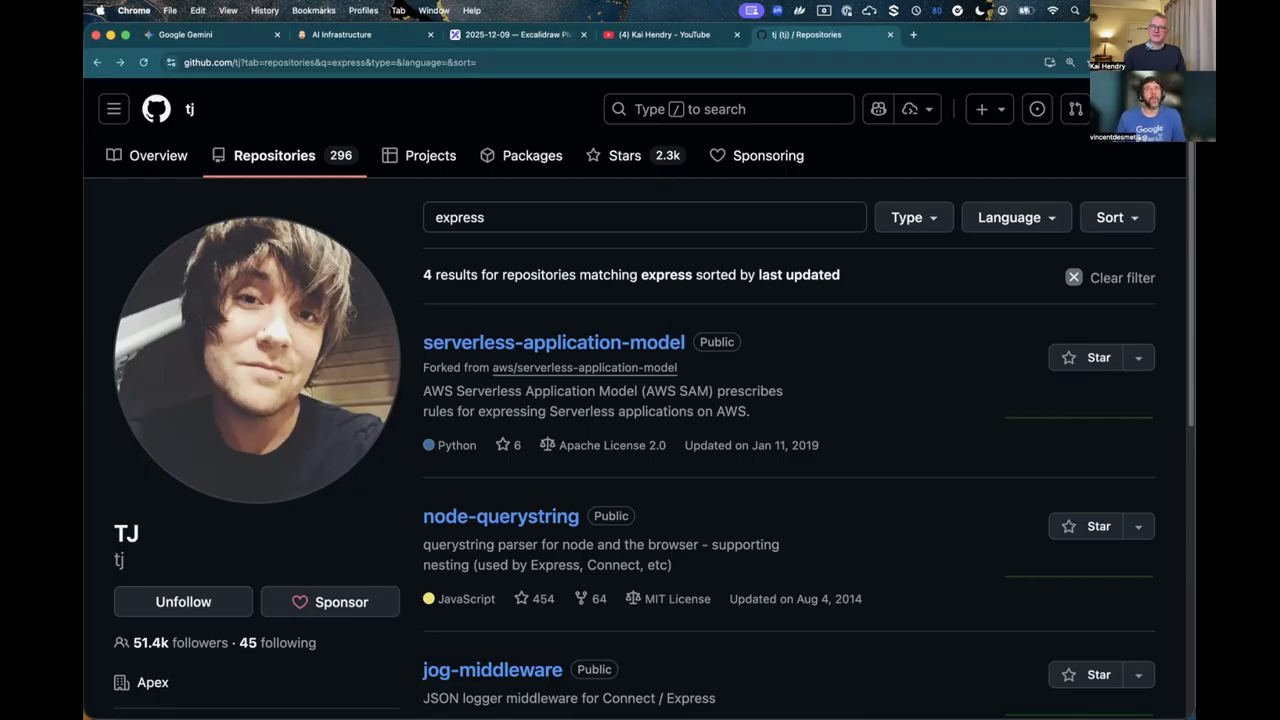
The discussion shifts to the rapid evolution of development tools in the Python and JavaScript ecosystems. The speakers praise the Astral suite, particularly UV and Ruff, for making Python development significantly more tolerable. Ruff is highlighted for its extreme speed, replacing multiple legacy tools like Black, Flake8, and Bandit with a single Rust-based binary that runs in milliseconds. This mirrors trends in the JavaScript world where Biome is replacing ESLint and Vitest is replacing Jest. There is a shared appreciation for clean, readable code, with a nostalgic look back at the work of TJ Hollowaychuk and the original Express framework. The speakers also touch upon the influence of DHH (David Heinemeier Hansson) and the tension between technical excellence and the political or philosophical stances often attached to software projects. They conclude that while they may disagree with certain philosophies, the quality of the underlying technical work remains the primary draw.
Hardware Constraints and Terminal Performance
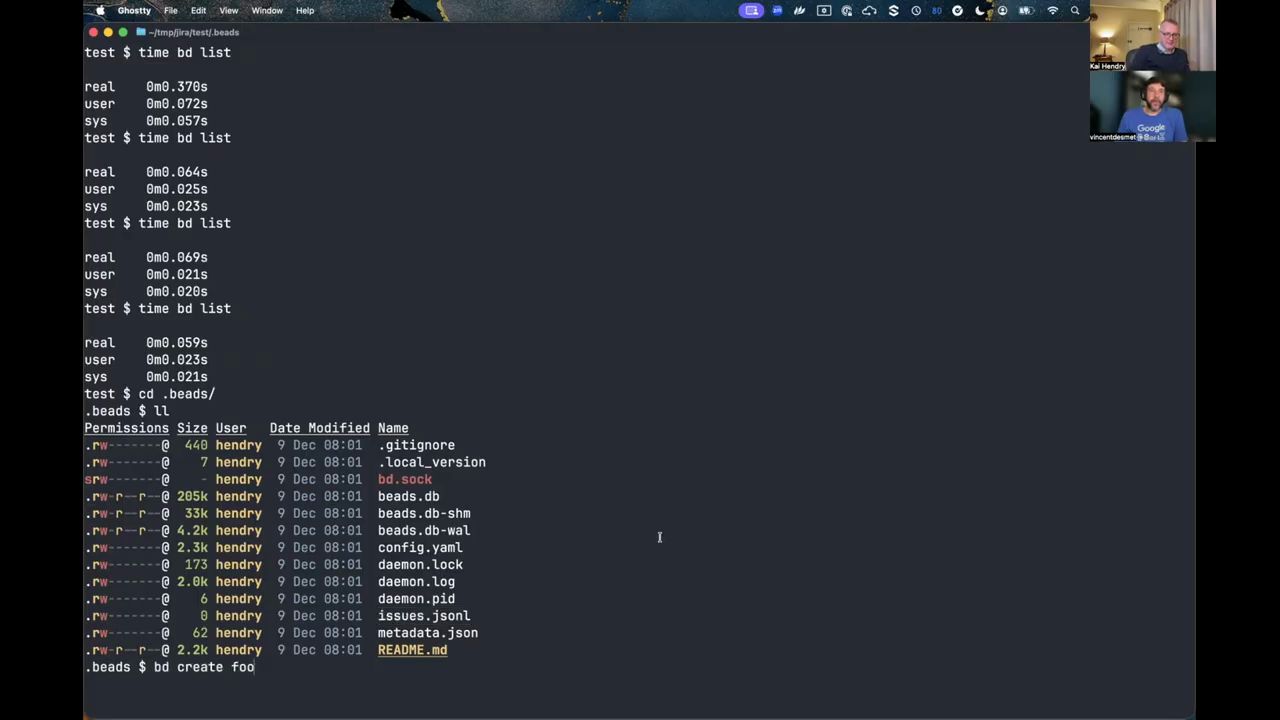
A segment of the conversation focuses on the physical hardware supporting these AI workflows. One speaker recounts purchasing a high-end Samsung NVMe SSD in Vietnam, noting a “sense of urgency” created by high demand for AI-related hardware in neighboring regions. This hardware upgrade is intended to support a transition back to Linux-based environments like Umari. On the software side, the Ghosty terminal is recommended for its speed and its ability to fix specific scrolling bugs encountered in other environments. The developers also troubleshoot performance issues within the Beads system itself, identifying leftover daemon sockets as a common cause of slowdowns. They note that because Beads is heavily AI-generated, it experiences a rapid release cycle—sometimes every two days—which leads to a slew of duplicate commands and occasional regressions or file corruption issues that require manual intervention in the underlying source files.
Advanced Issue Tracking with Pearls
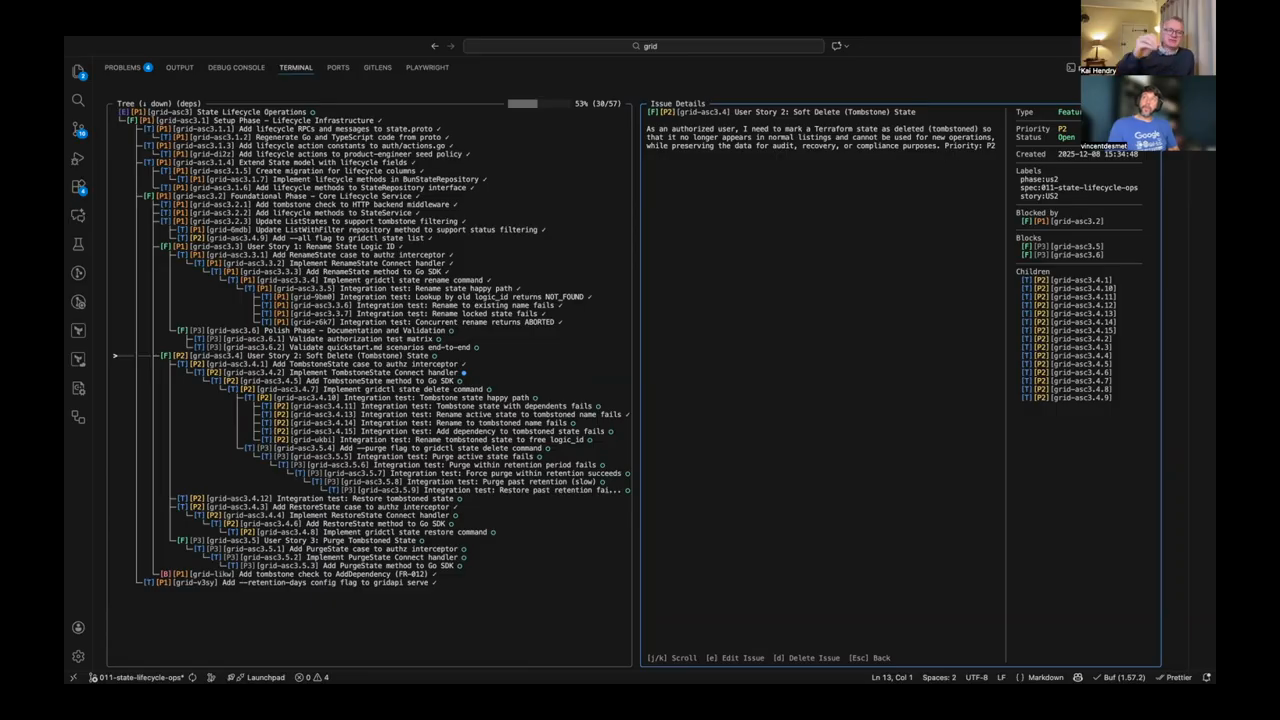
The speakers dive into “Pearls” (or Perles), a Terminal User Interface (TUI) for Beads that offers a more robust experience than the standard web UI. Pearls allows for sophisticated navigation of deeply nested task trees and dependencies, which is essential for managing complex “epics.” Unlike standard Kanban boards that struggle with cross-referencing, this TUI enables developers to visualize the full progress of an epic across dozens of sub-tasks. The system uses a specialized query language called BQL (Beads Query Language), which includes a lexer and parser to handle complex views. While there is some irony in a “simple” tool quickly adopting the complexity of the enterprise software it seeks to replace, the speakers argue that the local-first, terminal-based nature of Pearls makes it far more efficient for power users. They specifically highlight the utility of seeing “check-ins” from AI agents directly within the task tree.
The Rise of Resumable AI Agents
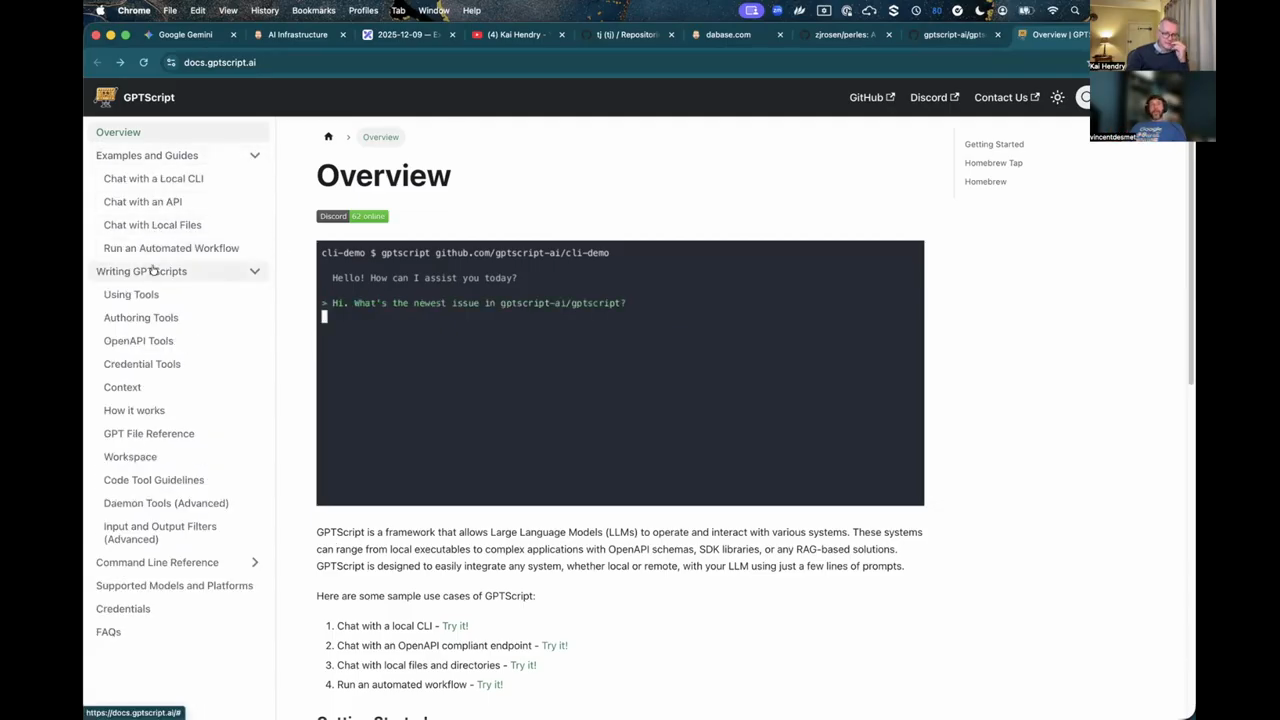
A major theme is the transition from static LLM prompts to dynamic, resumable agents. The speakers discuss Claude’s new capabilities that allow agents to be sent to the background and resumed later, preserving context across sessions. This is seen as a critical step toward true agentic workflows where a “main” agent can spawn sub-agents to handle specific, parallelizable tasks. The conversation references Anthropic’s recent emphasis on “skills” rather than just “agents,” suggesting that the future of AI integration lies in attaching specific capabilities to models rather than treating them as general-purpose chat bots. They discuss the need for better package management for these skills, similar to how MCP (Model Context Protocol) or GPT-script attempts to bundle capabilities. The goal is to create a system where an agent can be given a highly detailed task—including specific files to modify—and execute it with minimal supervision.
Optimizing AI Workflows and Benchmarking
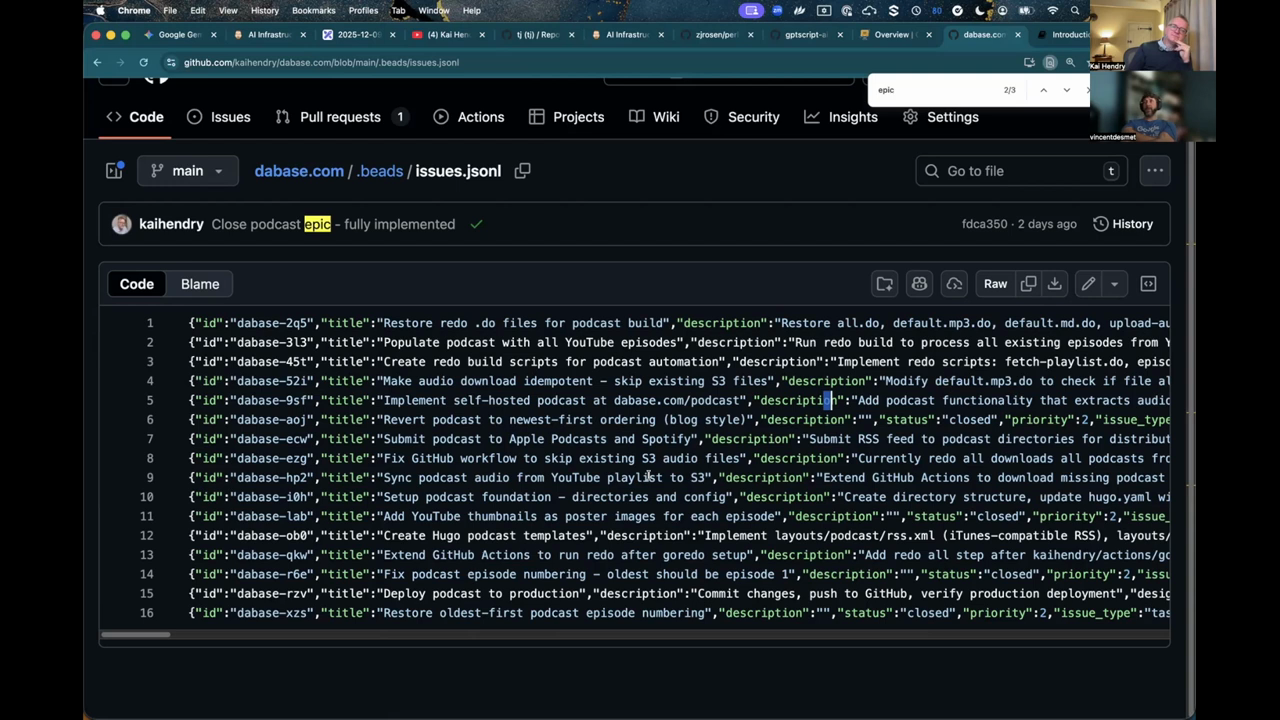
The final section details practical strategies for balancing cost, speed, and accuracy when using multiple AI models. One developer describes a workflow where Claude Opus is used for high-level planning and task generation due to its superior reasoning, while cheaper models like Gemini or Claude Sonnet are used for the actual implementation. This “spec-kit” approach involves breaking down a large project into a detailed to-do list where each task includes a description, design, and acceptance criteria. By providing agents with a narrow scope and specific file targets, developers can prevent “context drift” and ensure the AI remains focused. The speakers admit that while they want to automate everything, they still maintain a “human-in-the-loop” approach for commits to avoid accidental file deletions or poor-quality code. They emphasize the importance of a “retro” process to learn which prompts and task structures yield the best results. I’m very religiously asking the every time that a task was not correct I ask it to record the problems as comments on the task.
Model: google/gemini-3-flash-preview
Transcript (auto-generated from YouTube captions)
Yeah. Well, anyway, I thought I should
do some housekeeping because I I you
know, I got serious. I got I got I went
with Claude and I created a a podcast.
>> So, I wanted to mention that this
podcast should be available on Apple as
well as uh Spotify
as well as, you know, you don't have to
subscribe anywhere. You can just you can
just go here. But I've only got the MP3
version. Oh, I also just wanted to
mention that uh if you wanted to contact
me then Henry at uh icky.fe or canry at
Twitter. I was I was looking at my
email. I couldn't actually find an email
address for you. You were you were at
honest or something like that when I was
looking through my email.
>> What? You don't want to reveal your
email address.
I'm just I was thinking because like the
one that I that's on my commits of my
main GitHub profile are it's like a very
old Gmail that I created when I was like
12 and I had to take like a name not 12.
Uh when was Gmail?
>> Yeah, you can't be that young.
>> 20. Um
and so it's a it's a silly name. I got
an Outlook that has my full name.
>> Oh, for Christ's sake. I mean, and you
you're complaining me about using Jurro.
Well, anyway, Jira, I'm I'm almost
surprised that that you don't use Jurro
at your work. You don't use Jurro.
[snorts]
>> And and I think I think it's amazing
that like you can use AI to plan to
organize your spreads. Like like half my
my job as a lead is to like chase my
colleagues like, "Oh, have you updated
your card? Um, are you using the right
template? Have you storyointed the card?
Blah blah blah blah blah.
>> And and Jura is like molasses. So if I
can if I can sync this down to BD and
get AI to run over it, I'm like I've
saved myself 3 hours in.
>> I think it's a very clever hack. It's
kind of a realization of the um the
problem with MCPS a little bit. Although
that your main problem was the latency
of of managing Jira tickets and then
just having a local very fast SQL light.
um issue tracker that then automatically
syncs to Jira. It's it's a clever hack.
It's it's really nice. Um but
unfortunately it uh it mentions Jira. So
by that by definition it has to
[laughter] be
>> it's just uh hosed. Yeah.
>> Same same thing. I'm I'm joking with you
about Python, right? The moment you
mention Python or I'm just joking I see
oh no there's Python in this.
>> Yeah. I mean thank go I feel I feel like
really lucky. I feel like I'm living in
a virtual world. Like I love how AI has
come along and for Python the UV astral
tools.
>> Oh yeah, UV is amazing. UV
>> it is such I like I wouldn't It's so
good. It is so good.
>> It almost makes Python tolerable.
>> It almost makes Python tolerable. Yeah.
As the whole astral stuff, all the
Astral stuff is so good.
>> Are we the baddies?
[laughter]
you know this sketch from um
>> Yeah. Yeah.
>> Yeah.
>> Um I can't remember the names. [snorts]
Yeah. UV I actually I'm rolling out
rough at work. Um hopefully I won't get
too many complaints. I'm replacing It's
amazing because with the rough I'm
replacing like like lint black flake 8.
>> Oh, nice.
>> Uh
Bandit.
I'm like replacing the the pre-commit
hooks used to just take forever. Now
they're running like a millisecond. I
mean, thank you. Thank you. Rough and
Rust and
>> Oh, Astral. This is all Astral.
>> Yeah.
>> Okay.
>> Amazing. Amazing. Amazing stuff.
sounds a bit similar to all of the work
that like is happening in the JavaScript
ecosystem with like biome replacing
eslint and vitest replacing just um you
know making typescript more of a first
uh class citizen of the of the
ecosystem. I know your reaction to
TypeScript and this is why I reacted to
about Python that way was like I hate
TypeScript but to be honest
>> to me Typescript is a breath of fresh
air compared to just plain Java script
and um Python. I mean
>> okay um I mean uh
well did you ever come across a guy
called uh TJ Holloway Chuck?
>> No.
>> No. Oh, TJ. I think his GitHub actions
are quite popular. No.
>> Yeah. I mean, he he wrote Okay, this is
a fake account.
>> Different one.
>> Uh,
yeah, that's him. He kind of disappeared
and all his projects are sort of
maintained by other people, but I mean
he wrote Express
back in the day.
>> Are we talking about Okay.
>> No, I don't know why it doesn't show up
in his repos anymore. Oh, I think it's
now like uh
>> in the foundation or an orc.
>> Yeah, something like that. But like I I
often I mean I often sounds like I'm
insane, but like you know sometimes I
get nostalgic and look at his old code
and uh I don't think it's been
Typescript.
I mean it's it's like it's free of all
that sort of stupid annotations unless
someone's uh changed it. But like I
thought that the way I mean what I'm
trying to say is that I learn to write
to write node from his code
and every time I read his code I just
think it's so nice so nice this code
and express is also one of those one of
those projects which which I thought was
something that dragged me back into the
Node.js world for good reasons. But like
yeah, I mean Express is s such an
amazing project. I guess everything's
still kind of Expressbased, right?
>> Mhm.
>> I think you align with with um one of
like you know DHH.
>> Yeah, DHH. Yeah. Yeah. I
he he's uh he's cool. He's cool. He he
launched phys he launched Fizzy, which I
thought was like kind of weird because
you've been talking to me about Bead's
UIs.
>> Yeah. Yeah. That's that's funny. I also
saw him mention about like issue
trackers. Um but in terms of his school,
I I also I don't agree. I had this very
deep conversation with Chad GPT about
attaching politics to technical
um work. For example, DHH he does
amazing projects. I don't like Ruby on
Rails, but I do like um Omari or Omari
and I like Omar before that. And um
>> you're not running that software. You
just like the idea, don't you?
>> No, no. I run I run it on my uh Windows
desktop and I also for new year bought a
one terabyte SSD NVME to install RP and
all the way.
>> That's funny cuz I bought something
similar. What did you buy? Did you buy
exactly the same one I bought?
>> EVO Plus. I think I didn't pay break the
bank. What is this?
>> Yeah, I went I bought a Crucial.
[sighs and snorts]
>> The Samsung ones are like more
expensive. it. Well,
it was a really good salesman
[laughter] because I go to this shop in
Vietnam and Samsung is quite a popular
range of products in Vietnam. And in
Vietnam, you you must have you must have
a brand or quality, right? And so some
shops, they are the official retailers.
>> There's no returns policy. You just go
buy.
>> No,
there is return policy actually with
Fungu. They they open the package
normally and they put a little warranty
sticker but they didn't do it on this
one which is normally when you buy it
they put like a little sticker and they
like tag which but I guess today you can
do it with the receipt but um back in
like 2006 when I came to Vietnam and you
went you bought anything it all needed
to be tested right in the store right
you don't buy anything you don't take
anything home until you have actually
tested it in the store and there's a
little sticker added straight on the
hardware
>> that's cool yeah well I I I always
remember buying light bulbs at the at
the hardware store in Singapore. They
all the the lady always tested the light
bulb before she um you know let me leave
the store and I'm like they would never
do this in England.
>> I think this is a thing in Asia um
because of like cheap knockoffs, right?
Um and so you want to get the quality.
>> So so with this shop where I bought it,
you said Samsung is the more expensive
one. probably be related to their like
um guarantees on on uh on and return
policies and also I've been thinking
about like installing Omari I use Omar
coup right now Ubuntu based with Gnome
right and um I'm having some display
issues sometimes with with Ubuntu but it
works great but lately I've done all my
work on my Mac OS but I want to go back
to like um Linux and and so they
completely pivoted to Omari so I've been
wanting to get a new SSD drive to
install it um since June because my old
SSDs are too small as well. So when I
was there, I bought a router because I
wanted to set some other like separate
network up in my house. And I was there
and I asked him like we I saw the price
of a desktop like a pre-made and he
basically told me one of the
salespersons there was like, "Oh, you
can buy all of these components and
build it for half the price. Don't buy
this like pre-made."
>> Oh, wins when's the trust.
>> Like Yeah, you're right. You're right.
What else? What? Tell me about
>> I just bought I just went in for a VPN
rout um sorry a router that has VPN
support and um and then I he for some
reason I I was looking at the desktop.
They have these gaming desktops on on
display, right? And he made that comment
and I was like, "Yeah, but like memory
and GPU right now is crazy, right?" And
he's like, "Yeah, yeah, it's crazy." And
then I was like, "I've been wanting to
buy an SSD." And he was like, "Oh, the
price is going to go up."
>> And I'm like, "What? I know memory and
GPU is going to go up, but what about
about like hard hard disks? And he was
like, "No, no, because in Vietnam, China
is buying all of this. They're buying
all the memory. They're buying all the
GP GPU from all the neighboring
countries."
>> Yeah. Yeah. And and because they're
building AI rigs and and so they are
>> sense of urgency is created and the
buyer
>> he immediately created the sense of
urgency and I was like, "Yeah, I've been
thinking about it for for six months."
And I was like, "Yeah, but I haven't
used my Ubuntu for a while." So I was
like, "Ah, there's no urgency for me
there, right?" And he was like, "No, no,
no. It's going to go up." And I was
like, "Oh, okay then, [laughter]
you know,
>> last well."
>> And then when I check out, he looks at
the bill and I said, and and I'm like,
"Yeah, it's a bit expensive, but it's
like Christmas, right?" And he's like,
"Yeah, but that's like half my salary.
That's half my monthly salary." And
[laughter] I was like,
>> "Dude, I think you was asking for a tip.
>> Do do you tip people in in Vietnam?" No.
Not in that shop, but it used to be a
very like uh
>> depends if it's a bar and good someone's
good-looking, I suppose. Maybe.
[laughter]
>> Cool. Well, places. I don't know what
you're talking about. [laughter]
[snorts]
>> Well, let's see. Let me think.
Oh, okay. Let me just rattle off some
thoughts.
Are you using Ghosty?
No, but I heard that Ghosty fixes the
scroll bug in Claude Code, so I'm
thinking about it.
>> I switched to Ghosty and I'm loving it
actually.
>> Mhm.
>> And this is Ghosty right here. Okay. Um,
can you see my whole screen? You can see
it. You can see this.
>> Yeah. And I see your duffel API key. And
No, I'm just kidding. [laughter]
>> Yo, don't think I need this keybind. I'm
just taking it off.
Yeah, I'm loving Ghosty. It's It's fast.
Um,
>> want to give it background like it's
Hashimoto.
>> Oh yeah, you can project after exiting.
>> I don't go for that whole like what do
you call it?
>> Um,
>> it's written in Zigg or Rust. Zigg,
right?
>> Yeah, it's fast
and like it does like weird things which
is I think is quite cool. Like when it
seems to know that like it's waiting
sometimes. I don't know how this is
expressed in tone language,
>> but I'm I'm I'm loving it. I'm loving
it. This uh and uh and Claude I I'm I'm
often like I'm still a little bit
confused how to init my like how do you
init your project? I go get initi
and and and then and then but then it's
still but then I still have to do
something like um
like like this, right? before any is is
that how you set up beats or do you do
something else?
>> I have not set up beats in a new
project. I'm working in a fairly large
monor repo right now. So I just
fine-tune whatever is there and um
>> but what you just showed seemed to be
like the nice way of doing it.
>> You still have a performance issue.
>> Yeah, there's still a performance issue.
I'm not too sure why. You mentioned that
that the demon runs or something.
Yeah. So I was on beats version 0.21 or
something and there was some demon
socket issue or maybe in later versions
there was a demon socket issue. I
definitely saw some um issues about
performance in in the GitHub repo and
people were saying it's a leftover demon
socket
>> that need to be killed. So if you kill
all the demons usually it solves the
problem.
>> Okay, maybe you're right. I just killed
them all and now it's faster. [laughter]
>> Yay.
Okay, that's one problem solved.
>> That's one problem with beads though,
like there's a new release every two
days. [laughter]
Uh there's a a slew of duplicate like um
commands because it's all AI generated.
So there's no consistency and it
reintroduces bugs all the time or it
creates completely new bugs and then you
get like
>> I think I think Steve is definitely like
not coding. You know what I mean?
>> Oh crap. Oh, sorry. What? [laughter]
>> He doesn't seem to be coding. Oh yeah,
you showed me that pull request. Uh,
which one was it?
>> The the what was it about the ali cats
looking for work in the graveyard?
And um it's the pole I think it's it's
his test. It's it's like pole cat.
Search for pole cat. It's not graveyard.
It's like junkyard.
>> So I can't find it.
>> Yeah, he he has some very interesting
commits. But um what worries me when I
want to update this this thing this
binary is that I see commits like fix uh
file corruption issue and all this stuff
and I'm like wait what they have like
file corruption issues at
>> point I I've had some weird merge issues
but I mean but but since I know that
like you know [snorts] since I know that
the source of truth is is uh this file
here.
Let me go BD crate foo bar whatever.
Yeah, since I know since I know how it
works kind of
uh I can go in here and fix things. But
I'm just surprised it happens. Like I'm
really really surprised it happens. But
anyway, whatever. A great find for me
when I wanted to update Beats was um I
went through any of the UI projects that
are going on and just a few days ago
somebody um created a TUI a terminal UI
for beats called
>> Oh yeah, which one? Yeah, you which one
is that?
>> P E R L E S. It's in the root read me
also.
>> P E R L E S. Well, yeah, if you go to
the read me. Yeah, pearls but the French
way. Pearl. Yeah. At pearl the pear.
Belush.
>> It sounds dirty. Honestly,
>> what I said was pearls for the swines.
[laughter]
>> Yeah.
>> So, this one, download it, dude. Try it
out.
>> Oh, I thought it was a web thing.
>> No. So I I've been using Beats UI but
Bets UI doesn't show comments on issues
and it doesn't show uh it doesn't allow
easy tree navigation from one issue to
the other and and the dependencies.
>> It doesn't show
um
what was it there was some other issues
that I had ah it doesn't allow me to
filter by labels. So, so this thing is
if you like Jira, this seems to be the
Jira for beats. Okay, because one of the
things you can do is Jira is you can
build your combon boards with your
columns and you can doing some query
language there, right? Not that I ever
use Jira or or you know care about Jira,
but somebody told me that you can do
these query language um for your columns
and your boards and your views and all
that, right? So, they have this BQL
beatsql and it's like a lexer with a
parser. Yeah, this is a little bit
unsettling that things have gone towards
Jura so quickly [laughter]
like beats it was so simple now now the
people are doing this
>> but the good thing is this is all
separate from beats yeah you can get
this if you want so I I used his like
kbon view but you can't like cross
reference columns like if you create one
column with something and then you want
another column to to use something from
that you can't do that so if you want to
build a tree of dependencies or you want
to navigate and and he didn't seem seem
to like have a very deeply nested uh
beats issue. Maybe I can show you how it
looks on my on my machine.
>> The the next thing I couldn't help but
think is like estimation points,
velocity,
>> you can see the screen.
>> Yeah.
>> Oh. Oh, how did that get up there?
>> Oh. Oh. Oh, yeah. Oh, I mean, yeah, if
you want to spend some time talking
about grid.
>> Um, no tangent here. So,
that's a bit of uh crap here, but let's
let's maximize this view. You got to be
able to maximize.
>> So, here we are. Uh
>> maybe maybe control plus a bit. I mean,
no one's going to be able to read this
on YouTube otherwise.
>> Oh, that's going to that's not going to
look good, is it?
>> I'm going to have to control minuses a
bit. Is that acceptable?
>> Okay. I guess you're just showing the
aesthetics, I suppose.
>> Yeah. So
this is the standard view of per
uh if you want to pronounce it the
French way and you see there's like the
blocked the ready um the in progress and
the closed issues right classic I added
another view which is just showing the
epics
>> and then from an epic
>> I go into the epic and I can see the
full progress of this epic so I have
like 57 beats tasks in this epic and I
wish I could like narrow this column So
there those little symbols at the end
mean that like the agent is is choing
down on it or what does it mean?
>> Yeah. So the little check marks if you
see them are completed tasks and then
the green ones green like circles are
this is not yet um implemented. Actually
these it should be nice if there's like
red for for blocked and and green for
ready to to pick up. Maybe that's
something that we could uh request. And
then here we have uh the blue one here
the full full blue circle. You can see
that one is in progress, right? So, so
you can navigate the full dependency
tree and
>> when earlier the reason why I bring this
up is because most people don't really
have this like deep nested uh list. I
think I mean if I look at my
>> I mean at work I'm often on a jura board
with epic features tasks and it's it's a
nightmare just to to go between them. I
mean I mean there is this like chicklet
thing but like you know how Jurro is so
slow just just the fact that just the
fact that you're moving between issues
in a tree like that just
makes me feel unusual.
[snorts]
>> Don't talk about Jira. We don't talk
about Jira.
So for me like this was my main uh view
that I used of this beats UI which was
like the epics view and then when I
wanted to look I could see like the the
phases of each of the user stories uh
for this epic. So I'm working on um
terraform state delete uh with like soft
delete tombstones and and then terapform
state rename functionality and so maybe
again this is an epic it should have
been scoped down I don't know but um
this is the things I'm missing. So for
example, there's a user story here. When
I click on it, I can see all of its
dependencies. Ah, there's another thing.
There are design and notes here and
everything. And then when I look at the
dependencies,
>> you can I have this little graph view,
but it's I can't click on anything and
and it's it's not really nice.
>> So this is where
>> ditch that project and move to the
terminal.
>> Yeah. Um I I was like I was doing pull
request to add the tree view but then he
added his own version and it was
>> how come the issue names have like quite
weird naming like I I thought it was
just like now now you have AS3 3.4.12
4.12 what?
>> Yes. Um I noticed beats does that when
you create a new task that is that has a
parent. So it will just append.1 point
two parent.
>> I I don't know because I also
>> How come I haven't noticed that?
>> This is after I upgraded it started
doing that.
>> I see. Okay. Right.
>> Yeah.
>> So what happens if you move a task to
another feature or something or or epic?
Then it might mess up a bit. But anyway,
>> move task. Tasks are not open long
enough to move things around, bro.
>> Yay.
>> Right now, I created this whole tree
yesterday with Opus 4 and I've completed
50% of it. Um, this morning, okay, so
that was we talked a little bit about
like beats issue management and your uh
synchronization. There's quite a few
changes in in AI land as well like cloud
just released something called resumable
agents. So if you prompt cloud and tell
it to send the agent to the background
then that agent becomes resumable which
is like a very early way of um you know
before when you when you say like hey
spawn three sub agents to do a task they
spawn they complete and then you know
they're dead.
>> So it sounds like you can get the
context back if you wanted to pick it
up.
>> That's that seems to be the goal. um it
was on Reddit and people were saying
about this
>> because in my mind BD is the is the key
because it keeps the context in a task
right in a in a in an issue.
>> Yeah. So if I
>> if and I'm just like paranoid nowadays
of using since I've been using AI so
long like I just don't want context to
be anywhere else almost except in that
task.
>> Exactly. So so if we look at this task
here like this is a very detailed task
right. It shows what we are trying to do
the goal. Then there's the acceptance
criteria of like we need to actually is
a mistake here. I should have design
first and then acceptance criteria.
>> Okay. Don't beat yourself up about it.
Yeah. Progressive disclosure.
>> Yes. Um I don't like this. Um I'm I'm
going to do a PR to fix this. This is my
PR originally. He already merged it. U
but I I I realized it later that it was
wrong. So anyway, um, and then the most
important thing is that I want to be
able like you just said, spawn an agent
from this task or maybe from a user
story so that they can complete because
these tasks are very detailed. The most
important thing is it tells exactly
which file to change, right? Which is so
crucial um, if you want to spin up
agents like Haiku and they don't need to
like explore the whole codebase, just
keep them focused on a little sub part.
Definitely if you're working on like a
monor repo type of thing. Yeah, I mean
to be honest, I do that with my
colleagues. I say these are the in the
in the scope section of the of a ticket.
I say these are the the files that
you're going to change. You're not going
to go anywhere else,
>> right?
>> I do this already with my colleagues.
>> So, so, so, so agents with this should
work perfectly, right? You give them a
small task, they complete it like how
you code completes it and then the
overall main thread of your Claude Code
the context is saved because it doesn't
need to read the whole file iterate on
making the changes and then you know
that main context stays clean and and
focused on what is the overall goal and
just coordinates the sub agents. So I
tried earlier to say like okay there's
some of these tasks they are ready and
they can be done in parallel and spawn
two agents to do it but I wanted the
agents to confirm to me first that they
were doing the right thing. So I told in
the prompt that you sent to the agent
make sure to ask it to check in early
and it came back to me um with a
check-in and then I and it was like it
asked like a lot of questions I hadn't
even thought about and
>> it's amazing. So it's kind of mirroring
my life. So basically it's it's doing a
kickoff. It's basically asking any
clarifying questions, right? We call
this a kickoff. And uh
>> yeah. And um and then what happened is I
said, "Okay, great cloud. I heard you
have this resume capability. Now resume
those agents um but there's a bug. So
they don't see their initial prompt. So
make sure to reiterate your original
initial prompt and then together with
your um um approval of their plan and
then it send kick off an agent and they
completed a task. But then later I asked
it, "Hey Cloud, do you have agent IDs?
Do you know how to resume agents?" And
it was like, "No, there are no agent
IDs." No, I cannot resume. I was like,
"Oh, okay. So what just happened?" Like
>> that's really interesting. So things are
things are evolving quite quickly. I I
listened to an anthropic uh video last
night and
the emphasis with with respect to agents
was skills. So, I'm wondering to myself,
have you adopted that workflow where
your agents are you attach skills to
your agents? I believe like do you ever
do that
>> I I think we saw the same YouTube about
don't build um don't build agents but
build skills, right?
>> Yeah. Yeah, that one. Oh, man. We're
we're in an echo chamber here. We're
like reading the same things.
>> I saw it on on Reddit. Um, and I haven't
been able to watch it because like I
said, my audio is not working right now.
I don't know.
>> It's nothing. It's nothing too amazing
to be honest. It was a bit is a bit
tame, but like
>> Yeah. So, I do have the agent skill
here.
>> I mean, I have the beat skill here cuz I
told you how crucial the beat skill was,
right? It It really made it really gave
Cloud the edge compared to other
>> You haven't written your own skills yet?
>> No. No. Nothing else. I'm also still I'm
still struggling to maybe I've just
forgotten how to do it, but like like
like how do you like package manage
skills? Like how do you like just bring
skill into a project? Like like how do
you like isn't there like a cuz you get
plugins but they're not the same as
skills. So I'm a little bit confused
like I I want to like add Vincent's
skill repository and get XY Z skill or
reference that skill inside the the
agent or something.
Uh
>> so this is somebody that I know on
LinkedIn. He he built some TypeScript
project but he wasn't at at Meta. He he
was asking the question how do we
package like create bundles to easily
deploy um what you said like these
capability like plugins are MCPs skills
agents what how do we build these and
and and have them
>> like bootstrapped into into agent
shells? Um, and then he posted on
hackernews something called source
wizard. Um, which is I think a project
trying to do this, but it has the same
question as what you just asked, right?
>> Like how do we create bug?
>> I'm sure I'm sure Anthropic is working
on it. Like the a previous project that
I used to be quite into was called GBT
script. Have you heard of that one?
>> Let me share my script.
>> Gib script. Um, hold on. I need to
You sound like eggshell from M MRC.
>> Eggshell.
>> Was it XL? The thing that you use for
scripting bots on Mr. C.
>> Um Oh, yeah. I Yeah.
IROC. That brings me back
tunnels bounce. I'm actually still on
IRC. I don't know if you're on free node
and all that sort of stuff. There is a
relevant QRDC comic. What's it called?
XKDC. X KDC comic. XKCD.
>> So I'm I'm a lot of this stuff is is
prior R in a way like GBT script done by
the same guy behind Rancher Labs. Uh
Darren uh can't remember his name.
>> Wow. I didn't know he was doing other
stuff cuz I used to follow him on
Twitter.
>> Yeah, he's he's great on Twitter. I
build the cloud. So One thing about GBTS
script is that
they have this concept of of yeah tools.
So you have different tools and you can
these these in my opinion are are agents
really.
>> You can you yeah you can have tools and
they do certain things. So you reference
them in your like your front matter like
I want the random number tool. I mean
these are skills right and and then he
and then they they can be packaged at
the end of a URL. I mean, so what I'm
trying to say is that I'm sure Anthropic
are just going to like do do something
very similar.
>> Yeah. MCP was kind of the goal of like
having a redistributable and they put in
the plug-in marketplace and they're
definitely going to make bundles.
>> Yeah, they're definitely going to do
this. It's it's it's I guess it's
>> and hooks.
>> Do you know Beats now installs a hook if
you do Beats Doctor?
Yeah, I'm not too sure. I thought that
was a reason why my things were getting
slow, but what is
>> I don't like the hook.
>> Yeah, like it makes Yeah, I I want to be
>> I don't know. I'm I'm partial on it
because I'm like I keep staging my work
and then my commits are huge and the
hook is like telling it complete the
task and then, you know, do the commit.
And I am very reluctant to let the LLM
commit. I'm like heavily in the loop
like I want to commit to work. I I
noticed a tweet from you or something on
LinkedIn about [clears throat]
missing a file. I honestly had the
experience where
I don't know how it happened, but the
file I was working on got nuked while an
agent was running in the same repo. So,
I mean, I'm mature enough. I'm old
enough not to delete my own files
accidentally. So, I'm like, how did
>> we ever old enough not to delete our own
files? I just did like an hour ago.
So, I looked into git stash. There was
no git stash because I would I would
assume that the AI would be smart enough
to stash it if if they didn't understand
why why my file was hanging around and
it wasn't there. And and and I was like
quite
shocked about it. But but then I
remembered that VS Code has this local
file history feature.
>> Yes, I was about to say it's amazing.
>> And I and I managed to pick out a an old
copy of the file I was working. I was
like,
>> "Visual Studio Code cache is a lifesaver
if you accidentally."
>> Thank you, Visual Studio Code. Thank
you.
>> It's it's if you don't know about it,
it's it's such a surprise and it happens
sometimes, but I I keep forgetting some
but it happens where you accidentally
remove or or you want to get back to an
older version of a certain file and
cache and the cache has it.
>> So, it's really uh
>> lifesaver. Yeah.
>> Team VS Code. Um sadly, but truly. Hey,
Microsoft.
>> So, I um yeah, so I did I was going to
mention I didn't use I just used Beads
and Claude to to basically roll out this
feature and I thought it went quite well
and and there's there's a lot to it like
um
like for example, do you know about uh
redo?
Redo
or just redo?
No, I don't. No, we do.
>> It's kind of like a very niche uh well
niche. It's just like an unknown make
replacement.
And to my surprise, I didn't even like
instruct the AI about it. It just knew
what to do. It just did it.
So,
>> like it tried to see if it was on the
path and then start using it.
>> Well, I told it to use red do, but it it
knows how to write the language.
Ah
>> and and uh I I just wanted to mention
that like while I was developing that
podcast uh cache that it wrote all these
redo files like perfectly. it understood
the principles because the the principle
of redo is that it's like make you have
a target
>> and the way that you use standard out
and standard error um sort of
contributes to how the that particular
thing gets created like it has this
concept of different uh named uh I don't
know what you call these things
>> arguments positional arguments
[snorts]
>> so
so basically when it um yeah it. And the
cool thing about redo is is unlike make
which is no one can ever write a script
inside make because of the weird
escaping that you have to make. You just
write it in shell.
>> But with the with these paradigms of
using these name things, then you
replicate the whole make target type
stuff. So if you want to if if you're
missing uh you know fubar.mpp3,
it knows exactly how to make it.
>> Okay.
Yeah, I was I was I was impressed that
it was able just to go go with it. And
uh so I didn't use uh I didn't use
specit. I just basically said I want
this this this and this that done and it
did it. And I was like wow
>> do I need I still need to learn specit.
>> So somebody on on on Reddit was like
what is your guys what is your workflow?
And his workflow was like I use cloud
you know client like the the desktop
Claude Code not cloud CLI the the cloud
uh client desktop
>> desktop client sheesh I can't speak he
uses that and then he just um you know
gets the prompts to put them into cloud
code and then basically copy paste
between them and that's how I started
with chatgbt right and that's where I I
I I said like speckit is
>> yeah that's true like there's different
like levels of maturities
And most like 99% of my colleagues are
still sit in chat GBT UI type thing.
Yeah.
>> Which is fine. Like I like what my reply
basically to him was like for my large
project I use the spec kit flows because
it kind of um removes all of that copy
paste and it helps me like I showed you
the task. They're very like limited
[clears throat] to exactly what you need
to change where. So, we got this grand
design like with Opus. It's like a big
to-do list, but instead you can break it
down into small little cloud sessions
that are focused on the individual
files.
>> If you have Yeah.
>> If you have a really big project, you
can go to that level, but like it takes
a day to do that. Like I said, it I used
to tell you like it's like 60% of the
time I'm doing this and then I was
saying 70% of the remaining time, which
is [ __ ] of course.
>> Yeah. So, like I think the way I
prompted it was like I think I started
with an epic
um or maybe two epics. And yeah, I guess
the beautiful thing here is that we can
look I don't know if you checked in your
yourjson
L, but like I guess one thing we can
look forward to doing in the future is
like is like seeing which you know going
through the tasks and seeing which ones
got completed well and then and then
maybe studying studying the description
to see, you know, what's working and
what's not working, you know, like
this is not very this is not very
readable, but I was I was hoping that
you and I could just say or you could
say, "Kai, you're a genius for
prompting."
>> Uh,
>> so what I was I I had the thought today
that I I should try this, I should try
that because I'm trying to fix this sub
agent problem and every time I try it,
it like spawn an agent and then no 50/50
coin toss, maybe it does the thing I
want and then it uses all my tokens and
then I'm not happy. Um, so, so yes, I
want to spend more time on that, but I
also want to just complete the task.
Like I just had Opus generate all the
tasks and I was like, now it should be
fine to let Gemini do everything and it
save all of my clock.
>> That resonates a lot with me because I I
mean that's my
>> I don't do it
>> because I'm going to waste because
Gemini is going to give me something and
maybe some of it works, maybe some of it
doesn't and I don't trust it. So I'm
like right now I'm not going to do that.
So, it's you need to find like if you
want to do this, you need to dedicate a
budget to it because it's going to cost
money. You need to budget dedicate time
and you need to build your benchmarks
and your evolves and you need to do it
properly.
>> It's it's a whole job. And
>> I was I was going to say that like you
like half of me wants to get the thing
done and then half of me wants to to to
to do a retro to to see what worked and
what didn't work. to to make sure that
like I have that feeling that I learned
something because because yeah I mean
>> I want I want to build and I want to
learn from the build all the time
>> because I'm very religiously asking the
every time that a task was not correct I
ask it to record the problems as
comments on the task. So supposedly the
JSONL that I have should clearly
indicate that uh here we had a
divergence here we have a divergence and
it should clearly highlight the problems
but there's so many dimensions in terms
of like the overall scope of the project
like why diverge
>> it's very hard um to so so my approach
today is I try it I give it a good go
how far how much com how comfortable I
am in terms of time and in terms of
rectifying the output
I don't want to throw away the work. I
think the right way would be to just
like, oh, I throw away a lot of that
work and I start again. Um, so I don't I
don't do that right now. And so,
>> yeah, I'm I'm Yeah, I that whole
throwaway thing doesn't make sense to
me. Like I'm I'm always just picking up
the pieces. Oh, did you see my my blog
about Sorry to change the topic. AI
annoyances. I don't know if any of these
resonated with you
>> before before we go there because you
asked about the workflows and I
mentioned about the Reddit comment about
the copy pasting and then using spec
kit. What I wanted to say was at the end
of my comment I realized that actually a
lot of the time I'm just asking Gemini
tree and I have to like say I constantly
flip-flop between them. But today I have
Claude Code as my main like big project
workhorse and then I have Gemini tree
for I don't care what you do. this is
the problem I see, fix it. And it just
goes and does, you know, goes off and
then I check in. Sometimes I do the make
test. I do the make build and if it
works, I'm happy. I don't care about the
code because that was basically my
conclusion. Um, and then like I don't
know if that makes sense. So you don't
let me just write this down. So
basically right now you're using using
Claude I don't know son 4.5 whatever,
right? or you're using Opus whatever
you're just using claw code
>> and then what and then I I didn't quite
understand how you you throw it over to
Gemini Gemini 3 pro pro right yeah so on
the project that I'm currently using
Claude Code I wanted to use Gemini but I
decided not to and I have like three
other repos that I'm doing at the same
time so on one side I'm adding an API
new functionality on the other side I
have a completely separate repository
and binary that consumes the SDK Okay,
I'm I'm saying like hey uh we need to
start doing this and that and then I ask
that Gemini and I don't do speckit. I
don't do anything. It's like I don't
care about that project.
>> So but I'm I'm just what do you ask
Gemini to just to review the task? I
don't quite understand what
>> no complete separate. So one one
repository I use Claude Code opus 4.5
create and specit broken down by tasks
and it's a large monor repo across many
files. uh and and and I the goal is to
have Son or Gemini 3 do the actual
implementation but today I and I find it
very silly because Sun 4.5 and Gemini 3
to me are no different. So I I should be
able to trust Gemini 3 for that project
but I don't and I do trust Gemini
everywhere else like no specitate
nothing Gemini you're more you're more
like leaning into into Gemini
>> more and more now.
because of the heavy limits on on on
cloud like
>> oh that's why
>> yeah mainly
>> but I still don't understand your
workflow so you you do the thing in with
claw code in this repo I then when you
do how do you do this handover when do
you throw things over to Gemini
>> on the on the right box where you have
Gemini add slash um entropic or slash
son
>> oh okay
okay
So
yeah, so how do I do the handover? Opus
creates all of the beats I choose. As
you saw, I have a huge dependency tree
of how they link to each other. Every
single
>> it's is broken down in one epic that has
multiple phases which are the features
and then within the feature there's like
actual task. So the epic and the feature
they have just general description but
each individual task has a design
section which says like what we are
doing um sorry the description is what
we are doing the design is how we are
doing it and the acceptance criteria is
what we want to verify right then maybe
some notes and then definitely using
using comments for any divergence while
you do the work
yeah so it's description design
>> no oh sorry description I think
description is what?
>> Oh yeah. Why? What? And why?
>> Yeah. [snorts]
>> How?
>> And then acceptance criteria.
>> Yeah. But okay. So
>> what Opus creates and and ultimately
what needs to be closed are the tasks
that contain those sections. So that's
the context for
4.5.
>> So you Okay. So you get the card and
then and then you throw it on here.
Okay. Can I just replay how I think what
you're telling me? You you have a a
planning repository and then you use BD
to coordinate uh your tasks.
>> I have a mono rep. So it's it's all in
the same repository.
>> Oh okay. It's all in the same
>> when I talked about different repos. I'm
talking about different task completely
not shared beats task.
>> Okay.
So I you're just using Gemini just
because it's it's cheap, right? And it's
got and it's got more context, doesn't
it?
>> Yeah. Um and
it's smart. It's like almost opus smart,
right? But I'm afraid it doesn't follow
the instructions.
I don't know why. It's it's ridiculous.
it just because like I felt like I want
to get this done and I don't want to
take like exactly what we earlier you as
like can we do some benchmark and some
evals and some some figuring out things
I was like yes I want to do that but I
want to get this thing done like now
it's Tuesday and I want to get it done
by tomorrow so I'm like I'm not just
doing
>> there's been so many like weird little
instances where I feel AI
was just immature or not listening to me
or did its own thing. It's It's
hilarious. It's kind of It's
>> the thing about Gemini. Gemini is very
literal. So, I'm afraid that if I
haven't if I have made a mistake in the
description of design or a capsson
criteria, I'm afraid Gemini will just
not do it right. And I feel that Son is
doing more of what I expected to do.
>> Yeah. Interesting.
>> So, when I care about it, I ask Son. If
I don't care about it, I ask Gemini.
Like, I don't care how, just make it
work.
Okay, I got to I got to do my kids drop
off now.
Um, so
>> cuz you wanted to talk about AI
annoyances, but then
>> Yeah. Did you read this blog? Did I
share it with you?
>> I don't think you did.
>> Have a look. I don't know if you're
going to be around. I'm going to I have
to do my kids drop off and then uh then
maybe we can resume.
Hopefully I have a chill morning.
>> My budget doesn't reset for another
hour. [laughter] So, I'm watching you
YouTube. I went to the gym. So, this was
part of my my comment reply because
people are always complaining about
like, oh, these limits are horrible. I'm
currently not unhappy. I do not feel
there's a huge degradation in the amount
of work I can get done. Actually, I feel
like I get more done with the current
cost and limits on my on my account and
>> constraints are good. Constraints are
good.
>> Yeah.
>> Yeah. So, so I ended it a bit snarky
with like and if I if I hit a limit, I
touch your ass and you should do
[laughter] the same.
Well, I'm I'm Yeah.
>> Easy said when you're frustrated, right?
>> Okay. Um Yeah. May maybe resume in uh 20
minutes. See you.
>> Okay. See you.