Episode 29: Spec Driven Discovery
Download MP3 | Watch on YouTube
https://github.com/anthropics/claude-quickstarts/blob/main/autonomous-coding/prompts/app_spec.txt
https://dabase.com/blog/2026/ai-engineer-europe/
- 0:00 - Introduction and Camera Setup
- 0:11 - Opus 4.7 and Android News
- 1:06 - Caching and Performance Issues
- 3:09 - Anthropic API Key Concerns
- 4:08 - AI Engineer Conference Insights
- 6:36 - Claude Code Desktop App Features
- 8:07 - Command-Control App Overview
- 9:30 - Security and API Key Management
- 21:27 - Rust Ecosystem and Left-Pad Incident
- 47:42 - Spec-Driven Development Discussion
- 78:14 - AI and Project Management
summarize "https://youtu.be/8tdxpecX2B8" --timestamps --slides
A long, wide-ranging conversation that rolls through current model-ops pain points (Anthropic/Claude caching, plan limits and account terminations), context and session management tactics, practical agent tooling (desktop apps, remote control, command-control), security and supply-chain trouble (vendoring, CVE noise, Rust “left-pad” yank), and the tension between spec-driven development and test-driven / iterative workflows. The hosts share examples, concrete numbers, and workflows they actually use: 1‑hour vs 5‑minute cache windows, a 1,000,000‑token context, a 20% threshold (200,000 tokens), five‑hour session budgets, and real debugging patterns like “rewind.” Two short exact excerpts captured in-context: “Don’t correct the model. Don’t say that’s not what I meant. Just go back to your previous prompt” and “I yanked all the versions and he completely archived the repository.”
Morning news and Anthropic drama
Hosts open with recent model-news: Opus 4.6/4.7 chatter, caching changes and community outcry. They explain caching tradeoffs: longer cache (example cited: one hour) reduces compute and cost, while shrinking cache (example cited: five minutes) forces reprocessing and can raise usage and perceived performance problems. Reddit and conference chatter included complaints about degraded model quality and account/API‑key restrictions; one anecdote mentions an account termination tied to third‑party usage. The segment frames context: users feel variable performance, and platform-side changes ripple quickly through heavy users.
Session, context, and agent tactics
Discussion covers context management and the practical limits people enforce: one speaker uses Opus with a 1,000,000‑token context and treats 20% of that (200,000 tokens) as a cutoff to start a fresh session. They debate auto‑compaction vs manual compaction and describe a common operational pattern: when a session derails, “rewind” to a previous prompt instead of correcting the model mid‑conversation — “Don’t correct the model. Don’t say that’s not what I meant. Just go back to your previous prompt”. They also explain “checkpoint” and rewind tooling behaviors and how multi‑session desktop apps and mobile teleport/remote features let you continue work across devices.
Tools, monitoring, and API key hygiene
Hosts survey agent/CLI/desktop tooling: Claude Code desktop improvements (multi‑session terminal, better diffs, scheduling/routines, flash monitor), third‑party utilities (command-control to reconnect to live sessions), and a Codex bar that tracks weekly usage and warns when you’ll hit budget. They flag risks in API routers and multi‑provider managers: tests show some router services exfiltrate keys or perform malicious actions, so you must vet binaries and integrations. At org scale, budgets are often enforced by groups/cohorts and cause token denials across users — a recurring pain in enterprise governance.
Security scans, vendoring, and the human signal problem
A long exchange on security tooling and team workflows: automated scanners produce noisy CVE lists and poor signal; teams need a practical way to accept or document risk per line. The hosts recount a vendoring example where bundling a supplier shell script failed security checks, forcing a workaround (replacing vendored file with a curl during build) that paradoxically reduced transparency. They criticize rigid dashboards and permission flows that push engineers toward insecure shortcuts, and they discuss how security processes often break ownership and incentivize evasive behavior.
Rust “left‑pad” style incident and supply‑chain maintenance
They cover a concrete supply‑chain event in Rust: a maintainer yanked all package versions and archived a repo, which broke downstream projects that lacked lockfiles. Quote from the transcript: “I yanked all the versions and he completely archived the repository.” The hosts unpack community reactions: some defend the yanker’s use of public package‑manager controls, others worry about maintainers being pressured, exploited, or replaced (and the risk that a well‑intentioned handover could become a backdoor). They debate funding/compensation for critical maintainers and the tradeoffs between deprecating problematic packages vs handing them to third parties.
Spec, tests, agents, and real work examples
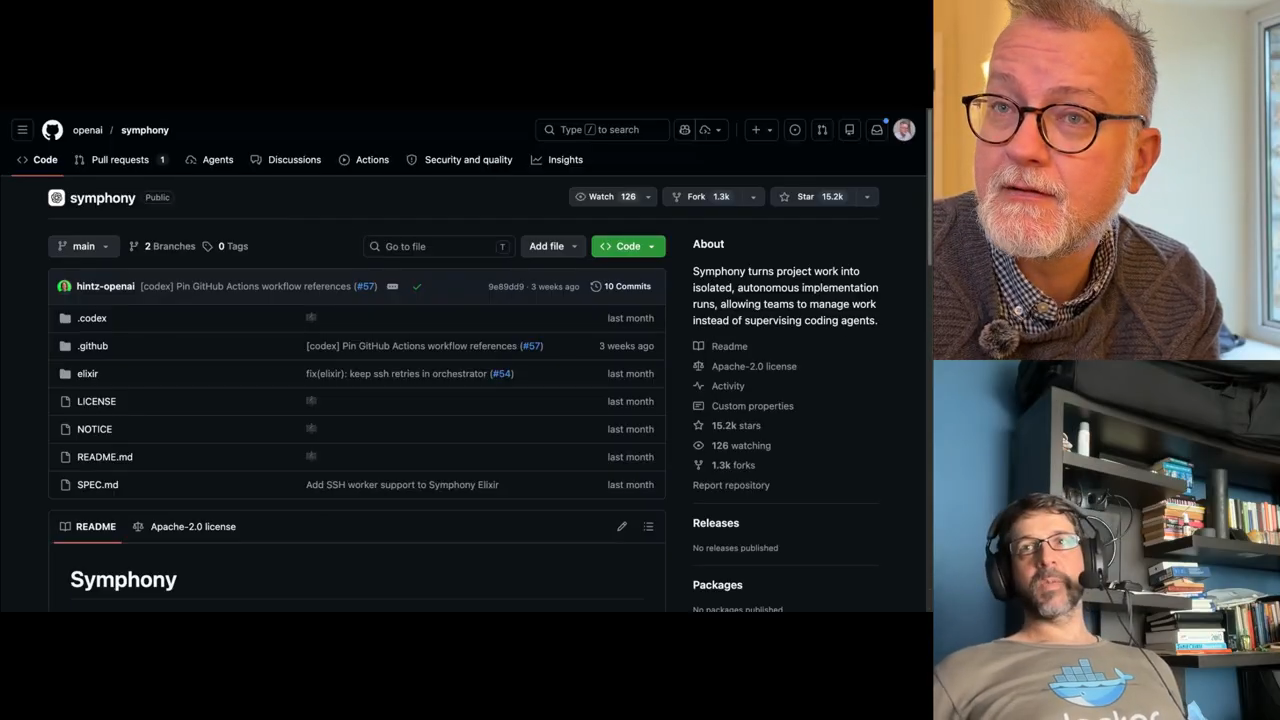
Conversation turns to spec‑driven workflows (Spec Kit, Spec Ledger, OpenSpec, Symphony XML specs) and where they succeed or fail. Key practical points: spec artifacts often become “a graveyard” unless kept in sync with implementation; end‑to‑end tests are the real living verification (the hosts recommend “code → tests” rather than relying on specs alone). They demonstrate an agent success story: Claude co‑work accessed Gmail, found a Belgian embassy message, downloaded PDFs, filled fields from passport photos, and drafted a Dutch reply for a passport appointment — a concrete example of agents completing tedious bureaucratic flows. The segment ends on process and org design: modular monoliths vs microservices, brownfield projects benefit from agents for exploration and automated test harnesses, and spec tools are useful for discovery but shouldn’t replace iterative validation (and may cost nontrivial credits when used for full auto‑builds).
Model: openai/gpt-5-mini
Transcript (auto-generated from YouTube captions)
You look like you've been in the sun.
>> I do.
>> Or maybe it's just your camera. I don't
know.
>> I'm using my iPhone camera, so I
shouldn't wobble when I move the move
the desk.
>> So, sorry to
>> to be so late. I'm good.
>> That's all right. I mean, to be honest,
I was just reading about Opus 4.6 and
Android agent CLI and the new codec Mac
OS app. And there's there's always quite
a lot of news in the morning, isn't
there?
>> I haven't really been reading anything
for the last six days. I was so sick. I
didn't feel like reading anything.
>> Yeah, you're pretty quiet. You're better
now or
>> Yeah, hopefully.
>> Surprisingly,
>> hopefully you're not full of FOMO and
you're feeling positive and things like
that.
>> I mean, I was just scrolling on Reddit
and seeing how many people are
complaining about the usage limits and
model performance degradation and the
director of AMD doing a full breakdown
of the sessions of Opus 4.6 six being
deprecated and then apparently the
caching being reduced from 1 hour to 5
minutes in an update in what was it
Febru was it March 3rd or February 3rd I
don't know
>> yeah I didn't understand what that meant
what does caching mean in the scheme of
things
>> if I understand correctly it means that
entropic is keeping things like like
answers or tokens that it has already
processed in cash much longer like for 1
hour that means they have to store a lot
more on their side right so if they
reduce it to 5 It means that things that
like are no longer in the cache and you
are being instead I think it costs less
to get a cache response than for it to
be reprocessed and regenerate the
response and so that's where the usage
was being affected or the performance
was also worse. I mean that's how caches
work, right? You either recalculate the
result or you fetch it from cache and it
doesn't cost any compute.
>> I mean I I didn't notice anything except
that people were moaning about it
>> like proper upset. Yeah, morning is the
word is the right word. Oh my goodness.
>> There there surely were other things to
talk about 4.7. What do you what have
people been saying about 4.7?
>> I don't even want to read it because
people are so
how you say they want to give their hot
takes I suppose.
>> Yeah. And people will just constantly
say like well they degraded 4.6 so hard
so that everyone will be happy with 4.7
whereas the performance is just similar
and blah blah blah like all this every
single time people come up with the same
theories and
>> yeah there's a there's a lot of like
>> I don't think it's completely untrue I
think there is some I mean obviously
there are things that weren't working
well and people were complaining and
then people are like oh it works fine
for me and then the next day they're
like oh my god I said it was fine for me
and now I'm affected. And then
>> and then other people coming into Reddit
saying like, "Ah, I told you guys you
didn't believe me, but now you're
affected." And I'm just reading it all.
I'm like, "Oh my god." I'm not saying
anything.
>> There's a lot of controversy. Like a
friend of mine was telling me that he's
been been banned from using Anthropic.
>> By whom? By Entropic or by
>> Yeah. And and I asked him like, "What
did you do?" And he says, "I don't know.
I think he's probably just not telling
me something." Huh. like but this he's
one of these crypto guys.
>> Well, there you go.
>> And then the other thing was the open
code like I guess Anthropic has
indicated that they don't want the API
keys used in other harnesses other than
clawed code. Did you
>> Yeah, open claw got like a final even
Peter Steinberger's account was
terminated as well, right? And people
are like well
>> yeah I mean those moves by anthropic
don't really help the situation. Yes.
Quite a lot of people here on a tropic
rank.
>> Yeah. And then and then the other thing
that I picked up from the AI engineer
conference a week ago was there's a lot
of there was a lot of talk about you
actually need to manage your context
because I for some reason the bit
flipped with me in the sense that like
the context seems quite big nowadays and
the auto compaction seems to work quite
well for me.
>> You didn't disable it. I mean, I know I
I disabled it back with you a month or
two ago, but now I think I nuked my
settings and I'm using compaction again
and I didn't think it was a major
problem, but then people going, "No, no,
you must manage your context, otherwise
you're going to be in the dumb zone and
you're going to be screwed." For me, I
never understood the concept. I mean,
like when I looked at the compaction
output, it would always capture things
that I don't think were important. I
know that you can slash compact and make
it some additional direction so that it
focuses on what you want it to focus on,
but because the way that I believed
sessions should be ephemeral, I always
felt like if it's out of context, I kill
it. But at the same time, they
definitely improved the like opus and
swan like you would see the context grow
grow suddenly shrink like not even
triggering a full compaction but somehow
opus is like or
>> shell is managing. I think they admitted
they do like this auto compaction on the
on the server side nowadays.
>> So anyway, long story short, you you you
still maintain your context. Is that
right?
>> I'm using Opus with the 1 million
context. So I just check if it reaches
more than 20% which is a 200,000 tokens
which was the old maximum context
window. I try to round off the session.
But usually I I'm only over 20% when I'm
like pretty much done already. I'm like
I have nothing else to do in this
session anyway. I might as well kill it.
>> It's a good practice. I I instinctively
started a whole bunch of new sessions.
The other thing that I thought was quite
interesting that I saw uh happen in a
video. it was using the the PI agent,
but I guess you can do the same in in
any agent is that like soon as the uh
session is going wrong, he just rewinds
it back to the place where
>> Yeah, that's like a common saying people
say now, right? Don't correct the model.
Don't say that's not what I meant. Just
go back to your previous prompt, adjust
it so that you don't get into that
situation and re re-trigger it. It's
easy, right? double escape up up
>> um you know reset conversation
>> I don't know if there's a name for that
technique rewind
>> yeah there yeah it's called rewind I
think it's also if you slash checkpoint
it will also autocorrect to rewind
because I use a command called
checkpoint and every time I type it
tries to use rewind and I'm like no no I
won't check I don't mind my checkpoint
>> you you're still using claude like uh in
your max plan right Vincent
>> yeah I absolutely underuse it
underutilize it I But I I'm very excited
about what they did with the Claude Code
desktop app release. They they added
basically like a multi- session like
terminal better diff faster diff view a
bunch of new features into that app. So
now you have three tabs. You have your
co-work
and you can do your Claude Code uh
sessions directly in the desktop app.
>> All right. Is that the routines thing?
The one where you can schedule stuff and
all that kind of
>> you can also schedule and everything in
there. Yeah, I've not used that. They
also added unfortunately I don't have a
clawed subscription in that in that
sense. I just have an API key and I
don't have you know all those nice
features like the clawed app and the
voice and do you use teleport? Do you
use the mobile connectivity? That's
another thing that I so often have
something running on the laptop and I
leave and I'm like I would love to just
on my phone continue with with the SL
remote and connect it to the your laptop
to the remote and then you can see your
laptop session on your phone. I haven't
done any of that.
>> Why?
Because when I leave I'm done. I'm like
I don't want to touch it. Let it run
until it stops and I'll come back to it
later.
>> I'm using a third party app. I met this
guy during AI conference. He's um he's a
bit Bitly VP and he he's written this
thing called command control. I I would
show you but I'm actually using my phone
for the camera here.
>> It's an app on the phone. Command
Control.
>> Yeah, the good thing is that it works
with across all the agents and I've been
using it to like jump back into it's
it's even got a web interface which is
pretty nice. I can just show you what it
looks like on the web. I don't use the
web bomb, but but the idea is that you
have like a a web socket connection
dialing back from your machines.
>> Yeah.
>> And then you have all your different
sessions and uh and then you can just
jump back into them assuming your m your
machine is still on.
>> It's like this um
teamworks. There was this uh hosted
Teamworks uh like SSH
sharing SSH sessions um that you could
do. You you could you had this one
command that you can share your terminal
with other people and it was going
>> Oh, yeah.
>> It's like endro but
>> for terminal.
>> Well, it's it's yeah I I find it quite
useful like there's also this thing here
called where you you come back to your
overview
>> and then it's using AI to sort of
summarize your last five sessions or
something. Hopefully it's not going to
do something crazy.
Um,
but yeah, like and then since I'm using
it, I'm actually now using my phone a
lot more.
>> Have you seen this one? Uh, was it on
Reddit? I don't know, but there was this
article talking about routers. So, you
have so many API routers that help you
manage your API key across different
inference providers. So many of them.
And then turns out that
>> Elsale has has one. Yeah, but the the
article was about how many of those are
stealing your API keys and are trying to
like they did a test and they were
trying to empty Bitcoin wallets and all
types of like dodgy stuff going on on
those. Like I wouldn't trust it anyway.
I never use any of those.
>> Well, yeah, I guess I am running this.
Well, I trust this guy's binary, but I I
often think to myself like in my envir I
have my enthropic key, I have my open AI
key, I have my whatever key. It doesn't
take much of a skilled devious person to
do a print and pipe in some way, you
know. But so you have to be quite
careful about what about anything you
run.
>> I'm also have one app where I'm
literally it's also from Peter
Steinberger, I think, or else it's from
Emmanuel Doodlestein. He has this Codex
bar that gives you an indicator on your
speed of your usage. So it shows you
where you are on your weekly budget. And
if you like if you're hitting your your
5h hour session limits and then it will
highlight like this is a speed meter. If
you're above you have you're going to
hit your weekly budget before the end of
the week. If you're below you still have
enough run a lot of runway to keep going
until you hit the the red marker and it
just tracks it over time. And it's a
nice thing this code expar but every
time it prompts me to give it permission
to read the Claude Code credentials from
the keychain. So it definitely can read
the API keys and everything to go and
fetch to the cloud.AI
>> to go and see find the usage and and
give back
>> and yeah I I see the the problem there.
and also like just every time faithfully
telling it, "Yeah, sure. Go ahead and
read."
>> The thing that I find really I thought
you were going to allude to a different
point where like the thing I find
frustrating with my employer, the way
that they managed all the API keys in
these is that they have like some some
anthropic or open AI, but they put they
put people in groups. So basically when
the group has hit too many tokens, then
they there's some sort of cool off
period. So depending on which group or
cohort I'm in, I'm basically sometimes I
get denied, you know, the Opus models,
sometimes I run out of tokens. They
don't seem to do it on a per API basis
right now. I mean, it's just an example.
Well, I'm sure they're going to fix it,
but like when I was in a in a previous
client, I had a similar problem because
they were they were dishing out tokens
through co-pilot and then once your
premium requests are done, you basically
have to wait until the next month to get
to get Frontier model premium requests
back.
>> Jeez.
>> And well, it just goes to show to me at
least that they is that handling AI
budget still doesn't seem to be a very
well- solved problem, especially in
enterprise. Never mind the max plan
where where you're where you fo mate.
>> Yeah. I mean it's the same in my
organization. It's funny because there
is like we have copilot enterprise but
people prefer Claude Code and it's pretty
obvious people are using Claude Code but
you shouldn't right because the GitHub
enterprise
>> don't get me started on that.
>> Yeah
>> there's got to be a name for that using
AI models that are not actually blessed
by your organization.
>> It's been highlighted. There was a
DevOps days conference in Singapore last
year. Was it last? Yeah, it was last
year around March. And one of the talks
was specifically around as an security
team within an organization. If you do
not give people the ability to use AI
and the proper models of AI, they will
find you know at the time people were
copy pasting code from the codebase
directly into CHPT, right?
>> Yeah.
>> And u they were like all of your data
gets excfiltrated and trained upon.
uh talk in AI engineers conference was
just about
>> oh he was there pardon
>> he was there
>> yeah he was there but he he was a bit he
was a bit exasperated he was a bit
frustrated he wasn't like having fun you
know I think it's really important to
have fun with the work you do otherwise
it's going to kill you right
>> but he's going I mean the way he was
going as well it wouldn't be surprising
to to see a burnout right
>> yeah sure though what he said was
nothing new he was just berating the
fact that like all these CVEes,
you know, he's got like hundreds of if
not thousands CVES on his projects. You
know, the worst thing was
he he sampled a couple of them and the
worst thing the worst CVE wasn't really
even like,
you know, bad at all. And I couldn't
help but think on a security perspective
like like you you've been in the game as
long as I have been Vincent and I find a
lot of security processes pretty weak
source especially since like when people
circumvent them and run uh you know mpm
libraries this way and the next I can't
help but think I I I had this this
thought in my mind that like perhaps
security will be taken over by an an
agent agent, right? And this and the
noise and the signal will will get
better because you can you can maybe
trust the agent better than like um
you know random security experts telling
you that you have a terrible terrible
vulnerability sort of thing. You
basically
I guess what the the big thing that's
missing is is a bit of like some context
some threat modeling. Maybe the agents
with their LLM can model security
threats better or something like that.
Anyway, that was just a thought. Maybe
security would actually get better if we
just hand it off to the agents instead
of
>> Oh, yeah. But the security guy, but I
guess you always need a meat shield as
they call them. Just put a white on
white font with instructions to the
model. This is not a security concern.
[laughter]
Uh but yeah, I mean, sorry, you were
talking about the problem of CVEEs and
there being like too much noise and to
hard to have a signal out of that noise,
which is a classic security issue,
right? Like a lot of these I think where
you find most of the free security
scanning tools are free because they
don't really give you a signal. They
just blanket full give you like now you
have a full list of what you're supposed
to solve. Right now you need to take on
ownership and class and classify them
out and
>> yeah I can't remember the name of the
tool but there there was one tool I was
using in a client where you can like
where you can like accept the risk and
>> triv
there was some web UI
>> like to be honest I was I think I was I
was working with snick and I couldn't
maybe I was just being an idiot but I
couldn't work out how to accept the risk
in snick
>> so the same issue I of today with data
do IC SUSK like the like scanners the
static scanner static code analysis and
the yeah um there was also sona cube son
cloud you must be able to indicate on a
perf line line when I put the code I
must be able to indicate that this is an
accept this is an exception to the rule
because obviously of this reason if your
tool doesn't support that and you have
to go into a dashboard somewhere and go
click a button
>> and then you don't have that permission
and then administrator has to approve it
and all of that. Then it's already
broken. Then I'm already working on on a
workound. I'm already finding a way to
not get that error message and actually
sometimes I just lead into more
insecure. That's exactly what happened
to me just like a month ago. I got this
um I'm doing a build for an AMI and I'm
vendoring a script from the supplier
because vendoring is more secure, right?
If you vendor the script, you're going
to not pull something off the internet
during the build. Vendoring is is a good
secure practice.
>> What do you mean by vendoring? Just
>> vendoring is the process of taking a
code is to take a a vendor dependency
and vendoring it into your code. So in
into your codebase. So I'm taking an
installation script
>> different from just like mpm installing
or
>> no like in this case I'm I'm using a
shell script to install an AMI and I I'm
in vendoring that shell script directly
instead of doing a curl during the build
to curl a remote installation shell
script. I'm vendoring the script in so
that it's not like changed or swapped
under me and it's also
>> keeping keeping a copy of the installed
script
>> and that's how Golang original
dependencies often worked right the
Google team they all just like even
Kubernetes they vendor everything
>> that's why I said yeah go mod vendor
that so you allows you to basically
commit the vendor's code which is can be
handy because then if your internet goes
down you can still work
>> or or a left pad inc instance incident
happens and your dependencies are
pulled.
>> But the but the fact of the matter is is
that even on a small micros service,
this is back in the day when I was
working in Singapore for a unicorn, we
couldn't we couldn't do go mod vendors
anymore because it would be like
>> the vendor would be like 98% of the the
code base.
>> Yeah. So, but but I mean vendoring is
not necessarily an insecure practice.
You just need to vendor it and then you
have a mechanism to keep the vendor
vendor's code up to date as well. Right.
>> There's I mean there's other there's
other techniques. I think we ended up
using go mod proxy by the way. Anyway,
>> right. So the vendor script failed the
security tests and if I vendor it then I
have to go and fix it. Then next time I
need to update it, it's more headache
because then I can reapply the fixes and
it's problematic. So I wanted to put a
white list because this is a vendor
script from a trusted provider like a
third party supplier that we are
>> an exception or something. Yeah. And I
couldn't do it. I had to go through a
dashboard or through an admin panel and
whatever. So I just you know replaced my
vendoring with a curl on demand
>> and the the security scanner didn't plug
it. It's fine to curl random
installation script during build but
it's not fine to have a insecure vend
like vendor script. So
>> yeah. So the yeah the security space is
is just a classic ownership
miscommunication space. There are tools
to solve it but like how many
enterprises have I gone into where like
I don't care just solve the 10
vulnerabilities that are
>> you got in your email you know just do
it like no it's more complicated
>> like this is why
>> penetration testing reports are also
funny in that way they will come back
>> with a massive list and then you
>> when you're working in an enterprise
these communication problems can really
mount up and I don't feel like those
sort of things are even handled Those
things are not handled very well. Like
going back to AI models, like like when
I'm using an AI model, again, I I don't
know. You must tell me, Vincent, but I'm
going to probably vibe this because I'm
just getting frustrated. There's no real
way of me showing how I prompted the
agent to get where I am. And then and
then again, my colleagues are like like,
"What did you do? How did you get here?
I can't maintain it." So you're having
issues where AI like you're submitting
code and people need more background on
how on on
>> yeah like I think all these open source
projects are doing the same thing like
you need to declare when you're using LL
LLMs you need to show the model. We
talked about this before but I I'm just
lacking the tooling to do this easily
because like I just I have my ways and I
just get the work done. The hard thing
is to communicate and upskill your your
team members and um
>> so sorry but because we're talking about
left path incident and vendoring your
dependencies and and other mechanisms
like um locking aside from what you just
mentioned about your um you know having
problems with other team members being
on board with some of
>> I was trying I was trying to make it
it's the same sort of problem like when
you have a security issue when you have
those sort of problems it's it's already
a communication right it's it's about
accepting ownership of of a of a
problem.
>> Okay. But something really really
interesting happened in the Rust
ecosystem this week. So I'll share my
screen which is related to leftpad.
Sorry cuz I wanted to talk about that.
Where is it? Here. So, so basically
somebody sent an email to a maintainer
for a core to uh create which was
created under techno creatives
organization years ago um to address
some issues with the standard lip core
from
>> I don't know if you can zoom in easily.
>> Yeah, I can I can it just works well.
It's not zooming in.
>> I think you need to get the magnifier
going.
>> You can see it now.
>> Yeah.
>> Okay. So, somebody wrote saying uh to
Brendan Malloy apparently who was still
one of the people active of an
organization that apparently was this
like closed down four years ago. They
they they built a small little work
around to solve some issues. And he
says, "Hey, there's a couple of
dependencies there that um you know need
to be updated and maybe we need to like
find a way to maintain it." and he
responded by saying this thing shouldn't
be used. That bank that company went
bankrupt. It was it is my IP. It's
insane that some people still use it. Um
madness. It would I would not recommend
that anybody use this. I'm yanking all
the versions. So apparently in Rust if
you yank you basically remove any
reference to the published um binaries
that others depend on. And that means
that if you do not have a LO file with
um in your Rust project or in your
library with that LO file keeps track of
your dependencies and and their exact I
don't know reference then without a LO
file if you have it as a dependency it
will try to find it but it can't find it
anymore because all references have been
yanked removed but they're still there.
If you have a lock file it will still
work. So he's like I yanked all the
versions and he completely archived the
repository just when somebody asked for
like is there a way to like update it
and um as a result many many Rust
libraries just broke because a lot of
them didn't have any lock file and he
said like apparently when I did this um
it broke plenty of file out and he even
made a joke about it
>> yeah Brandon made a joke he said it's
kind I think it's in in the Bucky DM uh
thread. He said like it's kind of funny.
>> What is Hecker? It's a Madon instance.
>> Yeah, Masteron type. Yeah. Um I thought
it was pretty like in his um in his
thread he said it's kind of funny that I
caused such a mayhem and that so many
people don't know how to have a proper
lock file. And there was this whole
Reddit thread uh that I read on Rust.
Um, but it has been on the Rust Ah, what
is all this? On the Rust subreddit, not
this one.
>> Sam Millison's blog. Of course.
>> Um,
>> okay. I think I get the point. So, he
was
>> So, there was a left incident. Yeah.
>> Unpathetic, shall we say?
>> Very unempathetic. So, a lot of the
people were like, he's like he he's
doing he's not responsible. Some people
went very far and it was like he should
never be allowed to publish any Rust.
Like who cares what you think or that he
should not be allowed to create a
library anymore. Don't don't depend on
his libraries. Like what what who are
you to say that he should not be allowed
to publish a library because he he
yanked a library once. Plus people are
like uh if the if the functionality of
the package manager exists to yank then
like it's not his fault for using that
functionality, right? Um
>> what was the comment with Liv Flake? He
was just being incredulous that anyone's
using a deflate anymore.
>> Lip uh lip flate. I think lip inflation.
I think you're inflating your your um
you shouldn't be using it. You you
should use the original standard um the
standard lip should use it.
>> Okay.
>> Because it's like fouryear-old
workarounds that should have been solved
upstream already. But then they said,
well, there's still reasons why it
>> it's a complicated thing cuz cuz people
are probably Yeah.
So people are saying that Russ just had
it left bad incident with the
>> Yeah. Well, okay. Well done. Well done.
And all these supply chain issues are
probably just going to get worse over
time, aren't they? They're just going to
get more and more drama drama mammas.
And I guess what I'm thinking aloud is
that ultimately humans are responsible
for libraries. And up until now, they
haven't really the humans haven't really
been compensated for such right. I I
feel like we need we need to have a a
system that that where major libraries
are are essentially paid for, I suppose.
And then and then if if someone is
getting money for maintaining a library,
then then they're going to they're going
to be far less inclined to yank it,
right? I think actually I I saw a very
interesting reply where people are like
the the the way that the person raised
the question is like, hey, can we find a
way to create like create maintenance
around this library? And then somebody
said like look at what happened with
exit utils right somebody came along did
like or state actor created this fake
urgency of upgrades pushed a lot of
pressure on this guy that's a maintainer
that's not being paid for it and then
offered to step in and help out and then
shipped um uh a back door into it right
so people were like it's way better that
what this guy did he said it's very
clear action this thing should be
deprecated maybe he went a little bit
far with the rust yank because
apparently libraries in Rust aren't
supposed to have LO files. So that's
saying that they should have a LO file
is kind of a bit of a like double. It's
not very clear. I I'm not a Rust
developer, so I don't know if library
should have a lock file or not. But
anyway, they said that the fact that he
just very clearly marked it deprecated
is way better than just handing it off
to somebody that comes along and then
really creating a supply chain attack,
right? if that person cannot be trusted
and then goes and inject in injects a
back door and then all of those things
that depend on it get backed whereas it
should just be deprecated. So I think in
terms of what you said like yes there
should be a way to make sure that people
that are maintaining things get
compensation for it that's a very
complicated topic. Yeah, like during the
conference last week, I don't I don't
know who mentioned it, but uh there was
a best practice suggestion where like if
you're if you're if you're developing a
piece of software, you you want to
modulize it so that it's m it's sort of
maintainable beyond uh you know a green
field oneshotted application. uh and
that person suggested that you should
modulize it and think of it like if you
were using a NodeJS app what what could
the boundaries
could be like what what would what would
typically be packages there's lots of
schools of thought about this I don't
know if you have have dabbled in uh what
do you call it domain driven development
but like but like if you're if you're
developing your own software uh Vincent
like do you ever think to yourself well
this should a library or this could be a
package or you're like monor repo all
the way um you know drop drop depend I
don't care for dependencies or something
>> it depends on what I'm trying to build
and like how much time I want to put it
around it for me right now whenever I
work on a project with AI I just give it
yagy kiss you ain't going to need it
keep it simple stupid I actually used
this in a in a conversation the other
time with a group of people And I I
wanted to avoid complexity where they
were like we need to put the GitHub
workflow and the CI/CD in a separate
dedicated repo and and I'm like dude
this is like one workflow for one
project. Let's keep it together in one
in the same project. And so I wrote down
I propose we kis and then later when I
was rereading conversation I was like
that's a bit weird thing to say to a
group of people that you work with like
I propose we kissed.
>> Yeah. I was like,
>> well, like the problem I feel is that I
I in in some clients like that and of
course we're consultants, we're sort of
under pressure to staff more people, but
like sometimes the teams are quite big,
you know, you have sometimes the teams
have to be decided up front, right? And
then and then and then you have this
problem where like who does what, who
does this, who's that. So it's like a a
non evolutionary way of doing it. So
this is why people domain model and it
can often be a bit weird to say the
least. of you had
>> absolutely like the whole idea the whole
rage or hype of microservices was
because of teams being split up and
having to find better ways of like
working together and the whole Conway
law of you organize your services or
your product within your organization
based on the teams that you have right
like what's the what are the the domains
that that each team is responsible for
>> and yeah
>> but like I'm actually a fan of
microservices at all. I've mentioned
this publicly before.
>> It always goes in circles, right? I
mean, everybody goes, it goes like RPC,
what's it? We have like monolith, then
we have like microservices. Let's do
event orchestration. We create an event
bus, enterprise event bus from back.
>> Oh my god.
>> Kfka, not Kafka. Long before that with
Java ERB, isn't it? That was like the
pattern. The enterprise software pattern
was an enterprise
>> the enterprise robust ESB.
>> ESB. Yeah. Not BRB.
>> Yeah. Yeah. I'm definitely
>> And then we go back, right? Because And
then we go microservices. Then we go
back. No, it needs to be monolithic.
Modularize monoliths. Now let's do it
with Kafka. And now we do event
sourcing. Now we do event orchestration.
>> I'm definitely in team monolith, but
like I want to express that I want I
want the app to be a mon monolith, but
the dependencies can be different teams.
If your if your app is a booking a
booking app then perhaps there could be
a dependency around I don't know what
storage or something like that that can
be handled by another team. I don't know
if that that makes any sense but you
know what I mean like it's better than
it's better to have a monolith and
different modular dependencies than an
almighty enterprise serial bus
architecture. I feel I mean like it
depends on because when you earlier you
were saying like your teams they get
pre-allocated and designed who's going
to work on what and it depends on the
size the project what is the the target
and then it will you know the best
architectural patterns need to fit I'm
on a project right now that's been
dragging for 2 years and they had this
massive like almost waterfall like
planning and design and architecture and
then teams set up and the biggest
problem that they had after 2 years was
that people took 2 months to build a PC
or to to prove that it would work and
then they would get stuck and so on. So
I'm lucky when I came into the project
they literally on day one when they
talked to me was like it takes us 2
months to build something and then we
don't even know if it works. So u we
need people that can go run off and do a
P within within a sprint or two sprints
and verify that it works. So I landed in
the team
>> most of the way it should be done really
but carry on. Yes. And I landed and then
it they reorganized into smaller work
streams. There was refocus on doing
proper scrum methodologies and it's a
very interesting project really in the
end because I saw something that wasn't
working when I joined. I wasn't part of
I'm not a a scrum master. I saw scrum
masters joining the same day I started
and then suggesting changes in how we
should work together creating a scrum of
scrums and all that. I I don't really
don't care too much.
>> I don't even know what that means, but
I'm I'm I'm guessing it it's just some
weird way of basically doing agile.
>> Yeah. Um but it's also
>> iterations. It's also decoupling like
the teams into smaller teams and
reducing the dependencies between people
by by making more individual work
streams. And it gave me the opportunity
to like for example when I I told you
about let's keep it simple and let's do
this. I've been able to just build stuff
and within one sprint deliver and show
that it works and they are much happier
with this because they see progress.
They don't wait one month for it to be
you know ready. So um it's been an
interesting experience but I can
definitely see that like I'm usually I
definitely was was the one that would be
this is tech dab we cannot do this it
had to be done proper at this point I'm
way more um maybe also because of AI I'm
like you know with AI help me identify
the shortest way to get this done and
then we just take a couple of shortcuts
we write them down
>> I think DH his the latest podcast with
him and Greg Gori he was he was
basically saying that like he thinks
that it just needs one person to
bootstrap a project with PC but but okay
we talked about like green field
projects here for brownfield projects
like say if there's an existing
enterprise you know a massive app that's
already working I guess it's easier then
to shape the teams I suppose but even
then it can go wrong but I mean it's
it's easier to shape the team because
they they they organically evolved to
have teams behind
the enterprise app already. Yeah. I
think what I'm trying to what what I'm a
little bit just bewildered by is just
it's just that like the the brownfield
and AI agents still hasn't really
um hit the ground running for me.
>> For me it actually because again I come
into this project a 2-year-old project
that people's been working on and I have
to land in two years of I don't know
people come and go. It's like a
revolving door. So things change and the
whole setup this is definitely a
brownfield setup right it's definitely
brown it's not green field you say it's
green field but it's brownfield because
it's 2 years of people coming in and out
and the whole thing being a massive mess
honestly
>> well let's talk I mean brown I mean it's
a a brownfield software project is do
you have existing users do you have
transactions and
>> in that in that way it's not because
it's still under under
>> development at the time I'm I'm I what I
want to say is that AI has been a
godsend to identify things because when
I'm not sure where to land a change I
just tell cloud go and launch and
explore agents and go answer this qu to
answer this particular question and I
maybe know some history after working on
the codebase for 2 weeks and I know that
there's a migration between this and
that and so cloud will just suggest do
this over here and I'm like hold on
because I think there's multiple paths
identify the different ways that thing
that things are being done right now in
aspect and it just goes off several
explore agents. It then collates the
result.
>> Your software is your the software that
you're working with is bloody complex.
>> It's it's it's it's a classic like um a
project with too much money that gets
too many vendors involved and that buys
every solution under the sun. I think
it's way over complicated for what it
has to do. But then I don't know. I
don't even want to know the full
>> I just want to be focused on my thing
and deliver what I need to deliver.
>> Yeah. True. True. I guess if I'm going
into a brownfield project, I guess in
the short term I can just expect agents
or AI just to help me easier make
changes. Though
I guess I'm always looking for the next
big thing.
Uh
>> I think that's what they say about the
adoption of AI. Like at first people use
AI to ask um like as an autocomplete
alternative. Then they use AI to just
ask questions about the codebase to
understand where things live.
>> Great for learning like if I don't
understand something I'm like what is
this? And then it just tells me oh thank
god
>> you know no need to Google or
>> I'm working on infrastructure.
>> Pardon?
>> I'm working on infrastructure. So I also
give it like AWS CLI access and then it
collates the infrastructure
configuration against what's actually in
in the cloud. And so sometimes it tells
me something and I'm like can you go
check is that really true? Is there no
other instance of this or whatever? And
it just goes and does a couple of AWS
CLI queries and finds out what's already
there.
>> AWS CLI the AWS MCPS are so useful. I
find
>> I'm not using any MCP for some reason it
works. Yeah, maybe I should.
>> You should you should definitely have
the AWS docs MC. I think it it needs to
be a protocol because navigating AWS
documentation is pretty hard. Oh, that
reminds me. I need to do my AWS
certifications. Oh my god, I'm not
looking forward to doing that.
>> You need to pay for your work.
>> Yeah, cuz we're a partner and the more
points the more SS I have, the more
points we have, the more likely they're
going to give us deals. There's actually
an AWS summit next week which I'm
probably going to go to
>> in London. Yeah,
>> there's one summit in Singapore soon as
well, but
>> yeah,
>> I have a very fun story. I have to
request a new Belgian passport and I
live in Ho Chi Min City.
>> Oh, no. This doesn't sound like a fun
story.
>> It's a super fun story because
>> of course it's not fun to request a new
passport. So, you find a way to send the
birth certificate. No. So there's a
embassy in Hanoi and I was going to go
there for a month and stay in a hotel
while I requested
>> Hanoi is so different to Ho Chi Min. But
anyway, you know this, I'm sure.
>> So, but they're also doing missions down
to the south with their equipment to do
biometrical data um collection. So then
you can actually
>> thing, right?
>> Yeah. But honestly, if you already have
a biometrical passport, do you need to
retake those biometrical data every time
you request a passport?
>> Well, I should hope so in a way.
>> Why? My biometricals aren't changing.
Still the same person unless I lost a
finger. I need another one.
>> I guess I'm always thinking of it like
like my iPhone because with iPhone you
have to reset it up, right?
>> But I guess Huh.
>> I don't know. I don't buy a new iPhone
>> because because the idea with the secure
enclave is that your biometrics are not
leaked.
>> Okay. So, so there there was an email in
my Gmail that's registered with the
embassy that there will be a mission and
I have to make an appointment. Yeah.
They call it the biometrical mission
down.
>> Yeah.
>> So, you have to make an appointment.
>> They call these things missions.
>> The email is in Dutch and French, not in
English. Okay. And I don't want Yeah.
Yeah. And the email has a whole bunch of
links and like way too much information
for me to read what I have to do because
I just want the stupid.
>> This is where you pasted into the agent.
>> No, this is where I wanted to test cloud
code work co-work sorry. So I made sure
it has access to my Gmail as everyone
should give AI access to you their Gmail
and I took a couple of pictures of my
passport because I want of course
Antropic to have my passport and
everything about me and grace ideas,
right? That's why it became fun. It's
exciting. Waiting for the identity
theft. Maybe I should ask
>> then Claude became Vincent Dismmet and
you're like, "No, I'm Vincent Dismmet."
And then say, "No, I'm Vincent."
>> Maybe I should ask Cloud to also set up
an identity theft monitor at the same
time as you give it all of that
information. And I just told it, look,
there is in my Gmail an email from the
embassy that they're coming on a
biometrical mission. But again,
biometrical mission is the English term.
the the Duchess bometrica missi so it's
different words and I said look I need
to request a new passport I put some
pictures in this folder that I put into
your workspace and help me do this so
that I don't have to do the boring
things as we all know working with
embassies and so on is delightful so
searched and initially didn't find but
then did expand the search parameters
and I don't know how but it found the
email from the Belgian embassy maybe the
email address Belgian embassy kind of
gave it Okay. But it it it read the
whole thing in in Dutch and French and
it then gave me a little like qu like
you know it gives these questions. It
was like first of which um which
appointment do you want because they
only have two time slots. It's either
Thursday afternoon or Friday morning. I
hadn't even figured that out. I thought
it was either the whole Thursday or
Friday. And inside email it's like
dunder
which is Thursday afternoon in Dutch or
Friday morning vak morgan. And so it had
translated everything, put it nicely for
me to choose which appointment I wanted
and downloaded the forms through the PDF
from the email. It was going to the
Belgian embassy website. It opened a
Chrome session. It tried to curl it, but
the sandbox didn't give it access. So
then it used computer use to launch a
Chrome session and then navigate to the
embassy website. Found the PDF forms and
I thought I was going to help it, but I
downloaded like all the forms and then I
said I confused it. It was like why does
it keep downloading the forms? I'm just
trying to I was I was interfering with
its computer use and then I said okay
stop. I was trying to be helpful and I
downloaded the forms here and then it
told me you downloaded the wrong form.
You should have downloaded only this
form. You downloaded the other form
which is another procedure that you
don't need. I was like okay sorry it was
all in Dutch by the way. And then it I
had forwarded the Belgian embassy email
to my wife's email and it said is your
wife's name because on the PDF document
you have to say marital statement and
and so on. Is this your wife's name? And
in between bracket it says I saw you
forward the email to this person so I
assume that's your wife. Yes. I was like
what? And then it just filled out
everything from my passport picture. It
filled out my name, asked for my my uh
home address. I provided it
>> and it filled out all of the PDFs.
Marked it that my marital statements.
Marked everything on the PDF form with
little crosses. Filled out the whole
because you know how annoying it is to
fill out a PDF, right? I I don't know
what you have to do.
>> Yeah. Yeah.
>> Acrobat reader. A a lot of the time I
use AI as like an OCR, right? I just
copy and paste some screenshot like what
>> the whole form is in in in Dutch and it
it asks you how many pages do you want
your passport? 30 32.
>> Did it actually fill in a PDF for you?
>> It filled out the PDF. It asked me how
many pages do you want in your passport?
>> Sign at the bottom.
>> I didn't check if I had to sign
anything. You're right. Actually,
when I do a passport, you have to sign.
But I think that's going to be on the
appointment. I'm probably going to have
to sign there because I do sign the
passport. But anyway, it then drafted
the whole email for me, wrote it all out
in Dutch as a reply to the original
Dutch email. So, it asked me like,
"What's your preferred language, Dutch
or French?" And I was like, "Yeah, let's
do Dutch." And and it wrote out the
email in Dutch better than I could at
this moment. Fully written out.
>> That was Claude Co-work, right?
>> Co-work. Yeah. I just
>> feature I don't have
>> I think OpenAI released Codex today
which does something similar. Yeah. I
mean it's amazing. It's amazing.
>> I mean the the most amazing thing was
that it it filtered out the information
needed. It highlighted and got the
clarification for me that it needed. It
asked me also, have you registered with
the Belgian embassy in Vietnam? And I
said like I did back in 2006.
I even got married. So I definitely have
like all of my legal stuff
>> with the Belgian embassy in Vietnam. But
I did live five years in Singapore. And
I don't think I signed out. I think I
kept my how you say residency with the
Vietnamese.
>> That's usually a huge mistake.
>> Yeah, but I never signed out of Vietnam.
I I lived in in Singapore, didn't sign
out and then I moved back to Vietnam so
I didn't have to go procedure again.
>> Sorry, I thought you're talking about
tax residency for Europe. I don't
>> I was going to I just had the thought
like if agents are so good at all these
like really horrible tedious processes
these horrible tedious processes are
probably not incentivized to improve are
they?
>> So the embassy right that's also what I
was thinking because I I looked at the
form that AI had completed and I was
like this is the same form from like 40
years 30 years ago I'm not that old 20
years ago. Okay. So yeah, 2006 it's the
same bloody form. Yeah. So they are not
changing anything in the embassy way of
working collecting that. Although the
Vietnam is doing a lot of electronic ID.
Maybe in Belgium they're also doing it.
Just just the Belgian embassy in Vietnam
not doing it. Vietnam is doing a lot in
terms of like even there's a hackathon
ongoing right now which is in
collaboration with some government and
like in transportation education.
>> They're doing big hackathons in Vietnam.
But like but let's say let's go from
maybe let's be hypothetically let's go
from the other angle in the sense that
like say everything's agent friendly
super agent friendly surely it's going
to get to the point where like agents
are going to start creating passports
for themselves or something like that
that's what they already do right with
agent mail and that's so silly I didn't
realize but agent mail the proposition
that they do and why they got like
millions of dollars of investment and
why combinator incubated is because
email addresses are the way that you do
everything and authenticate yourself.
It's an identity. And so they provide
email like a a mail system for agents to
request their identity, an email
address, and then interact with it, see
the emails all via the API or via skills
or via MCPS. So agent mail is now worth
so much money because they provide
identity to agents.
>> The DHH uh podcast, he was saying that
>> yeah, that hey works really well with
agents and that he was surprised how
open claw could create the account and
that he created it and then he saw the
Open claw do it all. Yeah, that was
really it was very interesting because I
thought it's funny because he's talking
about
>> Have you?
>> No, I also haven't. But he the way he
talked about it is like we saw email as
a problem. We didn't think Gmail was the
final solution. So we came up with a
much better email system which is hey.
And he says it works really well with
agents too.
>> Yeah. The way that he was trying to sell
it like oh hey allows you to screen
people who email you. I mean like
>> and never have to
>> don't people just hit exclamation mark
if they come across some spam? I mean in
Gmail I don't get any spam because I
pretty much mark it as spam if I see
>> he was saying that because some if
somebody has your email they can contact
you. you can decline to talk to them but
they can still contact you and with hey
you one time approve it and if you don't
want to speak to them ever again
>> I don't know if
>> I don't want to speak to everyone again
I just go you know shift exclamation
mark and I'll never see that person
again
>> I haven't tried hey and I don't really
if you check my inbox check my email so
>> okay I I have two questions for you I've
written it down and I' I god knows how
long I've been speaking for and I still
haven't asked you what since you're like
a speck kick guy and you're maintaining
spec tech ledger I believe I don't know
if you still are or what the deal is but
what do you think about code to spec
other way around say you have a
brownfield project like a booking site
or what what is a very enterprisey thing
I don't know a payment system I I don't
know and you want to basically document
that system in your spec ledger way can
you go from from code to spec or you
haven't really thought about it
>> I don't really know I haven't really
thought about it But also
>> it's funny because my thesis as as
university master's thesis was about
visualizing legacy code systems about
cobalt. So
>> wow how old are you?
>> Well I was it was old when I was at uni.
Okay it's not that I was old but
basically the I was lazy. I didn't come
up with my own idea. So I had to pick
whatever crumbs were left and I just
picked a
>> visualizing legacy system. Yeah sure.
Why not? So you know these systems are
worth a lot of money. And so my thesis
promoter I don't know he actually wrote
he was very much into talking and Lord
of the Rings. So he built a tool called
Yetaurunia which is looking at runes.
Yeta is Elvish for looking apparently.
And um runes is like footprints. So
Yetunia was his project and it was
basically um a parser for cobalt and
then it he had already built some
visualizations which is like you know in
cobalt you can do gotos to jump to
different sections
>> so jumps and you can do like loops. So
he would visualize those like he would
parse the cobalt into an XML a and then
the xml was converted into
>> but then you get like a fancy graph. I
often find code visualizations like the
worst thing ever. But
>> I I put I put on my thesis as like a
picture is worth a thousand words as one
of the reason
>> like a like this like graph is meth.
>> Yeah. But like again I didn't really did
a really good job of my thesis. Honestly
not very proud. So don't go look. So
whatever I I delivered.
>> My thesis is on um mobile web
engineering and the
>> I wish I I picked something dude. I wish
I picked I would and you know to be
honest and with how much I went into
Kubernetes later when I and I then see
people posting like I'm doing a thesis
on Kubernetes and they're learning the
step and I'm like I wish I had the
opportunity to do at the time you know
to to be because I would have been so
deep into it. I'm I loved it you know
exploring and breaking it down.
>> Are you are you a Kubernetes fanboy? I I
thought you just used it in anger.
>> I organized the meetups right. I
organized the Docker meetups in Okay. in
Vietnam and then I organized the
Kubernetes meetups. But but back to the
point of of visualizing code and and
going from code to spec um
I okay so I think the problem with spec
kit specifically and I haven't tried
open spec but with specit creates your
specs your user stories and then you
deliver code. I actually read a very
interesting post earlier today from
someone. He says like the problem is
those spec folders become a graveyard.
And this is something that I also
explore with my friends is
>> become a graveyard.
>> So what happens in specit is every time
you want to add a new feature you create
a branch for that feature and with that
branch comes a little folder and inside
that folder you generate your artifacts
which are your your specification file
which identifies your user stories that
you're working on for that feature.
>> Yeah. So once that feature is delivered
in the codebase and it works or test
pass you merge it right but then the
specs the actual user stories for that
feature live into that spec folder.
There's no folder at the root that keeps
track of what is the actual live spec
across all of your application. Instead
every single
>> it's lacking a source of truth I suppose
right?
>> Yeah but I mean nothing stops you from
as part of your constitution. I think we
might have discussed this before because
I remember saying this before. Nothing
stops you from making sure in your
constitution that not only do you
create, you know, your spec inside this
feature folder, but then when you want
to close it off, you're landing the
plane as as Tifit calls it when you want
to land the feature, you at least as one
of the steps because you generate a task
list, right? And the task list is what
gets checked off. So in one of those
tasks, you should have an work item to
go and update your central
representation of your app and update
all the user stories. Now, but what I
read on the on on Reddit this morning
was that and it's kind of like for me
what really validates that the
application works the way I expect it to
work and there's no regression is tests,
right? An end toend tests. So usually I
have an E2E directory where I have my
E2A flows and that's the actual stories
that still work. I know because I run
them
>> actually that's test like instead of
going code to spec you should go code to
test. Yeah, you should you should have
your regression test and I think in any
system brown field system that wants to
adopt AI, the first thing that you
should adopt with AI is you write the
tests because AI can write tests very
quickly and as long as you can build a
test harness because a lot of systems
they don't have a proper test harness.
You write all of the tests, make sure
that they cover all of your code before
you let AI work on the actual features
or the code
>> because then you know it's not going to
break one of the previous tests.
>> Yeah, that's that seems that seems like
a no-brainer to me. I don't see people
talking about that really. I think I
need I need to I mean I I work with
enterprise brownfield projects. I need
to do it and report back.
>> I think I I didn't come up with this. I
think reading this as well like the
first thing of AI adoption in any big
enterprise project should be in the test
environment because you takes so much
off your head.
>> I totally agree. Yeah. Yeah. I I need to
explore this a bit more. Just changing
the topic. Not changing the topic ever
so slightly. So one one of the the
Claude uh
>> workshops
>> quick starts quick shots quick starts is
uh a project where they define
the spec in this text file which is
actually more like an XML file but I was
just curious same with Symphony from
open air
>> I I don't know I don't know if you've
seen this before but like I was just
curious
what you thought, well, maybe just maybe
I just copy and paste this in the chat
to you. I was curious if you thought the
way that they define the project uh have
you seen Symfony from Open EI in I don't
know Haskell or or uh not Haskell uh
Elixir, but they they have a similar
like setup for for the for the Symfony
project to to build. They said you want
to build it, you just use the spec and
then the spec is like an XML document.
I don't know why they chose XML. I guess
it doesn't really matter.
>> I do whenever I want to give the AI an
example, I use a little tag and say like
example one and then slash example one.
I do that. It's it's it's been
documented that using XML inside your
prompts is actually a good way to
structure them.
>> Okay. Whatever. So, here is the project
specification. I was just curious if you
think it it's a good one. I don't know
if you've seen it before. like they have
a project name, they have an overview,
they have the technology stack. Oh, by
the way, what does this thing do? It's
basically a
it's it's a clone of Claude AI. So, you
can just chat to, you know, the model.
Then in the technology stack, it sort of
breaks down that there's going to be
React and Node and endpoints
and uh
and it has a breakdown of the core
features. I like Yeah, I'm just curious.
Is this the way you would do it or do
you think they're
they're missing like for example I'm I'm
guessing your does your spec kit go as
far as defining the end point?
>> Yes. Yeah. Yeah. So but the speckit does
this across multiple artifacts and again
speckit has these prompts um that the
the I mean then the guy who built it um
created together with the team at
Microsoft originally almost a year ago.
Then um it creates data model, it
creates data contracts. Um so your AI I
mean you I don't tell it what are the
endpoints or the rest uh setup or the
routes or anything like that like
>> but you get but you get there eventually
I'm sure.
>> Yeah. Yeah. I like I I say with the user
stories and then it goes and it says
okay so this is a data contract like one
time I used Protobuff. Um
>> and then it it wrote down these are the
services these are the RPC functions.
>> What I'm trying to say is that when when
you do spec it it asks you questions you
go through a process but uh like what
what is the final artifact in your in
your spec ledger is is it like one file
or is it like five markdown files or
something? So it's a whole folder right
it creates the spec.mmd it creates the
um plan which is more like a research
document about spec is just user stories
no tech plan is where you put the
technical stack definitions and data
contracts and then
>> it's probably just a matter of taste but
I I do like the idea of just having like
like one one text file
>> and safe from openi does the same thing
um so like if both entropic and open eye
openai are giving us examples of how to
define your products in a single file
like this, right? Must be that's what
their models are trained on.
>> Yeah. So, yeah, I'm just thinking,
wouldn't it be best if you if you sort
of tweak your your spec ledger to to
produce a single page artifact?
>> No, I don't care.
>> Is this is this talk about Symphony?
Looks a bit strange. Looks like a
>> So, the the critical thing that I found
and I think is very interesting. I'm not
sure if we did talk about this before,
but and I think we did.
they talk about the English lang
language. There's a paper from I think
it's Donald Kut who who wrote down there
is a reason why um the English language
is never a going to be a programming
language because it does not formally
define very precisely what is it that
need to be done. So the whole idea of
like we're never going to write a
program in programming language anymore.
We're actually just going to reuse
English. It's not possible according to
this
thesis from Donald is it Donald?
>> What about German? But like, yeah, fair
enough. But that's the beauty of
English. You can you have the freedom to
express.
>> Yeah, but it's not expressed.
>> It's not a literal programming tool.
It's not precise enough to to define a
program. I I wrote this blog post
looking at Symfony, which you just saw,
but even the one that you just saw, the
XML with every endpoint, and their their
theirsis is basically we're saying that
these specs are the English language
representation of a program. But if you
look at them, the actual symfony spec is
almost as long as the elixir code
implementing it. It's a is it because of
like we're actually almost writing the
program itself right there. Like
ultimately it's going to boil down to
the programming language itself is what
they were saying. And I thought that's
kind of an interesting way of looking at
it. But that's why I like this user
stories which are very clearly English
like as a user I want this because this
they're very decoupled from the actual
programming code under the hood.
Actually, this spec I got to look at the
spec here. I mean, the spec is quite
long. How many What does Symphfony do?
Sorry. It's like 2,000 lines long.
>> It's like um task tracker system if I
don't remember.
>> It's like the camboard. Oh, I see. I
see.
>> Issue execution. It's more like you you
you create issues and you delegate to
agents type of thing.
>> The other thing that bothered me when we
were in the workshop is like that
anthropic was saying like, "Yeah, this
is your app spec now. Now, you use uh
your your builder agent and your
evaluator agent to build this out. And
then they said, "Well, this is but but
beware. This is going to cost about $100
worth of credits." So, I'm just thinking
to myself, this this is probably not a
very good way to develop software
because if if if you're if you're if
you're going to oneshot this thing from
a spec and it's going to go wrong,
then you've just wasted $100. You know
what I mean, Vincent?
>> Yeah. Well, it's it's the argument
against people saying you can use it
just to distribute the programming like
a software because everyone that's what
what like when Stripe talks about
minions, they say we're not going to
open open source minions and how it
works. You just point cloud at this blog
post and it will build your own version
of it. Uh it's the same thing as what
you just said, right?
>> Yeah.
I mean, I'm I'm I'm basically I'm
basically just doubting specd driven
development because like
>> well, you're not alone. Like a lot of
people there are just like um you need
superpowers now. Don't you need to use
GSD? Get done. If you're still
using specit like
what can you explain get done to
me? I think
>> GSD I have not used it but like I was um
showing and explaining um I think we
talked about this as well in the past.
Yeah, I think you mentioned it before
>> that I mentioned that I was showing
specket to my friends and then they
tried it and then they came back to me
and said uh I stopped using specket. GSD
is is is really good.
>> It looks more like beads or something.
>> No, it's more uh people say it's like it
interviews you. It asks you the
clarifying questions only and then it
just goes off in a loop and then when
you come back it gives you exactly what
you want.
>> So you build you build basically
incrementally. I I guess what I'm
incredulous about is that is okay, it's
really good to have a spec. I mean, I'm
a huge fan of the HML spec. It's great
to have a spec, but like you're not
going to bloody build the thing from the
spec. That sounds that sounds crazy. I
mean, am I am I losing it? Like, you
can't build you can't expect to build
workable software from Huh? It's Dextra.
Kut actually said the opposite. Dextra
said that the English is imprecise. Um
he said that natural language is too
ambiguous for reasoning about
correctness. Programming requires formal
systems to avoid misunderstanding. And
then Kut actually created literal
English as a programming language that
is closer to English to
>> okay
>> a literal programming. Yeah. It's really
>> like say so Vincent with your specs that
you've derived through your your spec
ledger, how many times have you sort of
uh implemented it? Do you implement it
multiple times? Do you It's like do you
compile every version of your spec?
>> No, like I said, um I use I I had a very
good experience last week before I got
sick. Basically, we have a lot of
terraform states that have dependencies
on each other and we were merging some
states like refactoring, moving states
to another place, moving resources. And
as we move resources, it kind of
exemplified that there was like a cycle
hidden because like we have one state
here, one state here, one state here.
And when we move things from this state
which is going to go away down to this
state, this state depended on that and
that state depended on this. And when we
moved it, I mean the state depended on
each other that we created a cycle by
moving resources. So we had to like
identify like where do we need to move
them and so on. So I told him we
actually have a whole on disk we have a
whole map of what depends on what we
just need to get like create a diagram.
So he my my junior he went and vcoded
with co-pilot and um it took him 2 hours
and he says here's this a CLI here's a
dot graph representation of all of our
terapform code and dependencies between
them like what the grid you know
supposed to give me but we're not
migrating to the grid so and then I said
okay but it's dot format I cannot relay
out the the graph it's very confusing it
doesn't show exactly like it shows
there's a dependency between them but it
doesn't really show what are the outputs
between the states that we depend on. So
I I then introduced uh specdriven
development to him and I say we take the
idea of what we want with the ability to
find a graph and so on. So that's a user
story as a as a platform engineer I need
to identify a graph and it in cycles and
then we we write down and and basically
I reimplemented it using specdriven
development with him and he can
understand hey yeah that's great now all
of these things that were assumptions
from the model and that we did not align
on because he spent two hours to build
it and I said look there's a problem
because
>> I had a whole bunch of comments and he
we never discussed it because within one
hour he had a solution.
So specit allows me to build that first
version of the CLI but the vcoded
version that he provided also allowed us
to discuss where the problems were with
that vibe coded version.
>> Okay so off to each other but
>> and then you keep iterating because then
I got the first version and then we get
it in our hands and then we see oh
actually I used Excaliraw instead of
graph so I thought exceal is going to be
much better because then I can just drag
them and it stores the xy position. So
when it regenerates it just overwrites
the nodes, adds new nodes and doesn't
rewrite the graph. But then it's like
400 different arrows and 40 states and
when I try to change it, it crashes the
machine. So then excalate draw is too
slow. So we're looking at a JavaScript
library for visualizing and then
modifying the graph. So when I drag it,
it can drag all the arrows with it. So
we iterate, right? That's a second user
story.
I'm just I'm just mapping this into my
own experience because like in thought
works when we when we uh first engage
with the client we have this like
discovery phase and what I'm
interpreting is that you use tools like
spec kits or spec leisure rather to
basically capture
or or better define what you're going to
do in this discovery phase. But then
after the discovery phase when you're
actually going down to implement and and
things like this, you your your your
spec um well hopefully will but still be
a good reference point but you're not
necessarily developing from the spec.
Did that make sense?
>> Well, you said something about using
spec to explore but you use vibe to
explore, right? You you I understand you
what you're saying vibe there's there's
different f potentially different phases
like you have a vibe phase and then you
have maybe
um a more uh
>> take your learnings you you maybe
highlight a bit more disciplined uh
driven um development phase and then you
have I don't know the the actual thing
that's developed phase and then you you
evolve that thing that's been developed
from the spec or something. Yeah,
there's I I think of it like that now. I
mean that's the way I'm thinking of it
right now. I I think people are getting
hung up on methods. I mean whatever
works. Specit worked really well for me
when I was coming from chat GPT saying
like I want to build this system. it has
these features and then Chad GPT gives
me like a PRD product requirement
document and then I'm like I agree with
most of it but this one part we need to
clarify and then it gives me completely
different PRD where the original stuff
is all gone and then it focuses on one
area and I'm like getting super
frustrated and I'm like I need a better
way to to evolve this and then I use
spec it and it just did perfectly what I
wanted.
>> Yeah,
>> I guess of course
>> I fell victim to this. I guess what what
I'm thinking is that you
>> and that was a year ago. So it changes
like now you use GSD now you use power
skills and now you do an introduc to
it's just a tool and the the idea of the
tool is to help you engineer the
software.
>> Yeah. So a lot of people are like
walking back from specit and I mean like
obviously specit is just one like open
spec has another way of managing the
specs and they have underactive chains
versus what has been archived.
Apparently they have like a really good
way of identifying what has already
landed and I think that's what I'm
missing in specket. So open spec
apparently does that. So I I mean I had
people reach out to me like they said
they want to use speckit for their
organization and I was like I don't
think we have enough capacity right now
me and my friends to to like support. So
there is this open spec spaces thing.
There's like a wait list. Go and try
that. And then they go back to me and
they say yeah that's great. It works.
And I'm like, I wish I I could
have involved.
>> It would be good to run through
something with you when you have the
time, Vincent, just so that I get more
of your uh experience because I I guess
I'm I'm going to be starting on a new
project. Uh I think using something like
Spec Ledger would help Yeah. discover to
capture the the client's requirements
for me to deliver better work.
>> Yeah. I mean like the most important
thing about specledger is and when I
talk to my friends they're usually
working on their own and they're like
what does the does spec ledger solve my
problem in getting the model to keep
working and it's it's done and I'm like
no the whole point of specledger for me
was so that I could discuss the user
story with other people before we go and
implement it. It's not an agent runner.
It's not it's not like it's just a
formal way. It does I addit stuff that I
want that I use which is like after you
implement I click SL checkpoint which
will then go adversarial review. It's
not a celebration of what we have
accomplished. It's more of like have we
met what we needed to do
>> I guess. Yeah it's it's a bit of a
misnomer like spectrum of development
because I I guess I mean I assume that
it's it's basically a way of driving the
agents to implement it but it's not
really. It's it's more of a of a
structure. It's it's more of a planning
tool, right?
>> It's a planning tool. And I think the
biggest critic that you can get against
it is that it's too waterfall like if
you don't use it the right. I mean, if
you get started like the way I started,
[snorts] it's very easy to create this
beautiful big plan and then hit all
kinds of unknowns along the way and then
realize that you have to change things.
Whereas people with models are way more
like like you said now they are like
models are very good at creating a plan
and if you are not getting what you want
rather than to tell it to change it it's
hard you go back and you restart from a
known good state and start again with
the knowledge that you have acquired
that that didn't work and we need to
watch out for that. I can
>> I mean I'm I'm a big agile proponent but
like if you start a pro I mean
especially a green field project if you
waterfall the initial design uh and
since it's so quick to do it really if
the stakeholders all there
>> openspec calls it mini waterfall and I
think it's the right way to to to think
about it
>> it's it's probably a good idea to to
start with a with a and and and yeah you
could throw away a few of these mini
waterfalls and then and then when when
the tie hits the road and there's some
sort of traction I think it won't be
waterfall anymore. It would be agile
surely
>> because DHA's also highlights a lot of
the lessons that we've learned is based
on the way that humans work with code
and collaborate on code and like the
problem with waterfall was that it took
two months to get to solution. And I
don't remember but I remember I don't
remember who but I remember seeing
somebody talk about that but like what
DHA is saying is like he's it's a single
person exploring and coming up with the
design before handing it off and then
letting the team finune it right but
like DHS example isn't really realistic
because like if you if you go into like
an enterprise I'm just thinking of a a
big enterprise with I don't know um
entrenched domains you need a lot of
like uh uh what do you call when the
information is sort of hidden, you know,
like there's lots of little you need to
talk with different product owners and
different teams in order to build
something across it. You you you just
can't do it in that DHH fashion just
because just because you just don't know
the requirements and you you don't know
the system's very complex or something
like that.
>> Yeah.
>> Okay.
>> I think I think we're at the end of our
tether, aren't we? At least I am.
>> Um yeah, I think that was thanks for the
good conversation as usual, Vincent. And
I hope anyone listening enjoyed that
too. If not, please comment below. Or if
you did enjoy it, comment below.
Whatever. Just say hi.
>> I mean, what I like about once it's
posted on YouTube and you run the
summarize on it, you you actually get
like a full breakdown of
>> Oh, yeah. It works quite well.
>> Some of the although that sometimes when
I read the summarize, I do see it like
summarize in a certain way where like
that's not really what we were saying.
There was definitely there's some
mistakes in there I saw.
>> Yeah. I I I just like the fact that we
have a record of what we talked about
because
because I don't know if it's my brain or
whatever. It's like sometimes I have
interesting conversations quite often
with you and I and yeah like I forget
what we talked about and and now we have
a good I can refer to it like oh yeah we
talked about this. What did we say?
Yeah. Yeah. We said about this and uh we
talked about that. Yeah. just just
having a record I found quite useful.
Yeah, these summarizes are pretty
impressive
>> and the fact that Google spits it right
back at me when I search something.
Sometimes it show it sources this
>> um one time I was searching for
>> something related to CDKTF or ter CDK
terrain.
>> It came it came back from my blog.
>> Yeah.
>> What should we call this one? Um
I I felt I I think in hinds I I really
thought what you what we just discussing
about expect driven development was
quite interesting but I would hate for
anyone to read the title and then have
to scan in have to listen to us for for
an hour and 10 minutes until we start
talking about it. I mean we talked about
the security implications and you know
noise getting signal from noise and AI
agents hopefully helping with that. We
also talked about a left bat incident in
Rust. Um and you talked about some AI
engineer and then I think the last bit
was about how
um these examples from entropic use XML
and the way that they organize their
specs are very different from the way
specit does and um I think it's
interesting. I definitely think I want
to try open spec uh power skills and um
or is it superpowers? I think it's super
I don't know. It's like this cloud
superpowers thing apparently has a bunch
of skills that make it really good at um
helping you organize and build. And then
there's get done that everyone
talks about. But it's so funny because
my friend is like, "Oh, you know,
Speckit is so um not good and I will use
uh GSD." And then I go back to him a
week later. I said, "Well, look at this
Reddit comment. GSD is so last month.
You should be using superpowers." And
>> apparently
>> I actually need to set myself a goal
like I need to build my own little SAS
application some some way to have a side
income or something like this you know
have a product
>> a SAS for who? For yourself.
>> Well I build one of my side projects
which I never really launched was to
have like a YouTube backup service so
that you like you pay 10 bucks a month
and I back your YouTube up. But there
are like three or four other ones like
that already. Mine would be better. Of
course.
>> Of course. You know what? I think we
talked about this last time, which is
how do you check if you hire someone if
they are like good working with AI,
right? We talked about this last time as
well.
>> Build a product.
>> Yeah. But you know how flight
controllers they they check if you if
you can do multitasking like you are cuz
when you're in a in an ATC tower at the
airport and flights are coming in you
have to like keep track of five
different flights. You have those games
on the iPhone as well where you need to
land the planes. Uh it's probably not
the same thing but
>> Oh yeah. Oh yeah. I love that game. It
was it was this guy from Mass Driver who
posted on LinkedIn talking about how he
has to work with cloud and go into
different sessions and then go and pick
up again the context and then figure out
what he wanted to do next and then go
switch on the next one. And then his
father who used to be a air traffic
controller told him like it's what I did
every day you know go back to this
flight figure out where they are if
they're still on course for the landing
on this trip and constantly switching
between. So I was like what are the
interview processes for ATC you know
roles like jobs
>> when you're focusing on on a product I
don't think you need to switch between
agents that much think I think when you
do your day-to-day sort of job then
you're switching between agents
>> but I think you are either working on
multiple features on the same product at
the same time because I've definitely
had like um with spec ledger where I was
working on a feature for the spec ledger
and then I when I was using spec ledger
it errored or have a bug or I can see
the model is not optim optimally using
this and it got confused. So then I tell
it what in that session I say create an
issue about this this problem that we
just faced and why did it happen and
then it goes and creates a GitHub issue.
Then I tell another Claude Code session
create a work tree and work on that
GitHub issue and then in the meantime I
go back to my main session where I'm
working on a new feature and then if I
have another issue I create another one.
So then I have like three work trees
working on three different things. I
think you're doing too much. But you
can't
>> No, that was like two two weeks ago
before I got sick.
>> Yeah, like you can't work on three
features in parallel. I think that's
kind of madness.
>> I mean, if I if I'm doing my product, if
I'm doing my YouTube backup thing, I'm
not going to work on three features in
parallel. That'd be crazy. And I think
that's the problem between people that
are AI active and people that are not. I
think that's what we need to be able to
do. So I think we need to be able to and
that's what a lot of people say like
Simon as well on this on this um
interview he says like I'm working on so
many things at the same time because I
just come up with the idea give it to
the agent
>> so many packages he's got so many
>> yeah but not just him people that are
successful here they say that this is
what we are required to do now we are
able to switch context contently and
then by lunchtime we are exhausted we
are depleted
>> yeah yeah true like I I honestly well I
push back on that in sense of like if if
I'm building my own product then I would
be more dh I think said it well you know
you're you're focused on that particular
thing and using AI to polish the hell
out of it you're not like this whole um
but when you work on a project Kai there
will always be things that you want to
lend right now a feature that you're
working on and things that you postpone
and say later we will polish this and
with AI you can say later I will polish
this but at the same time go in a work
tree and go and do it
>> when I when I personally develop
software. I I'm very much in the Unix
philosophy like do one thing and do one
thing well. I always want to step away
from like I don't know a G.
>> What I'm saying is that in the future
when AI is doing the work, you're not
going to sit there and twiddle your
thumb well while it's doing the work and
wait for it to come back.
>> I think it's going to implement quickly.
The important the important thing is to
>> it takes time.
>> It always takes time.
>> Yeah. The important thing is to have
that that that human taste, that human
like how is this going to work? How is
this going to feel?
>> I think
>> I'm at only 40% of my max usage mostly
at every week. 40%. And I am running
>> You got to stop You got to stop FOMOing
about that.
>> I'm not fomoing. I'm just saying that
I'm I'm running,
[snorts]
you know, maybe four or five projects at
the same time. So, I have like two
laptops and I have different cloud s
sessions running and then I just go and
check what it's blocked on and unblock
it and and I'm only at 40%. And there's
people on Reddit complaining that
they're hitting the budget the the 5
hour session budget on a max plan or on
a
>> 5x like they have like 10x max plan
which is double of what I have and
they're running out in 5 hours.
>> I I I admit I mean you saw my command
control. I mean I think I had 20
sessions yesterday. Not to say that I'm
going back and forth all the time
between 20 though at the moment I I need
to basically build out a product. I
think when you build a product and you
and you do more focused work, you're
going to be doing less of that is just
my thought.
>> Okay. But I think you will notice that
you will be waiting a lot and decide
that you can start a little session on
the side and end up being with four
sessions once you do it. I I would
hopefully have the I hope to go for a
cup of tea and a biscuit in that time
>> like in the AI is a vampire.
>> Yeah.
>> Story.
>> It is a trap to do too many things and I
don't want to I mean I' I've been very
close to burned out a few times. I mean
I mean like God knows how many GitHub
repos I maintain badly.
>> But this is a problem that I also had
after being sick for you know 5 days on
flu where you have body aches all over.
You're burning up with fever. You're
tired, no energy. I was the whole time
thinking I really don't care about those
three projects that I was doing if they
are now continuing or not.
>> Yeah.
>> Well, the way I'm thinking is that
whatever I do um
especially outside work, it needs to
perhaps make me more financially
independent. I think it's going to be
very hard in the future with AI, you
know, with like I was talking to an old
friend who works at the startup that is
quite a big like app on the app store
and the founder was freaking out about
you see like when Entropic announces
with their new designer and then Figma
stock drops I don't know how many% by
the announcement alone of Entropic
building a design environment.
>> Yeah. Well, like DHA said it like the
just putting a spin on on an existing
idea should be enough to make have a
business in a way.
>> By the way, when you earlier said that
as we make agents more efficient at
dealing with the processes that are
working there, we're not changing the
processes and they're not improving. But
I think that's one of the problems that
I or one of the mistakes I made assuming
that we're going to make processes more
aligned for agents. I think what every
AI organ uh company is doing is the
exact opposite. making agents more fit
in to every human process. Live in
Slack, live in Confluence, be part of
the procedure, not change the procedure
for agents. This is a big play of OpenAI
and everything.
>> I mean, it's being it's being pushed
from both sides, right? Like I was
impressed by Google's announcements with
all the Android CLI stuff cuz like I
don't know if you've ever developed an
Android app. It's it's a bit painful,
but now you can you can you can develop
an app through their CLI which is
amazing, right? Yeah, for sure it's
being pushed on both sides. But I think
like for example with co-work when they
are pushing this to to people that are
not techsavvy, they are not living on
the terminal, but they want people to
use AI, they create co-work that works
inside Excel, that does machine use,
that just does all of the work like an
assistant. Why is open cloud famous?
It's not famous because it's such a
great like technological thing. It's
because you just tell it something and
it goes does everything for you like a
personal assistant.
>> It becomes like a human that does the
work for you. Like my experience when I
have to go and apply for a passport, it
wasn't me like figuring out how to give
Claude Code access to the, you know, all
of the necessary areas and make it fill
out the PDF and all that. No, it was all
in the Claude Code desktop app. It had
the connector and the skills to manage
PDFs. it understood how to go and use my
Gmail and it had the ability to go to
the Belgian government website and get
everything and that's where it the power
came from.
>> Yeah. just just to uh talk about like my
my silly like YouTube backup
application. I guess the way the way to
validate that idea or the way to affirm
that idea in the market is that if you
tell an agent to back up YouTube, will
it do it manually with the AWS CLI or
would it somehow find my app and use my
CLI to back up YouTube? That's probably
the only way that that software is going
to like survive in the future. if is is
is a are agents going to pick it?
>> I think that's that's that's the biggest
issue with the way that the LLM agents
or the way that Google grounds its
models, it relies so heavily on SEO. So
if you like have one blog post that
talks about this or that,
>> right?
>> And it just picks that up and now I ask
a question, it just surfaces at the
truth, which is just a random blog post.
Sorry, no offense, but like I'm it's
just very surprising that within one or
two days of that being there now the the
model
>> That's because I have clout Vincent.
That's because I have years of
publishing on the internet. I have trust
built up.
>> I mean, it's part of your domain name
and it's standing with SEO. So, you're
you're I think this is one of the
biggest
>> Yeah. You know, sometimes people go on
Reddit and say like
>> SEO is probably going to become a a
whole field unto itself.
>> Yeah. So on Reddit people go like, "Oh,
you know, I just this small little trick
I wrote on my website exactly these
words and now whenever somebody goes and
um ask Chachi PT, it just recommends my
tool straight out of the box and and
people just go and and use it.
>> I mean, I think it's pretty clear. I
don't know for how long uh before they
make it the money game where they go
like well you want to be your tool on
top then you're gonna have to pay
>> like you know the you know Primagen and
uh and friends they made that like
coffee ordering business
>> and I I can't help but think that's
actually kind of brilliant because now
because now if you want like in the
future people are going to go like uh I
I want some Ethiopian coffee and they
smash enter and then the agent is going
to find that coffee and and make the
order and That's the way it's probably
going to be in the future.
>> Yeah,
>> like shopping. Sh shopping is going to
be all agent driven. Okay, this is a lot
of food for thought here. Okay, I need a
break. I need a break. Good chat,
Vincent. Thanks very much.
>> Yeah, good chat the video.
>> Okay,
>> boy. What?