Our First Air-to-Water Heat Pump: Vaillant aroTHERM plus
Notes, photos and costs from installing a Vaillant aroTHERM plus VWL 35/8.1 A air-to-water heat pump under the UK's Boiler Upgrade Scheme, plus wiring it into Home Assistant to chase cheap Octopus rates.
We’ve just had our first air-to-water heat pump installed, taking advantage of the UK’s Boiler Upgrade Scheme grant. It’s a Vaillant aroTHERM plus, model VWL 35/8.1 A 230V, rated Pmax 3.4 kW, IP X4. That “8.1” in the model code is effectively the generation marker.
The install took 8 working days (Mon–Fri, then Mon–Weds), with a crew of four: one electrician, one plumber, and two apprentices. It was a lot of work — we also had every radiator in the house replaced, since heat pumps run at lower flow temperatures and need more surface area to shift the same amount of heat.
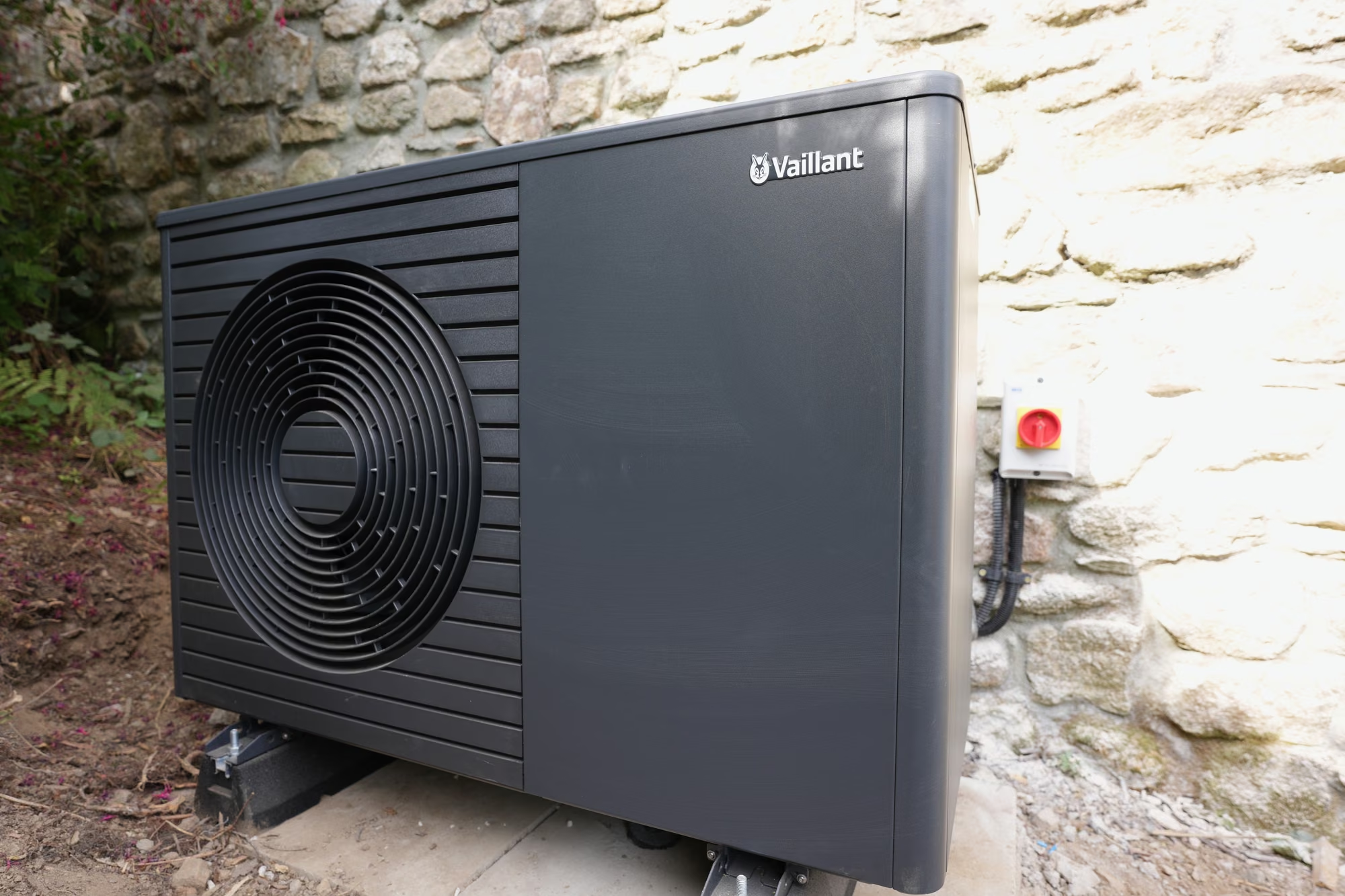
The outdoor unit sits on a raised bracket against the old stone wall of the house. Single fan, monobloc design — all the refrigerant circuit is sealed inside this box, so only water pipes run into the house rather than refrigerant lines.
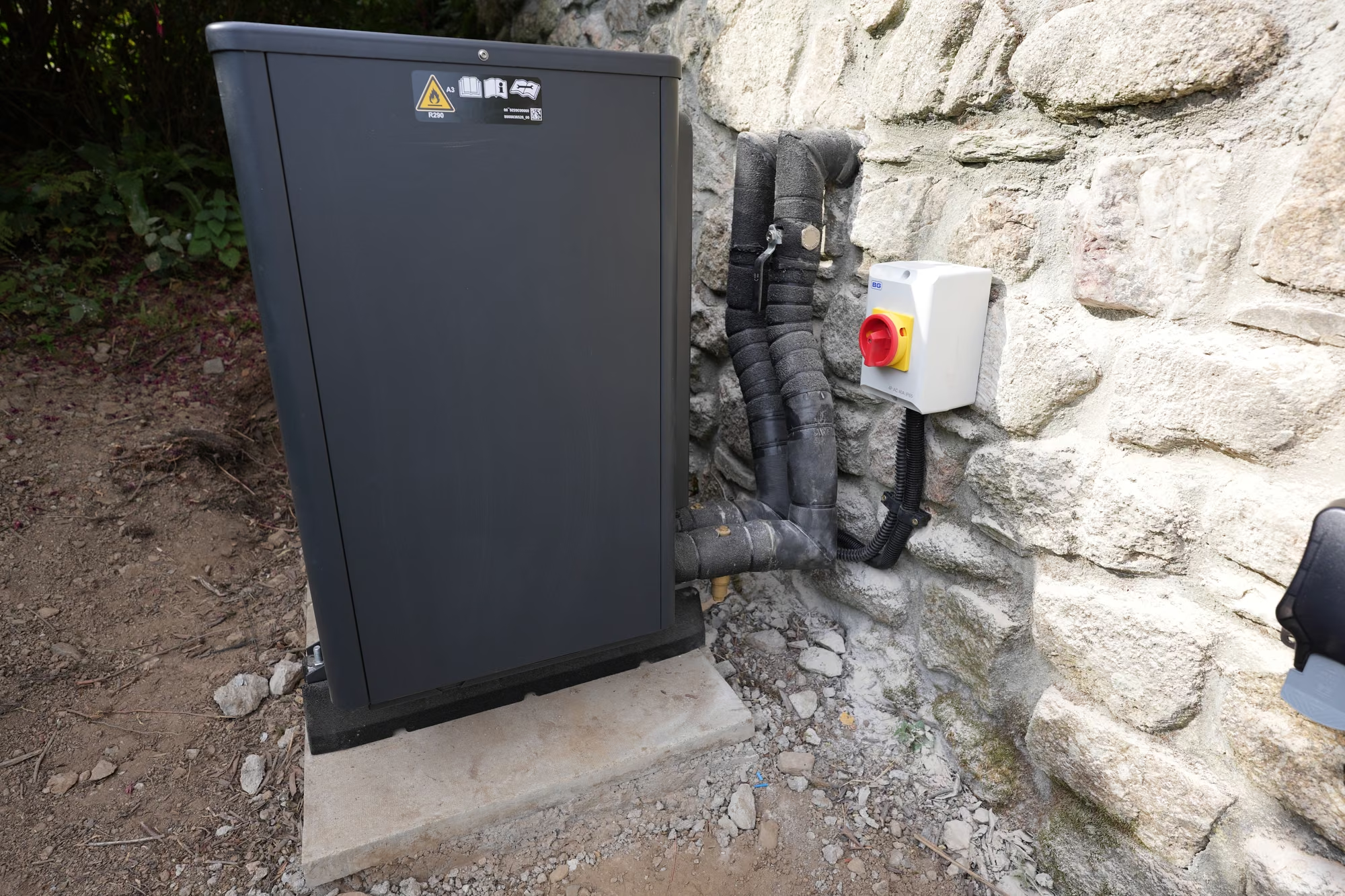
Round the back: the R290 (propane) refrigerant label and the red electrical isolator. R290 is a natural refrigerant with a very low global warming potential compared to the older F-gas refrigerants, which is part of why it’s mildly flammable and gets its own hazard sticker.
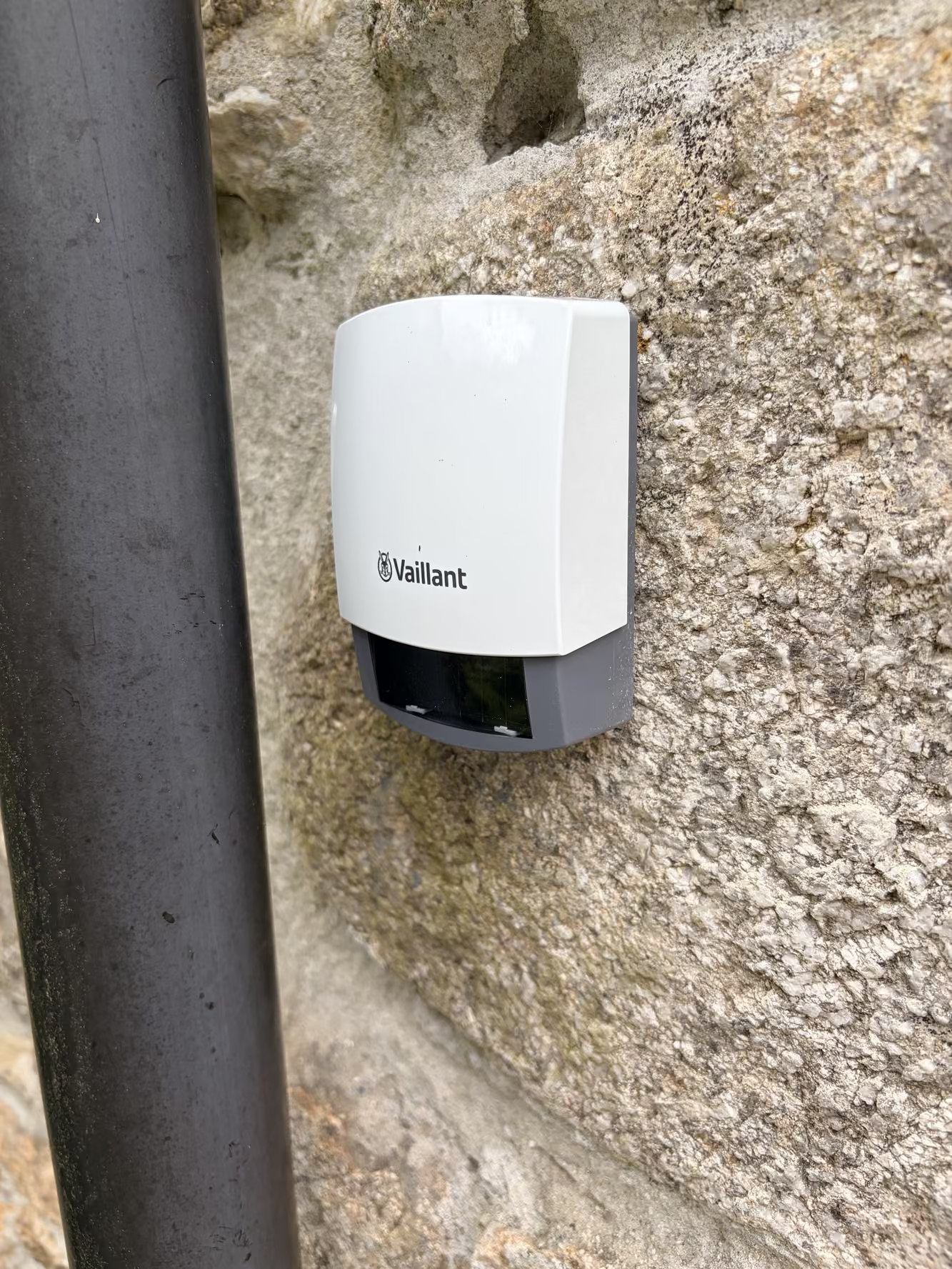
Easy to miss: the outdoor temperature sensor, a separate little box that talks to the controller over a radio link (there’s no cable — see what happens when that link drops). This is what the weather compensation curve reads — the 0.6 curve I mention below is a function of this number — so it wants shade, away from direct sun and from the outdoor unit’s own discharge air. Ours is tucked beside a downpipe on the stone wall. It’s also what feeds the outdoor temperature entity in Home Assistant.

The flow and return pipes penetrate the wall here, insulated and boxed in with a little metal cage to stop them getting knocked.
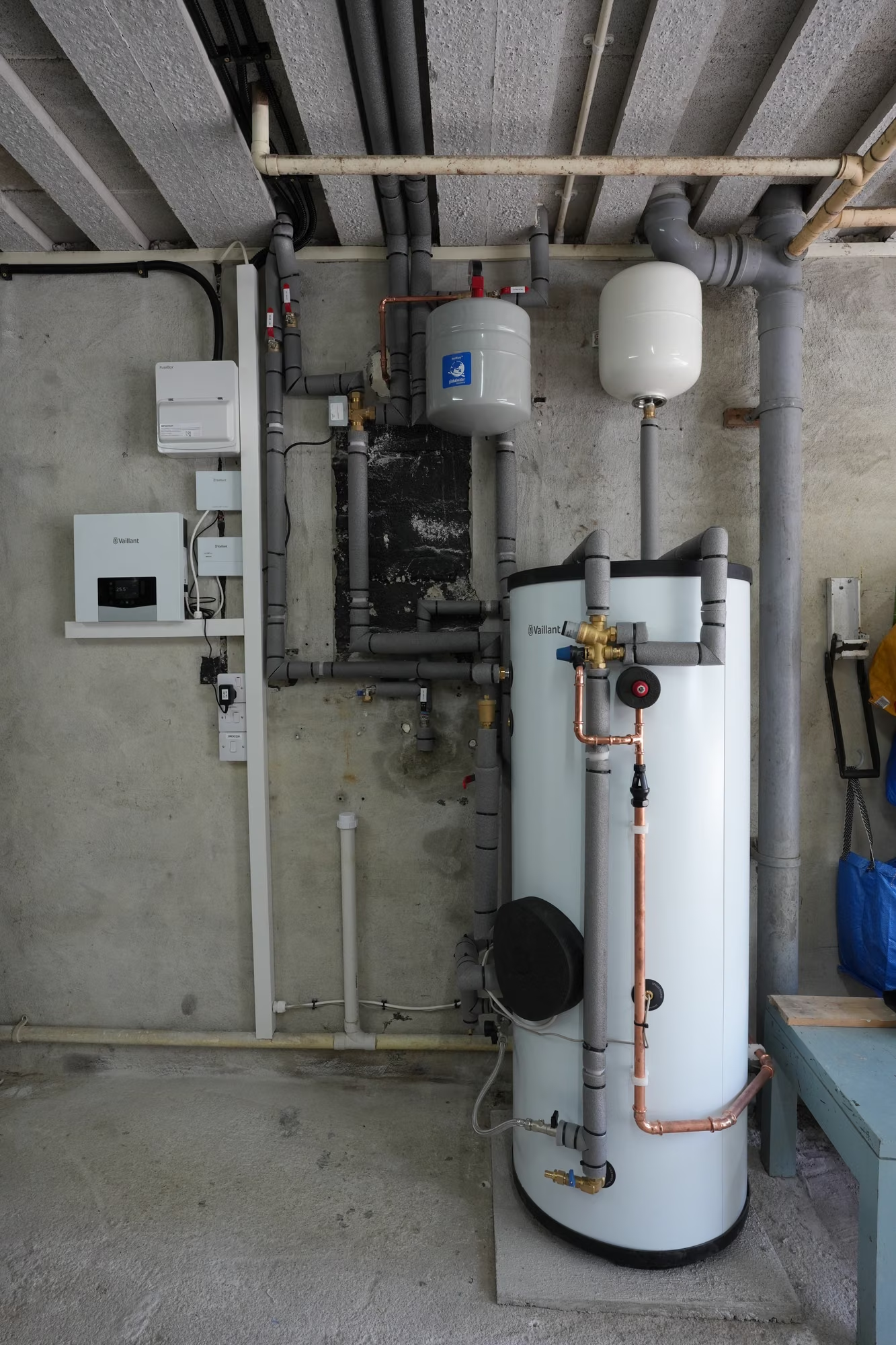
Inside, the plant room: a 250L Vaillant uniSTOR hot water cylinder, a couple of expansion vessels, and the manifold where the heat pump’s low-temperature circuit ties into the existing pipework.
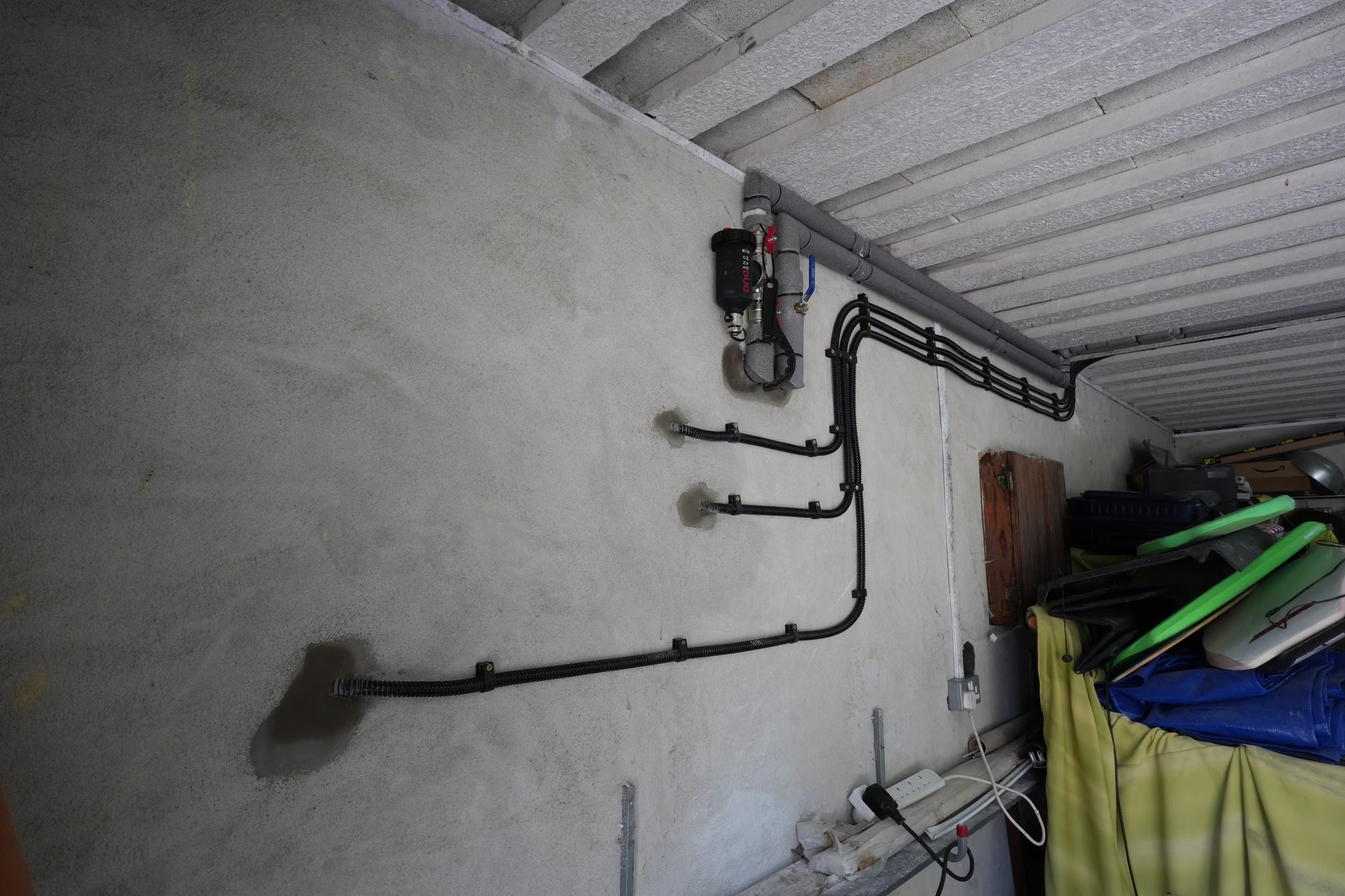
Pipe runs across the ceiling, insulated, feeding down to the manifold below.
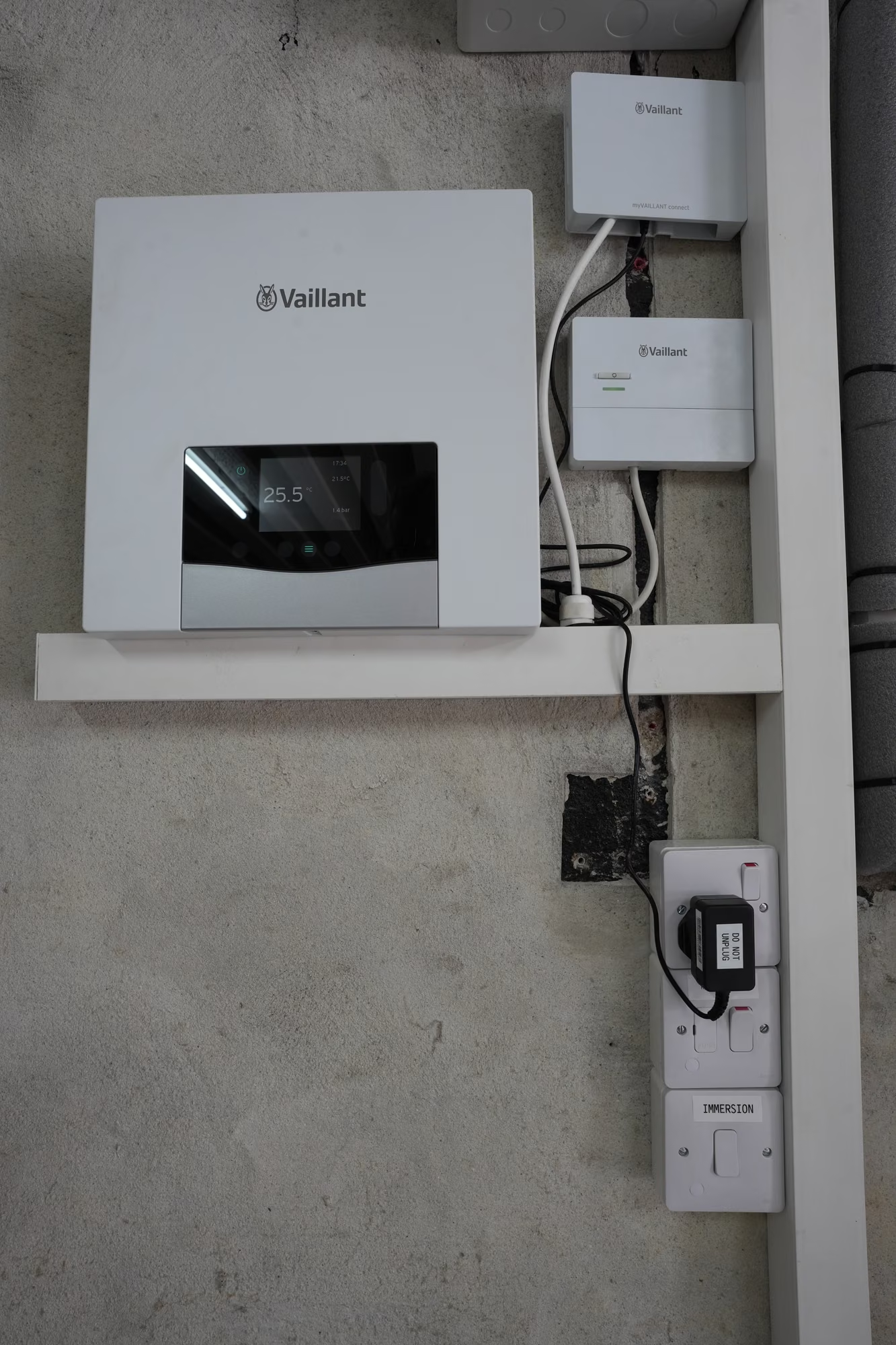
The sensoCOMFORT controller — flow temperature, room temperature, and system pressure at a glance, with the myVAILLANT connect boxes for remote monitoring mounted alongside.
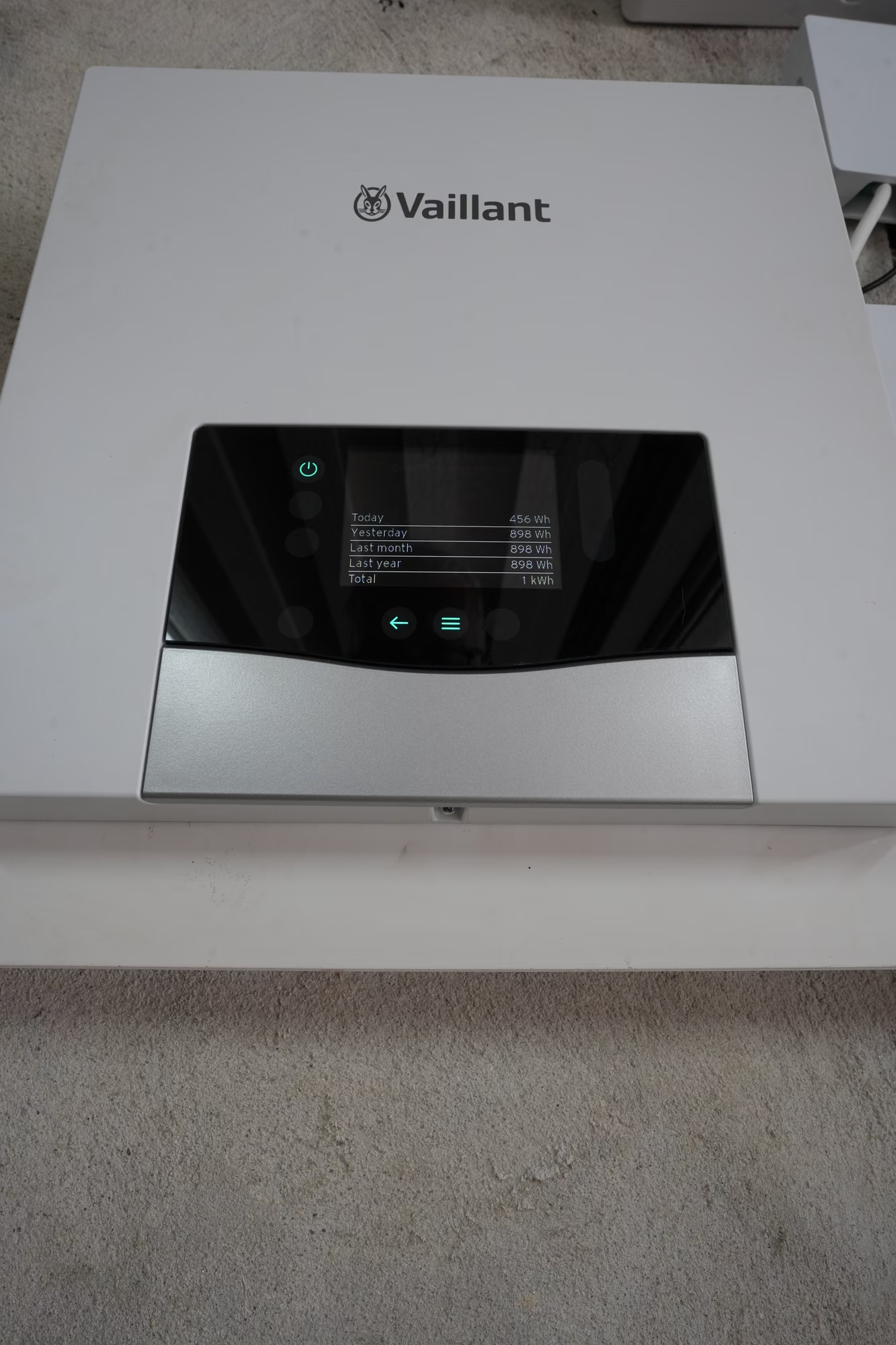
And the energy display, already logging consumption in Wh. Numbers are tiny so far since it’s only just gone live — worth revisiting once we’ve got a full heating season of data.
The myVAILLANT app does have an energy tab, incidentally. It just wasn’t showing when I first looked — it appeared on its own a few days after commissioning, so if yours is missing, wait rather than raise a ticket. It also does realtime energy statistics, which I love: you can watch the compressor draw while it’s running, not just yesterday’s totals.
Cost
A few people have asked about the price, so here’s the breakdown. The full contract with Reco Energy — heat pump, hot water cylinder, and every radiator in the house — came to £15,818.31, zero-rated for VAT (ASHP installs currently qualify for 0% VAT in the UK as an energy-saving measure).
Our install landed right on the boundary of the government’s Boiler Upgrade Scheme uplift on 21 July, when the grant rose from £7,500 to £9,000. Reco invoiced the deposit and interim payments against the old £7,500 figure, with the extra £1,500 due back as a credit once the uplifted voucher is confirmed — so either way, the full £9,000 applies.
| Contract total | £15,818.31 |
| Boiler Upgrade Scheme grant (uplifted) | −£9,000.00 |
| Net cost | £6,818.31 |
Paid in three instalments — 25% deposit, 35% interim, 40% final — with the grant applied against the interim and final invoices.
First impressions
A few surprises:
- I didn’t expect it to come with an immersion heater as backup for the hot water cylinder.
- It’s so quiet — standing next to the outdoor unit, I can barely hear it running.
- We replaced every radiator, and I’m not sure it was worth it — the new ones are only slightly larger than what we had before.
Home Assistant
There is a cloud API, and there’s a community Home Assistant integration for it:
mypyllant. Installed via HACS, it logs into
the same myVAILLANT account the app uses and gives you ~50 entities — tank temperature, flow
temperature and setpoint, heating curve, outdoor temperature, energy consumed and heat generated,
and a climate entity for the zone.
Two configuration traps cost me an evening, both under Settings → Devices & Services → myVAILLANT → Configure:
- The daily energy sensors don’t refresh by default. The update interval is unset out of the
box, so the coordinator fetches once at startup and then never again. Everything looks plausible
— it just silently stops moving. I had
consumed_electrical_energy_heatinggo from 100 Wh to 200 Wh and briefly thought the heat pump had run, when in fact it was a Home Assistant restart re-fetching. Set it to 3600 seconds; hourly is plenty for daily-resolution data. - Saving options doesn’t reload the integration. No amount of clicking Submit does anything until you restart Home Assistant. Restart after every change to Configure.
Realtime power is a separate option (“fetch real-time power usage”), which adds a
current_power sensor. Worth turning on — it’s the same live figure the app shows.
One rule that matters more here than with local hardware: the Vaillant API has strict quotas and
will lock you out. Never poll it on a time_pattern. Event-driven automations only.
Shifting hot water onto the cheap rate
We’re on Octopus Intelligent Go, which is cheap in two ways: the fixed 23:30–05:30 window, and the SMART dispatch slots Octopus grants outside it when it schedules the car — during which the whole house import drops to the off-peak rate, not just the car. That’s another 1–3.5 hours a day, at unpredictable times.
The cylinder’s own time program already runs 23:30–05:30, so scheduled hot water was on the cheap rate from day one. The gap was the daytime: if the tank ran down by teatime, the choice was reheat at ~30p/kWh or go without until 23:30.
So a pair of automations now watch the dispatch sensor and hit the cylinder’s boost switch when a slot has been running five minutes, the tank is under 45 °C, and it’s between 06:00 and 22:00 — cancelling the boost if the slot ends before the reheat finishes. The five-minute delay matters: some dispatch slots are only ten minutes long, and starting a DHW cycle for that just short-cycles the compressor.
It’s not really a money-saver — it’s insurance against buying evening hot water at peak rate. Expect it to fire once or twice a day, sometimes not at all.
The first COP figure from all this was a nice surprise: 1.1 kWh of electricity in, 5.2 kWh of heat out for a hot water reheat — a COP of about 4.7. The seasonal heating efficiency sensor reads 3.7. Against a resistive immersion heater at a flat 1.0, that’s the whole argument for a heat pump in one line.
Space heating: the plan, not yet the practice
Doing the same for space heating is harder, and I’ve deliberately not built it yet — it’s July, and there’s no heating history to tune against.
The lever is mypyllant.set_quick_veto, a temporary setpoint override with a duration that
expires by itself. (There’s an official example that suppresses heating with set_holiday
instead — avoid it. Holiday mode doesn’t self-expire, so if the automation meant to cancel it ever
fails, you find out in January.)
The tension is that preheating costs efficiency: raising the room setpoint pushes flow temperature up via the weather compensation curve, and a heat pump loses roughly 2–3% COP per °C of flow temp. Our curve is set to 0.6, which is low, and that low curve is why the seasonal figure is 3.7.
The tariff spread wins anyway:
| COP | Cost per kWh of heat | |
|---|---|---|
| Normal, off-peak (7p) | 3.7 | 1.9p |
| Preheating, off-peak (7p) | ~3.0 | 2.3p |
| Normal, peak (~30p) | 3.7 | 8.1p |
Even a 19% efficiency hit leaves off-peak heat about 3.5× cheaper than peak heat. But the veto wants to stay modest — +1.5 to 2 °C, not a deep boost/setback cycle — and it should be skipped below about 2 °C outdoors, when the heat pump is already flat out and has nothing spare to shift with.
Dispatch slots are also much weaker for heating than for hot water. A cylinder swallows 3 kWh in half an hour; a building’s thermal mass doesn’t respond meaningfully in that time. Only the long morning slots (05:30–07:30 turns up regularly) are worth extending a preheat into.
Two things I don’t know yet, and can’t until winter: how long the cottage actually holds a 2 °C overshoot, and how much of the day that lets me shift. My guess is I’ll move the morning and nothing more.
There’s one gotcha I’ve already found: the zone’s control sensor lives in the hallway, near a window. It read 30.2 °C with 20 °C outside — a correct reading that is in no way representative of the house. Anything keyed off zone temperature inherits that bias, so time and price make the better triggers, with temperature only as a guard.